



















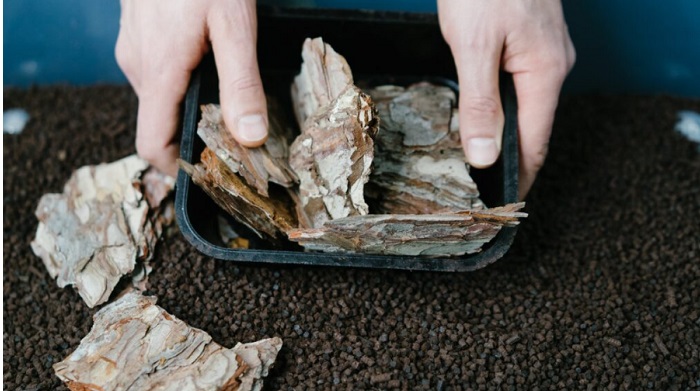

Bpacks, a sustainable packaging startup, announced the launch of the world’s first bark-based packaging technology. The new materials seamlessly integrate with current equipment used for all kinds of plastic rigid packaging production, facilitating the shift to eco-packaging. This is especially important, as the European Union’s policy directives have mandated the transition to biodegradable packaging within the next five years.
Bpacks’ 300 square meters R&D center, which is based in Belgrade, Serbia, enables the production of both finished packaging and granules as substitutes for plastic pellets. The bark-based pellets’ production process closely resembles that of polymers and doesn’t require capital investments to begin molding, since the manufacturing process mirrors that of plastic production.
The Bpacks’ production process starts with compounding, followed by the creation of pellets or sheets, and concludes with the casting of solid packaging, which takes place either by injection molding or thermoforming techniques. The material should fully decompose in moist soil within one to two months. Nowadays, the most common biodegradable polymers such as PLA or PBAT eventually decompose into water and carbon dioxide in compost. However, neither of these adds useful material to it. Bark-based material, on the other hand, turns into compost within a week in an active environment, and enriches the compost with valuable nutrients.
Utilizing bark, waste of wood production, as its primary raw material, Bpacks ensures that forest resources are not further strained. With estimated bark production levels between 300 and 400 million m3 annually, the startup leverages this abundant resource to create environmentally friendly packaging solutions. Furthermore, studies have highlighted the antimicrobial potential of bark extracts from various tree species, enhancing the functionality of Bpacks’ technology, which emits up to six times fewer CO2 emissions compared to traditional plastic production methods.