








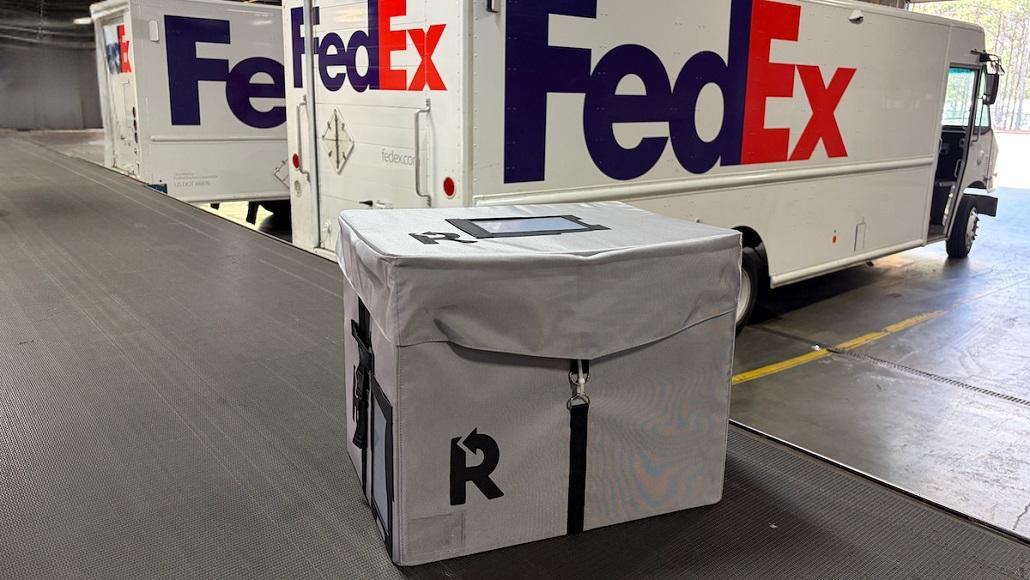

FedEx Corp. has introduced a new reusable packaging system aimed at B2B shippers, marking a move toward more circular logistics solutions within its network. The initiative was developed in partnership with Returnity, a reusable packaging provider specializing in circular logistics, and features a FedEx-specific box design. Through this collaboration, FedEx and Returnity are offering FedEx B2B customers the ability to transition from corrugated packaging to reusable boxes within their supply chains without facing the handling fees that are typically associated with alternative packaging formats.
“In collaboration with Returnity, we have created the first scalable, reusable box solution for B2B customers, which is especially useful for our soft-goods shippers,” said Neil Gibson, senior vice president, global customer experience, FedEx. “By pairing Returnity’s durable, easy-to-integrate packaging with our global network, we’re helping retailers unlock meaningful cost savings while reducing environmental impact, all without sacrificing speed or reliability. This new solution supports our vision to make supply chains smarter for everyone.”
“FedEx made reuse make sense by building the business case, doing the work, and creating a model for how circular logistics can succeed at scale,” said Mike Newman, CEO of Returnity.
Although reusable packaging has existed for years, integrating it into conventional parcel delivery systems has often been difficult due to cost considerations, operational complexity, and compatibility with existing logistics networks. The newly designed box aims to overcome these challenges through a durable, collapsible structure that is compatible with automated processes and fits within the existing FedEx infrastructure.
Unlike consumer-oriented packaging that depends on uncertain customer return routes, the system is intended for closed-loop operations where packaging returns can be controlled and predicted. This makes it suitable for environments such as in-house fulfillment centers, store restocking operations, and field service support, where shipments and returns follow structured processes.
Each box is engineered to withstand up to 50 shipment cycles and is capable of transporting up to 50 pounds of goods. According to the company, the format can reduce packaging costs by up to 30% per cycle and may lower carbon emissions by 64%-88% compared to single-use corrugated packaging under typical conditions, assuming a non-return rate of 40% or less.
FedEx has already piloted the system with several FedEx B2B shippers across North America to assess performance within real-world retail and distribution workflows. These pilot projects covered activities such as fulfillment-to-store replenishment, internal transfers, and reverse logistics.
Participants in the pilot reported operational benefits including quicker unpacking and restocking, greater labor efficiency, improved backroom organization, and reduced product damage rates.
FedEx customers in the U.S. can contact their FedEx sales representative directly to learn more about the reusable box solution. The packaging is currently available in the U.S., and the company plans to expand the offering internationally in Australia and Europe in the near future.