



















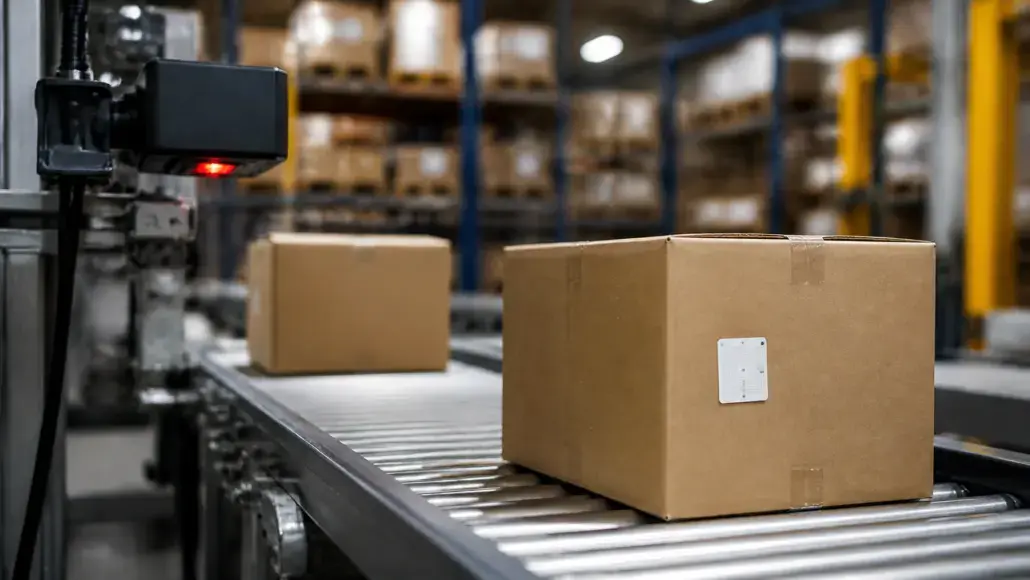

For most of the past decade, connected packaging lived in the demo zone. Brands ran QR campaigns, RFID trials and NFC samples, gathered applause at trade shows, and then returned to printing ordinary labels. The infrastructure was expensive, the data pipelines were immature and the business case rarely survived a serious cost review. That phase is ending. Regulation is making unique identification mandatory in entire categories, reader and tag economics have improved dramatically, and the data plumbing that once had to be built bespoke now exists as vendor services. Smart label serialisation is becoming ordinary production work rather than an experiment.
The shift matters for converters because the label is where the physical and digital layers meet. Printing a serialised code reliably, at line speed, on every unit, is a manufacturing task with tolerances, inspection requirements and data-handling obligations, and label plants are the ones that have to industrialise it.
Prepress absorbs the first wave of this change. Variable data files arrive as structured databases rather than static artwork, and the prepress team must merge them with brand layers, paginate codes across the layout and confirm that every unit’s data matches the customer’s commissioning file. Plants describe this as a new discipline inside prepress: part data engineering, part print production, and the converters that formalised it early quote serialised work with far fewer surprise costs.
From Trial Territory to Compliance Baseline
The clearest driver is regulation. Pharmaceutical serialisation regimes in Europe and the United States require unique identifiers and verification at dispensing, making serialised labels a legal prerequisite rather than a marketing choice. Medical device rules carry similar identification duties. In the European Union, incoming packaging labelling and digital product passport requirements are extending unique, machine-readable identification to consumer goods categories that never faced it before, with recycling instructions and product information migrating onto codes rather than printed text.
Retail mandates pull in the same direction. Major retailers now expect richer traceability from suppliers for provenance, freshness and recall management, and QR-based unit identification is the cheapest mechanism to provide it. Consumer engagement completes the picture: brands that once bought shelf space to inform shoppers increasingly direct them from the pack to owned digital channels, and the QR code on every unit is the doorway. When a requirement is enforced by law or by a retailer’s listing terms, pilots end and production begins.
Food categories are following pharma’s path more slowly but unmistakably. Marketing standards for fresh produce, origin labelling expectations in meat and seafood, and retailer requirements for lot-level traceability all push identification to the unit or case level. Consumer-facing recycling information, increasingly mandated as packaging labelling rules tighten, is migrating onto QR codes because the alternative, printing instructions for every end-market on every pack, has become impractical for brands selling across multiple jurisdictions.
The Technology Stack Behind an Everyday Smart Label
Everyday deployments now draw on a small set of mature options, each suited to a different job on the pack:
- Printed QR codes and DataMatrix symbols carrying unique serial numbers, and increasingly encoded as GS1 Digital Link so one code serves both retail scanners and consumer devices.
- RFID inlays, whose unit costs have fallen enough to justify item-level tagging on apparel, pharmaceuticals and higher-value goods for inventory accuracy and loss reduction.
- NFC tags for premium categories, where tap-based authentication and engagement justify a higher per-unit cost.
- Sensor and indicator labels, including freshness and temperature indicators, that convert packaging from passive to informational in cold chains.
The infographic below shows how those elements connect on a working label, from the unique code to the systems behind it.
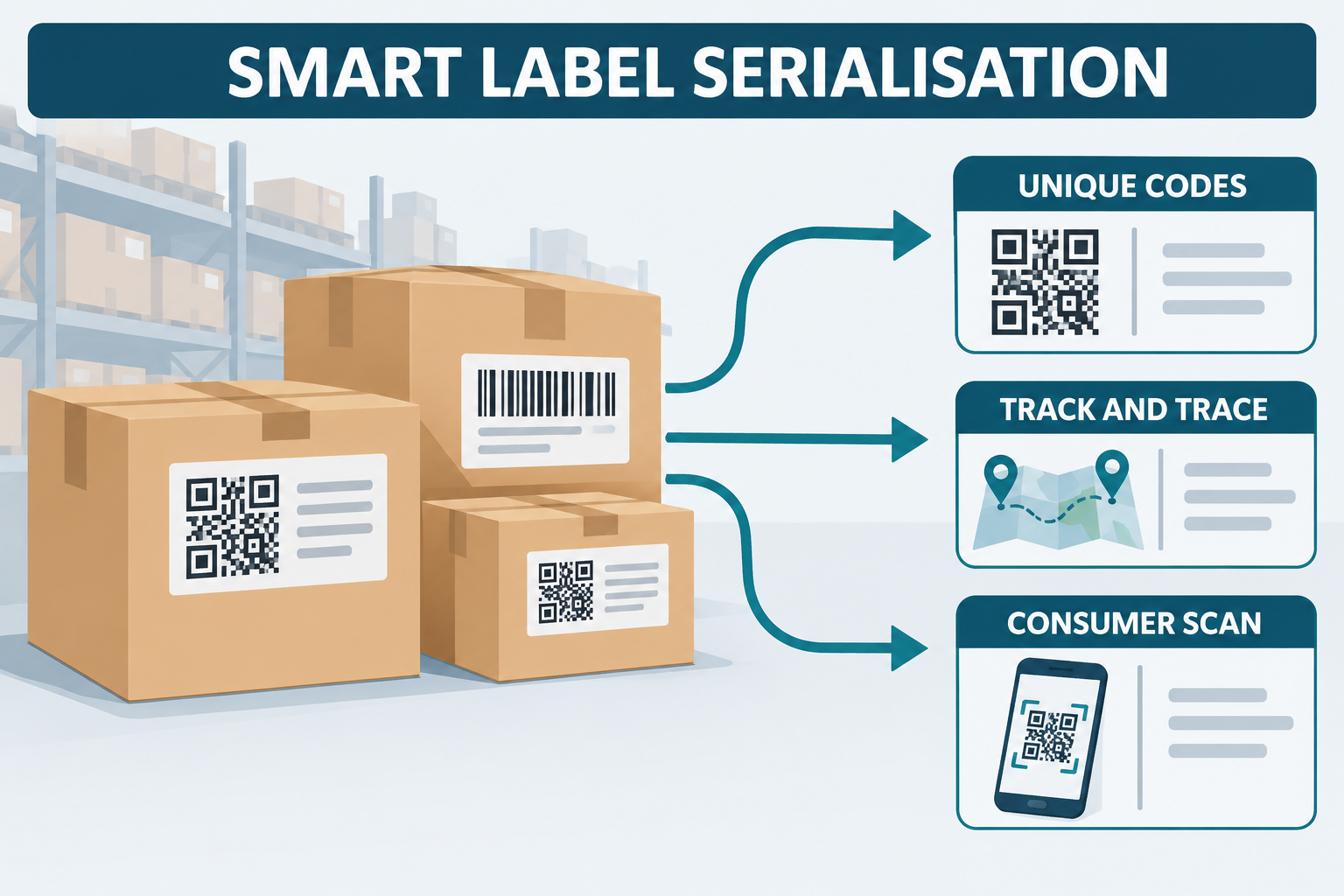
The common foundation across all of them is variable data: each physical unit carries information unique to itself, and the label factory is where that uniqueness gets applied, verified and linked to a data system of record.
What Routine Production Demands of the Pressroom
Printing unique codes at industrial speed is unforgiving about process discipline. A code that is under-inked, blurred or damaged does not scan, and an unscannable serialised label is a failed unit, not a cosmetic defect. Converters running serialised work therefore build inspection into the press pass, verifying code print quality against grading standards on every unit, not on samples, and rejecting or re-marking failures automatically.
Maintenance discipline matters as much as measurement. Printheads, lenses and inspection cameras drift over long production runs, and a system verified at shift start can degrade by shift end. Plants running serialised work build calibration checks into the shift routine and treat any borderline code as a stop-and-fix event, because the cost of a recall caused by unreadable labels dwarfs the minutes lost to an early correction.
Data integrity is the second discipline. The sequence printed on the web must reconcile exactly with the serialisation database: no duplicates, no gaps, no codes printed and never commissioned. That requires a controlled handshake between the press, the inspection system and the serialisation data provider, with audit trails that pharma customers in particular will scrutinise.
Throughput is the third. Serialised work has historically leaned on digital presses, but variable inkjet modules make it viable at conventional speeds, and this is one reason hybrid label presses have moved beyond convenience for many converters. For label plants, smart label serialisation is now a production capability to be built and maintained rather than a project to be survived, Hybrids answer the throughput half of that problem: they print static brand artwork flexographically and variable codes digitally in a single pass, keeping serialised work competitive with plain stock labels. Converters that solve speed, inspection and data reconciliation together can quote serialised jobs without the cost penalty that once made brands defer them.
The Data Question Brands Have Not Fully Settled
The manufacturing side is converging on standards faster than the data side. A serialised code needs somewhere to point: a resolver that routes retail scanners to product records and consumer phones to brand destinations, a system that tracks commissioning and status through the supply chain, and an ownership model for the scan data generated across millions of touches. GS1 Digital Link is settling much of the routing question, and industry bodies continue to refine how product passports, recycling information and consumer content share one code without conflict.
Privacy and value exchange remain open. Consumer scans generate behavioural data that brands want and regulators increasingly constrain, and shoppers need a reason to scan beyond obligation. Brands that treat the code as a service, offering authenticity verification, recipes, warranty registration or sustainability information, see engagement; brands that treat it as a tracking mechanism see little. Whichever model a brand chooses, the converter’s duty stays constant: print the code, verify it, and keep the record. Interoperability is the quiet battleground beneath these choices. Brands want codes that work across borders, resolvers that serve both retail scanners and consumer phones, and data schemas their trading partners can read. Converters sit downstream of these decisions but feel them at specification time, when a customer’s data architecture determines what gets printed, in what format, and what verification the plant must certify before shipping. Converters are affected mostly at the edges, since data choices change what must be printed, but design teams that understand the connection win the specification conversation.
Economics: Falling Costs, Rising Mandates
The cost curve has moved decisively. RFID inlays that once cost more than the product’s label budget now sit at levels that make item-level tagging routine in categories such as apparel, where inventory accuracy alone pays the premium. QR serialisation adds mostly inspection and data-service cost rather than material cost, and those overheads fall as verification equipment matures and data services commoditise. Converters planning capacity should assume the mandate list keeps growing: categories that have never carried unique identification are being added to regulatory schedules, and each addition converts an argument about value into a matter of compliance. Capacity built ahead of those deadlines tends to be rewarded, because late adopters face the same inspections and the same data audits with machinery vendors fully booked. Meanwhile the compliance baseline keeps rising, converting once-optional features into requirements with deadlines and penalties attached.
The practical consequence is that smart label serialisation now appears in ordinary quoting conversations: pharmaceutical plants run it as regulated business, apparel brands tag at item level for stock accuracy, and food brands print recycling and provenance codes because regulation and retailer terms expect them. Converters that invested early in inspection, variable data discipline and data-pipeline competence are quoting this work with confidence and margin. Those that did not are discovering that everyday serialisation work flows to the plants that industrialised it first, and retrofitting the discipline under deadline pressure is considerably more expensive than building it deliberately. In that sense smart label serialisation has crossed the line separating a technology investment from an operating capability: brands no longer ask whether it is possible, they ask who can do it at the lowest cost per unit.