

















The perception of sustainable materials has undergone a dramatic shift in recent years, moving from a niche environmental concern to a central pillar of industrial design. At the heart of this movement is moulded fibre packaging design, a field that has transitioned from the production of simple egg cartons to the creation of high-precision, aesthetically striking solutions for luxury goods and premium electronics. This evolution is driven by a new generation of designers and engineers who refuse to accept that sustainability must come at the expense of beauty or functionality. By leveraging advanced manufacturing techniques and a deeper understanding of cellulose chemistry, the industry is creating a new visual language for the circular economy—one that emphasizes haptic quality, structural integrity, and emotional resonance.
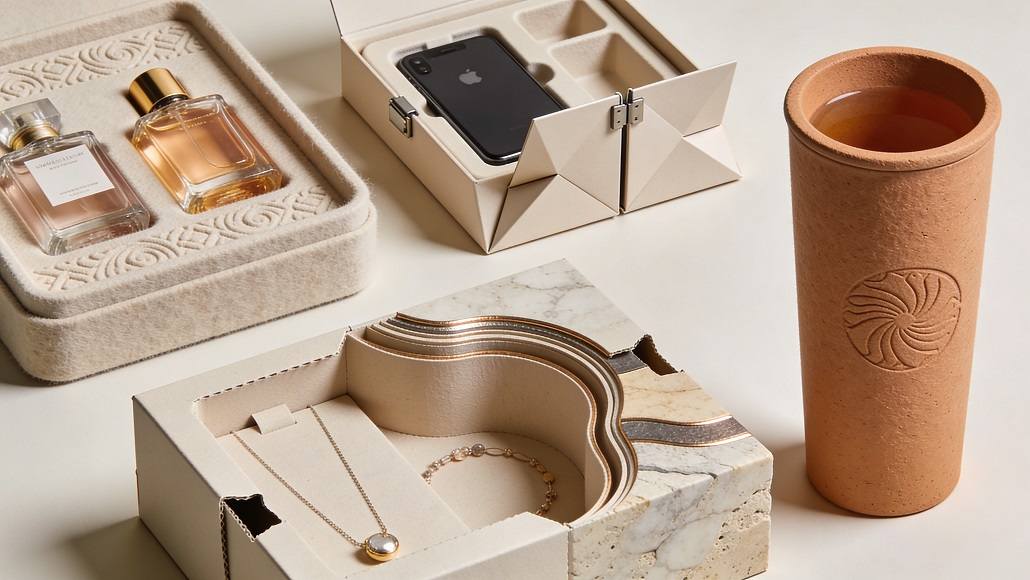
The historical constraints of fibre moulding such as rough surfaces and limited geometric complexity are being systematically dismantled. Modern design innovation is focused on achieving the “smooth-surface” finish traditionally associated with injection-moulded plastics. This is accomplished through thermoforming technology, where the fibre is pressed between two heated metal moulds under immense pressure. The result is a material that feels dense, sophisticated, and premium. This leap in quality allows brands in the cosmetics and consumer electronics sectors to maintain their high-end identity while demonstrably reducing their environmental footprint. The design trend here is one of “honest materials,” where the natural texture of the fibre is celebrated rather than hidden, providing a tactile connection to the environment that synthetic polymers can never replicate.
The Rise of Haptic Sustainability and Tactile Branding
In a digital world, the physical touchpoint of a product’s packaging has become more important than ever. Designers are increasingly focusing on “haptic sustainability,” using the unique texture of moulded fibre to create a sensory experience that reinforces a brand’s ecological values. Moulded fibre packaging design now frequently incorporates intricate textures that are embossed or debossed directly into the mould. These patterns can range from subtle micro-textures that improve grip to elaborate artistic motifs that tell a brand’s story. Because these features are part of the material itself, they eliminate the need for secondary labels or printing, simplifying the recycling process and maintaining a minimalist, clean aesthetic.
This focus on tactile branding extends to the internal structure of the packaging as well. Designers are moving away from loose void-fill materials toward custom-engineered inserts that cradle the product with surgical precision. These inserts are not just functional; they are designed to be “unboxed” in a specific sequence, creating a sense of anticipation and theater for the consumer. The soft, felt-like quality of high-end moulded fibre provides a protective cushion that feels significantly more premium than brittle plastic or dusty cardboard. By treating the packaging as an extension of the product, brands can build a deeper emotional bond with their customers, turning a routine purchase into a memorable interaction.
Precision Geometries and Structural Engineering
The move toward more complex shapes is another defining trend in the industry. Advanced 3D modeling and simulation software allow designers to push the boundaries of what is possible with cellulose. We are seeing the emergence of “origami-style” folding mechanisms, integrated hinges, and snap-fit closures that were previously thought to be exclusive to the world of plastics. These precision geometries are not just for show; they serve critical functional purposes, such as improving shock absorption and reducing the overall volume of the packaging. By optimizing the structural design, manufacturers can use less material to achieve higher levels of protection, a core principle of sustainable packaging design.
A significant innovation in this area is the development of deep-draw moulding techniques. Historically, fibre moulding struggled with tall, vertical walls and sharp angles. New tooling designs and modified pulp slurries have overcome these limitations, allowing for the creation of tall, elegant bottles and deep-set trays. These shapes are particularly useful in the beverage and personal care industries, where vertical shelf presence is essential for attracting consumer attention. The ability to create complex, multi-dimensional structures from a single piece of fibre represents a major breakthrough in fibre moulding innovation, providing a versatile platform for brands to express their creativity without compromising on their sustainability goals.
Bio-Based Colorants and Aesthetic Customization
Color has always been a challenge for sustainable materials, as traditional dyes can interfere with compostability and recycling. However, recent trends in moulded fibre packaging design are seeing the integration of bio-based pigments derived from mineral and vegetable sources. These natural colorants provide a sophisticated, muted palette that aligns perfectly with the “organic” aesthetic of the modern eco-consumer. From earthy ochres to forest greens and slate greys, these colors are integrated directly into the pulp slurry, ensuring that the color is consistent throughout the material and will not scratch or fade.
Furthermore, some manufacturers are experimenting with “in-mould decoration” (IMD), where a thin, biodegradable film with high-resolution graphics is fused with the fibre during the moulding process. This allows for vibrant, full-color branding that is fully integrated into the container. When combined with digital printing technologies that use water-based inks, the aesthetic possibilities for moulded fibre become virtually limitless. This trend toward high-definition customization is crucial for mass-market adoption, as it allows sustainable packaging to compete head-to-head with the visual impact of traditional plastic packaging on the supermarket shelf.
Minimalism and the Elimination of Excess
One of the most profound design trends in the sector is the move toward extreme minimalism. This “less is more” philosophy is driven by both environmental necessity and a desire for a clean, modern aesthetic. Designers are actively working to eliminate unnecessary components, such as plastic windows, adhesive tapes, and secondary outer wraps. In many cases, the moulded fibre container is designed to be the primary retail package, the shipping container, and the display unit all in one. This multi-functional approach significantly reduces the total amount of waste generated and simplifies the consumer’s role in the recycling process.
This minimalism also extends to the design of the “unboxing” journey. Brands are increasingly adopting “frustration-free” packaging designs that use the inherent properties of fibre such as its flexibility and tear-resistance—to create intuitive opening mechanisms. No more “wrap rage” caused by difficult-to-open plastic clamshells; instead, consumers are greeted with a package that opens with a satisfying, natural movement. This focus on user-centric design is a powerful tool for brand differentiation, as it demonstrates a commitment to the consumer’s convenience as much as to the planet’s health. By stripping away the excess, designers are revealing the true beauty and utility of the material.
Hybrid Materials and Functional Coatings
While the goal is often a 100% fibre solution, a growing trend involves the use of hybrid materials to solve specific performance challenges. For example, some designers are combining moulded fibre with thin layers of recycled ocean plastic or bio-based laminates to provide exceptional moisture and gas barrier properties. These hybrid solutions are designed to be easily separated by the consumer, or they utilize materials that are mutually compatible in a composting environment. This “best of both worlds” approach allows fibre to enter demanding markets like fresh meat and carbonated beverages, where high-performance barriers are a non-negotiable requirement.
The development of functional coatings is also a major area of innovation. We are seeing the emergence of “smart” coatings that can change color if the product inside has been exposed to extreme temperatures or if the seal has been compromised. Other coatings provide antimicrobial properties, extending the shelf life of fresh produce without the need for synthetic preservatives. These advancements are transforming moulded fibre from a passive container into an active participant in the food safety and distribution chain. By integrating these high-tech features into an eco packaging design, manufacturers are proving that sustainability can be the driver of technological progress rather than a limitation.