











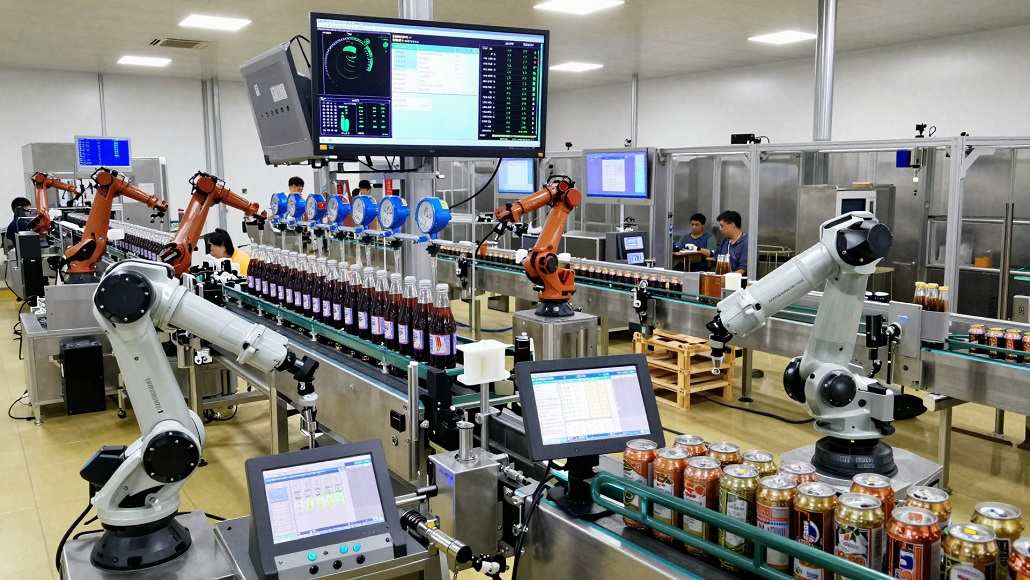
Maximizing Productivity: High Speed Filling and Packaging Line Automation
In the hyper-competitive world of beverage production, the difference between market leadership and obsolescence often comes down to a few milliseconds per unit. High speed filling and packaging line automation has become the cornerstone of modern manufacturing, allowing facilities to produce thousands of units per minute with surgical precision. This level of performance is not just about raw speed; it is about the sophisticated orchestration of robotics, sensors, and data analytics that ensure every bottle is filled, capped, and labeled to the exact same standard. As global demand for beverages continues to surge, the ability to scale production while maintaining quality and safety is the ultimate industrial objective.
The Architecture of Precision in Filling Systems
At the heart of any high-speed operation is the filling valve. Modern high speed filling and packaging line automation utilizes electronic flow meters and non-contact filling heads to ensure that the beverage never touches the filling equipment, drastically reducing the risk of contamination. These systems use electromagnetic flow meters (magmeters) or mass flow meters to measure the exact volume of liquid entering the container with an accuracy of +/- 0.5% or better. This precision prevents “overfill,” which can lead to significant product waste over a million-unit run, and “underfill,” which can result in regulatory non-compliance.
Furthermore, the transition from mechanical to electronic filling allows for rapid product changeovers. In the past, switching a line from a carbonated soft drink to a still water required hours of manual adjustments. Today, with high speed filling and packaging line automation, operators can simply select a new recipe on a touchscreen, and the system automatically adjusts filling pressures, speeds, and volumes. This flexibility is essential in an era where consumers demand a wide variety of product variants and limited-edition flavors. The ability to pivot quickly without sacrificing throughput is a key competitive advantage in a volatile market.
Robotics and the End-of-Line Revolution
While filling is the core process, the packaging stage is where much of the recent innovation has occurred. High speed filling and packaging line automation now incorporates advanced robotics for “pick-and-place” operations, case packing, and palletizing. Modern delta robots, capable of making hundreds of moves per minute, can gently handle delicate glass bottles or lightweight aluminum cans without causing damage. These robots are equipped with vision systems that can detect the orientation of a product on a moving conveyor and adjust their grip accordingly, eliminating the need for expensive and rigid mechanical guides.
The integration of Collaborative Robots (Cobots) is another significant trend. Unlike traditional industrial robots that must be caged for safety, cobots are designed to work alongside human operators. In a beverage plant, a cobot might handle the repetitive task of placing plastic carriers onto packs while the human operator focuses on quality control or machine maintenance. This partnership between human intuition and robotic consistency is a hallmark of the “Industry 4.0” approach to high speed filling and packaging line automation. It creates a safer, more engaging work environment where humans are freed from the most mundane tasks to focus on higher-value activities.
Hygiene and Food Safety in Automated Environments
In the beverage industry, hygiene is non-negotiable. High speed filling and packaging line automation systems are now designed with “Clean-in-Place” (CIP) and “Sterilization-in-Place” (SIP) capabilities that are fully integrated into the machine’s control software. This allows for automated, multi-stage cleaning cycles that reach every internal surface of the filling valves and pipes without the need for disassembly. These systems use sensors to monitor the concentration of cleaning agents and the temperature of the rinse water, ensuring that every cycle meets the highest safety standards.
The design of the machines themselves has also evolved. “Hygienic Design” principles dictate that equipment should have smooth, sloping surfaces to prevent liquid pooling and use materials that are resistant to corrosion and bacterial growth. By minimizing “dead zones” where microbes can hide, high speed filling and packaging line automation ensures that the product remains pure from the first bottle of the day to the last. This commitment to safety is what allows brands to confidently expand their distribution into international markets with varying regulatory requirements. It is a rigorous standard that protects both the consumer and the brand’s bottom line.
The Power of Data and Predictive Maintenance
Perhaps the most significant advancement in high speed filling and packaging line automation is the move toward predictive maintenance. Modern lines are equipped with thousands of sensors that monitor everything from motor vibration and bearing temperature to air pressure and electrical consumption. By feeding this data into AI-driven analytics platforms, plant managers can identify potential failures before they occur. For example, if a sensor detects an unusual vibration in a filling turret, the system can alert maintenance to replace a bearing during a scheduled break, preventing a catastrophic and expensive unscheduled shutdown.
This data-driven approach also enables “Digital Twin” technology, where a virtual model of the production line is created in the cloud. Engineers can use this twin to simulate the impact of new product types or different line speeds before making any physical changes. This reduces the risk and time associated with line upgrades and allows for continuous optimization of the production process. High speed filling and packaging line automation is no longer just a physical asset; it is a digital ecosystem that is constantly learning and improving. It represents a shift from reactive firefighting to proactive management of industrial assets.
Sustainability through Automated Efficiency
Efficiency and sustainability are two sides of the same coin. By maximizing the throughput of a line, high speed filling and packaging line automation reduces the energy consumed per unit produced. Modern motors are equipped with variable frequency drives (VFDs) that only draw the power necessary for the current task, and many systems now include energy recovery modules that capture and reuse the kinetic energy generated during braking. This reduction in energy intensity is critical for manufacturers looking to reduce their operational costs and their environmental impact simultaneously.
Furthermore, automated lines are better equipped to handle the challenges of sustainable packaging. For instance, lightweight bottles are more prone to crushing or tipping on traditional mechanical lines. Automated systems with precise torque control and vacuum-assisted handling can transport these eco-friendly containers through the filling and packaging process with the same reliability as their heavier counterparts. This allows beverage companies to meet their environmental goals without sacrificing production speed or efficiency. It proves that the “high speed” in high speed filling and packaging line automation can also mean “highly sustainable.”
The Future of Modular Production Lines
The next frontier for high speed filling and packaging line automation is modularity. Instead of a single, massive machine, plants are moving toward “plug-and-play” modules that can be swapped out or rearranged as needed. This allows a facility to start with a modest production capacity and expand as the brand grows. It also makes it easier to upgrade individual components as new technologies emerge, ensuring that the plant remains at the cutting edge of efficiency throughout its entire lifecycle. This agility is vital in a market where consumer preferences can change in an instant, requiring manufacturers to adapt their lines to new formats and formulations.
In conclusion, the evolution of high speed filling and packaging line automation is transforming the beverage factory into a high-tech center of excellence. By embracing robotics, data, and hygienic design, manufacturers are reaching levels of performance that were previously unimaginable. This technological foundation is what will support the next generation of beverage innovation, providing the speed, safety, and sustainability required to thrive in a global marketplace. As we look toward the future, the integration of artificial intelligence and machine learning will only further refine these processes, making the high-speed line of tomorrow even more intelligent, responsive, and efficient than the one we see today.
Remote Monitoring and Global Integration
Finally, the rise of cloud-based management tools is allowing for the remote monitoring of high speed filling and packaging line automation across multiple global sites. A technical expert in Europe can monitor the performance of a line in Asia, identifying bottlenecks and offering real-time guidance to local teams. This global connectivity ensures that best practices are shared instantly and that every facility, regardless of location, operates at the highest possible standard of efficiency. It is the final step in the globalization of beverage manufacturing excellence, where data and expertise flow as freely as the products themselves. The beverage factory of the future is not a silo; it is a node in a vast, global network of automated perfection.

