





















Polytag, Saica Flex, and Paragon have entered into a strategic partnership aimed at advancing UV-tagged packaging labels capable of delivering real-time, actionable environmental data to brands. The initiative brings together Polytag’s detection technology and technical expertise, Saica Flex’s packaging production capabilities, and Paragon Inks specialist UV inks to create an integrated solution designed for use at scale.
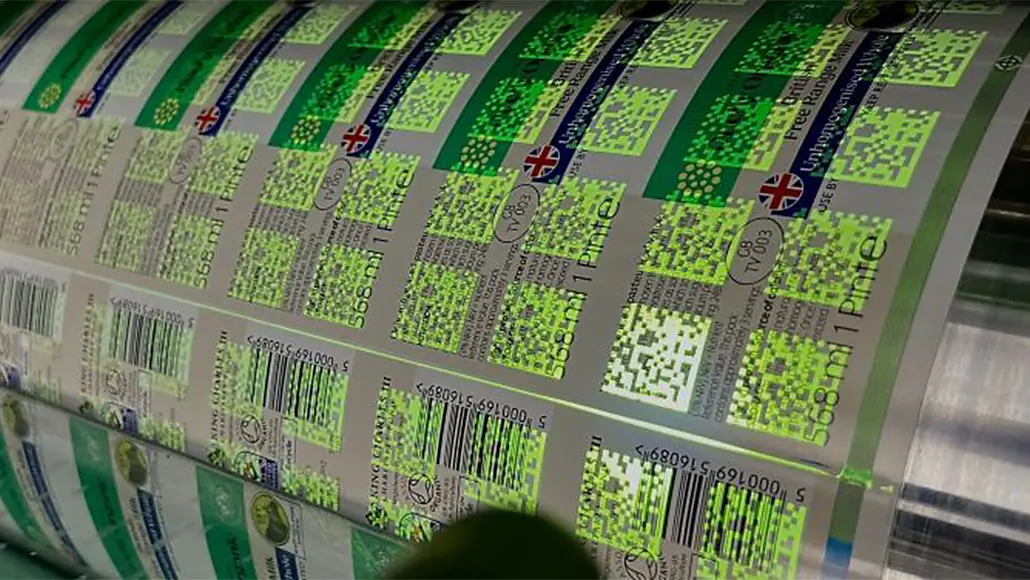
The collaboration has already moved beyond the pilot stage. Labels manufactured for Waitrose milk cartons are now in-market and generating verified, reliable recycling data. This live deployment marks a significant operational milestone for the partners, demonstrating that the system functions within an active waste stream.
At the core of the solution are invisible UV tags printed using Paragon’s inks products. As packaged goods enter the recycling stream, Polytag’s detection systems scan the labels and capture detailed, item-level data. The information collected enables recyclers to identify in real time which products are being processed, assess recovery rates, and evidence compliance with regulations such as Extended Producer Responsibility (EPR). The system also supports the structured sharing of recycling performance data with brands.
Designed with practicality in mind, the UV-tagged packaging label integrates into established packaging and printing workflows without requiring disruptive operational changes. Saica Flex’s collaboration with Waitrose, alongside its experience in this specific packaging format, supported swift implementation while maintaining continuity across existing supply chains.
Francisco Barrera, Sales & Marketing Director at Saica Flex, explained: “We knew from the start that adoption would depend on keeping things simple. Brands need solutions that fit naturally into their operations and current production environments. This product works across the entire packaging lifecycle, from printing through recycling with minimal disruption. It gives brands meaningful insight, while remaining practical and viable even for high-volume products like milk cartons.”
Alice Rackley, CEO of Polytag added: “And because it’s built on GS1 global open standards, the UV tag solution is ready to scale across multiple sectors and applications, allowing brands and recyclers to participate fully in building a transparent circular economy.”
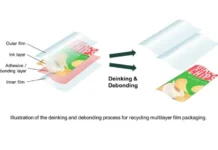
Extensive technical validation underpinned the development process. The UV inks were subjected to rigorous testing to confirm compatibility with standard waste management systems. During recycling, the labels can either be chipped down or separated through flotation. Any residual ink performs in line with other approved UV products, preventing contamination of recovered materials.
Barbara Paterson, Technical Director at Paragon Inks, said: “Creating the UV inks was a technical challenge. They needed to remain detectable by Polytag readers across a wide range of colours, substrates, and packaging formats, even after packaging has been crushed or otherwise processed. At the same time, the inks had to meet strict food-safety and environmental requirements. Two years of development, testing, and iterative validation went into delivering a solution that is reliable, safe, and fully compatible with existing waste management operations.”
Operational results are already visible. Labels produced by Saica Flex using Paragon Ink’s products are currently applied to Waitrose milk cartons and are being detected by Polytag systems in recycling facilities, providing the brand with enhanced transparency and insight into packaging performance, supported by live verifiable proof of recycling.
“Seeing the labels generate real data in a live waste stream validates all the work that went into development,” said Martin Fowler, Global Sales Director at Paragon Inks. “It proves the system works as intended, and this is just the beginning – the potential for other products and sectors is enormous.”