
























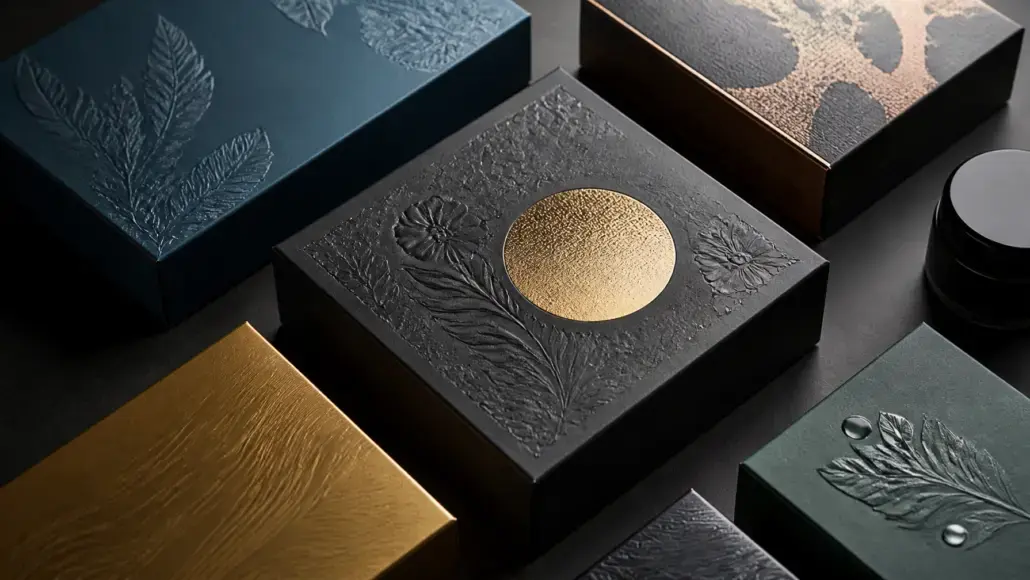

Premium packaging has always been a tooling business. Hot foil stamping needs engraved dies, embossing needs matched male and female tooling, and spot varnish needs plates, screens or dedicated coating units set up for each design. Every effect carried a fixed cost that had to be amortised across the run, so premium treatments belonged on flagship SKUs with the volumes to absorb them. That constraint is dissolving. A generation of digital finishing equipment applies foil, varnish, relief and texture directly from digital files, with no dies, no plates and almost no setup, and converters are discovering that digital embellishment opens a commercial territory that analog finishing never reached.
The technology matters, but the business model matters more. Digital embellishment changes who can afford premium effects, in what quantities, on what timelines, and it is reshaping how converters sell finishing, from a cost line inside a print job to a service with its own margin.
Why Premium Effects Were a Volume Business
Under the conventional model, the economics of embellishment favoured scale. A foil die might cost several hundred pounds and take days to produce; setting up a stamping unit consumed press time and generated setup waste. Those fixed costs meant a premium effect was only rational on runs in the thousands or tens of thousands, and the brand had to commit early, because artwork changes after tooling was cut meant new tooling. The premium route also lived downstream of the press, adding a second pass through separate finishing equipment, more handling and more schedule friction.
The result was a two-tier market. High-volume brands wrapped their hero products in foil, embossing and textured varnish, while smaller brands and secondary SKUs settled for printed substitutes: gold ink instead of foil, high-gloss flood varnish instead of spot effects. The printed substitutes were cheap but visibly less rich, which is precisely what premium packaging is supposed to communicate. Consumers notice the difference on shelf, and brand designers have long wanted the real effects at quantities their product lines actually support.
Folding cartons carried the same logic. Premium cartons for cosmetics, spirits and confectionery justified tooling because volumes were high and product lives were long, but mid-market brands in the same categories faced a stark choice: pay for tooling they could not amortise, or ship packaging that looked ordinary next to competitors. The gap between what designers drew and what the budget allowed became a permanent negotiation, and the compromise usually erased exactly the details that made a pack feel premium.
The Digital Toolkit Reaching Production Floors
Digital finishing equipment now covers the effects that once required tooling, and converters are assembling them into production-ready offerings:
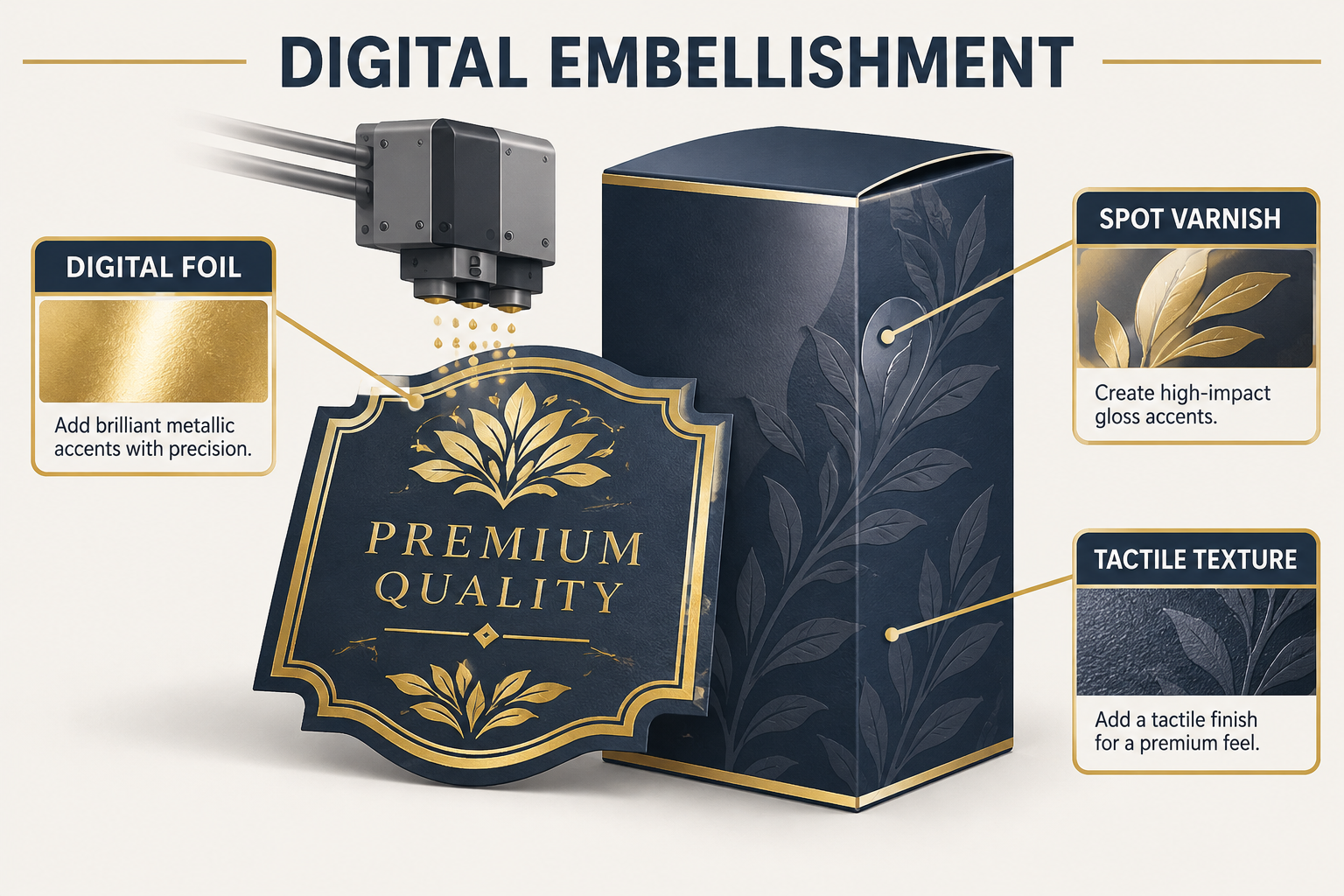
- Inkjet-applied spot varnish, including high-build and raised finishes that create genuine tactile texture from a print engine rather than a screen.
- Digital metal and foil transfer, where foil is laminated over digitally printed adhesive images, delivering metallic effects with no die and file-level precision.
- Raised foil and toner-based processes that combine digital colour, adhesion and foil lamination to produce dimensional, metallic accents in one nearline operation.
- Registration-free overlay effects, where designs can be revised or versioned in software and the change appears on the next sheet, without any tooling event.
The common thread is file-driven production. Effects live in the artwork as data, so personalisation, seasonal versions and regional variants carry no tooling cost, and late-stage design changes are a software edit rather than a die order. Nearline finishing machines apply these effects to sheets or rolls produced on any press, while a growing number of inline configurations apply them in a single pass alongside digital printing.
Where the Margin Actually Sits
For converters, the commercial logic of digital embellishment rests on removing the fixed-cost barrier that kept premium work scarce. A short run of gift cartons for a boutique spirits brand, previously quoted with a foil die amortised across five hundred units, becomes viable when the effect is applied digitally with no die at all. Craft brands, seasonal editions, luxury secondary packaging and personalised promotional runs all move from impossible to profitable territory.
Margin sits in the effect itself. Finishing commands better margins than process printing because it is closer to the brand’s visible value, and brands pay real premiums for genuine metallic and tactile quality on shelf. Digital application also turns speed into revenue: a versioned campaign that would wait weeks for tooling can ship in days, and brands under launch pressure pay for that responsiveness.
There is a defensive benefit as well. Converters who add digital finishing protect their existing premium accounts from specialist finishers and in-house digital print bureaus, while giving their sales teams a differentiated service to lead with. Several converters report that embellishment capability, quoted as a distinct service with samples and a design-support offer, wins print work they would otherwise have lost on price alone.
Seasonality illustrates the shift. Brands that ran a festive edition once every few years, sharing tooling or dropping the idea entirely, can now treat seasonal effects as an annual programme, because each year’s artwork applies to fresh files with no tooling legacy. Personalised runs, where individual packs carry names or serial messages, are entirely digital territory. Neither application existed economically under the tooling model, and together they convert finishing from a cost centre into a recurring revenue stream.
Equipment economics have improved alongside the offer. Nearline digital finishing machines have fallen in price as adoption spreads, while service models, including usage-based consumable arrangements, lower the entry barrier for smaller converters. For plants evaluating the investment, the reference questions are familiar from other digital transitions: what share of the current order book becomes addressable, what premium the effects command on shelf, and how quickly sampling and design support convert interest into signed orders.
Quality, Consistency and the Proofing Question
Digital does not remove quality obligations; it changes their shape. Foil applied digitally must match the metallic appearance brand designers expect from hot stamping, and consistency across the run, and across subsequent runs, becomes a colour-management task for the metallic channel as much as for the four-colour process. High-build varnish needs controlled laydown and curing so texture is uniform and durable through conversion, gluing and distribution scuff.
Proofing is the discipline converters most often underestimate. Brands accustomed to stamped foil proofs need samples of the digital equivalent before committing, and differences in brilliance, sharpness of fine detail and edge definition must be shown honestly. The converters winning this work build a sampling programme into the sales process, maintaining reference sheets that show each effect on representative substrates. Adhesion testing matters too, since foil and varnish must survive subsequent converting steps, from folding and gluing to refrigerated environments, and failures at that stage cost more than the effect ever earned.
Durability testing extends beyond the shelf. Embellished packs travel through case packing, refrigeration, humidity and handling, and a texture that feels luxurious in the studio must survive the supply chain without flaking, dulling or transferring. Converters run effects through the same transit trials as the substrate itself, and the designers who understand those limits write artwork that looks premium and ships intact. Curing chemistry deserves specific attention too: under-cured varnish can off-gas, block in the stack or lose build height, so the plant’s curing parameters become part of the job specification rather than an operator default.
How Converters Are Building the Offer
Successful adopters treat digital embellishment as a service platform rather than a machine purchase. The offer begins with education: brand designers often do not know what is now possible without tooling, so converters lead with sample kits, design workshops and rapid mockups that turn the capability into briefs. Pricing follows a new logic, based on coverage and complexity rather than amortised tooling, which rewards clean file preparation and creates an incentive to help customers design for digital from the start.
The adoption curve echoes the one that carried hybrid label presses into mainstream converting: a digital unit added to proven infrastructure converts a cost-limited specialty into an everyday service. Plants already running digital printing find embellishment a natural extension of the same data-driven workflow, while conventional plants add nearline finishing equipment to upgrade output from any press. The skills shift is modest but real, centred on finishing operators learning digital process control and prepress teams learning to build effect layers into artwork correctly.
Premium packaging demand continues to grow as brands fight for shelf attention and unboxing moments carry social-media value, while the run lengths behind that demand keep fragmenting. Digital embellishment sits exactly at that intersection: premium effects, short runs, fast turnarounds and file-driven flexibility. For converters, it is one of the clearest current routes from commodity printing margin to value-added service revenue, and the plants building the offer now are setting the terms on which the rest of the market will have to compete.