





















Packaging printers face a squeeze from both ends of the profit-and-loss account. On the revenue side, customers resist price increases, order books fragment into ever-shorter runs, and each job carries roughly the same administrative and setup overhead as the large orders it replaced. On the cost side, experienced prepress operators and press technicians are retiring faster than replacements arrive, and the training pipeline for traditional print crafts has thinned. Squeezed from both directions, margins tighten and error rates rise, and the plants that absorb this pressure most successfully are doing it with software rather than headcount. Customer expectations tighten the screw further. Brands now ask packaging printers for shorter lead times on the fragmented order book, real-time status visibility and error-free artwork handling, all of which assume data flowing between systems rather than between inboxes. A plant that answers a status query in hours because someone had to walk the floor is spending scarce skilled time on work a portal would do for free, and the brands noticing the difference are consolidating volume with the suppliers whose systems respond instantly.
Print workflow automation is the discipline of removing manual handoffs from the moment a job enters the plant to the moment it leaves dispatch. In packaging, where artwork is complex, tolerances are strict and every job is customer-specific, the automation opportunity is larger than in most printing segments, and the payback is increasingly visible in the numbers.
Where Margin and Skills Pressures Intersect
The two pressures compound each other. Fragmented order books multiply the number of jobs a plant processes, and each job needs intake, preflight, imposition, proofing, RIP, scheduling and documentation. When those steps depend on skilled manual work, more jobs means either more skilled people, who are hard to find, or more delays and mistakes, which cost margin. A plant can hire its way out for a while, but the labour market has other ideas: print trades training has contracted, senior prepress operators retire with decades of undocumented knowledge, and competitors in other industries bid for the same numerate, systems-capable staff.
The margin arithmetic is unforgiving. In a typical packaging plant, the touchpoints around a job, from customer service re-keying specifications to an operator manually stepping and repeating labels, consume more paid hours than the printing itself on short runs. Every manual touchpoint is also a defect opportunity, and a mis-imposed carton or a wrong die line discovered late can destroy the job’s entire contribution. Automation attacks both problems at once: fewer touchpoints mean fewer paid hours and fewer chances for human error.
Automating the Prepress Bottleneck
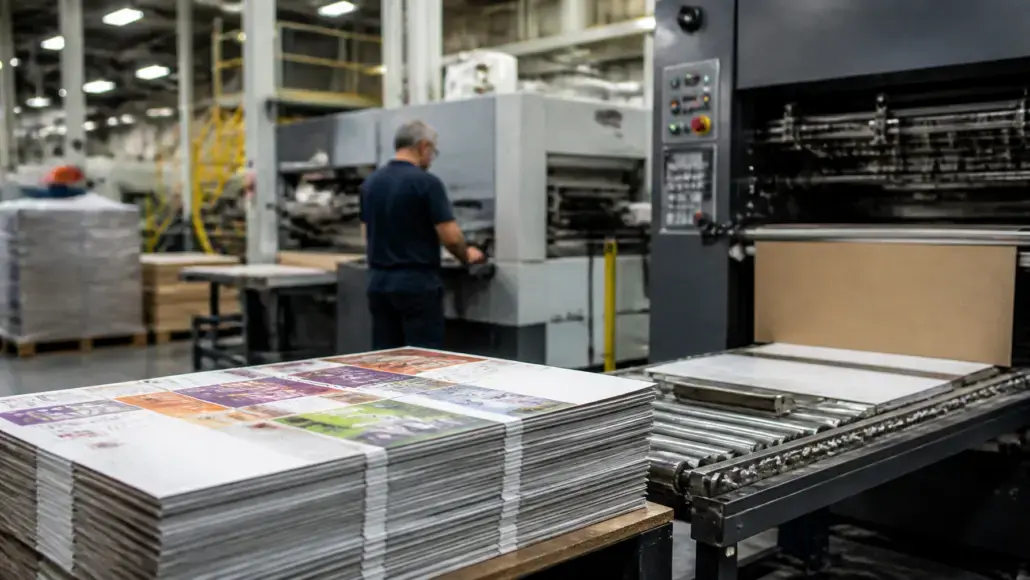
Prepress is where automation pays first, because it is where volume and skill intensity collide. Modern workflow suites take an incoming job through a scripted pipeline: automated preflight checks files against customer-specific rules, extracts specifications, fixes common faults and flags genuine exceptions to a human. Imposition, step-and-repeat and layout for labels, folding cartons and flexible packaging are generated from templates, including nesting and ganging logic that fills the sheet or web efficiently across mixed jobs.
Colour automation has matured in parallel. Device profiling, characterisation and ink key presets flow from the workflow into press consoles, so a job arrives at the press with colour targets already loaded, cutting makeready from an operator’s judgement call into a verified starting point. Proofing runs through the same pipeline, with contract proofs generated, tracked and versioned automatically against the approved artwork file, closing the loop between customer sign-off and press output.
The measurable effect is throughput per prepress operator. Plants adopting scripted intake and automated imposition routinely report that the same team handles substantially more jobs per week, with fewer errors escaping to press, and that the remaining human work concentrates on genuine exceptions, which is where skilled judgement adds the most value.
Exception handling improves in the process. Because automated pipelines log every decision, the plant gains a data trail showing which file problems recur, which customer needs artwork coaching and which templates fail most often. That visibility turns prepress management from firefighting into engineering: fix the recurring fault once in the template and every future job inherits the fix. The plants best positioned for the coming years treat print workflow automation as core infrastructure, budgeted and measured like any other production asset rather than an optional software purchase.
Connecting Estimating, Scheduling and the Shop Floor
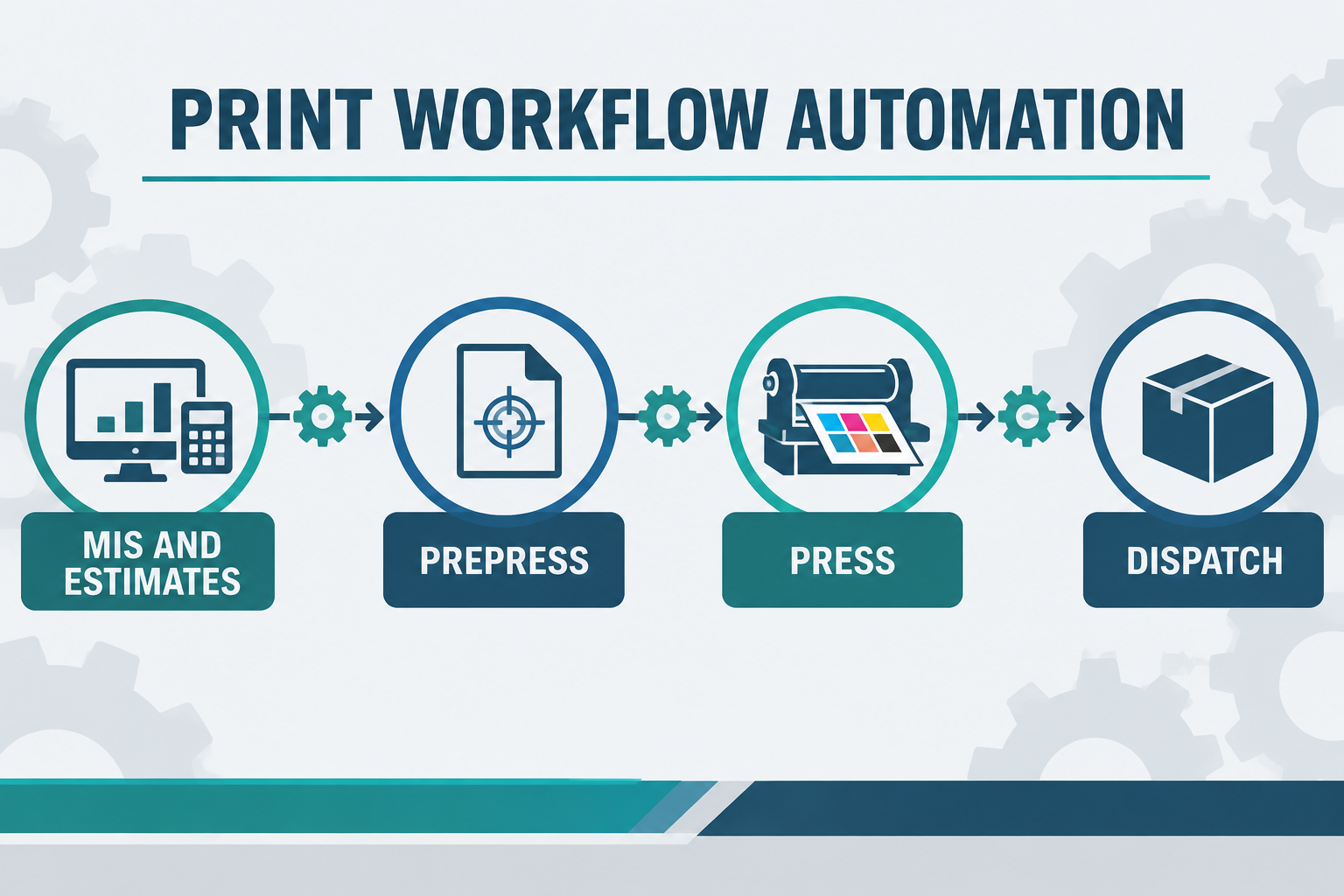
The second stage of automation reaches beyond prepress into the systems that plan and account for work. Mature packaging plants connect the chain end to end:
- Estimating and order intake feed job specifications into the workflow directly, eliminating re-keying and the transcription errors that follow it.
- Scheduling boards pull real-time status from presses and finishing units, sequencing jobs by due date, substrate and changeover cost instead of by an operator’s memory.
- Shop-floor terminals capture actual setup, run and downtime against the estimate, giving managers the variance data that makes the next estimate more accurate.
- Customer portals deliver status, proofs and approvals online, removing the phone-and-email loop that consumed customer service hours.
The integration work is unglamorous but decisive. Data standards between MIS and workflow systems, disciplined naming and job structures, and honest capture of actual times are what separate plants that see real payback from those that bought software and kept working as before. New press technologies sharpen the case further: single-pass inkjet, including inkjet corrugated printing, strips out many conventional makeready steps but assumes a continuous, automated flow of press-ready data, so the front end, not the press hall, becomes the true bottleneck in an unautomated plant.
Skills: Redeploying People Rather Than Replacing Them
The automation story in packaging printing is not a headcount story. The constraint the industry faces is shortage, not surplus, and automation is the mechanism that makes scarce skills go further. When intake, preflight and imposition run on scripts, the plant needs fewer people for repetitive correction and more people for judgement: managing exceptions, improving templates and maintaining the automation itself. Veteran operators’ knowledge, previously applied job by job at the light table, gets encoded into rules and templates where it serves every job, including after retirement.
Training times compress as well. A new hire working within an automated pipeline learns the plant’s process rather than a catalogue of manual techniques, reaching productive independence in weeks instead of years. That matters in a labour market where the plants competing for talent are the ones offering modern, data-driven roles rather than repetitive correction work. Plants also report lower stress on shift patterns, because automation runs the overnight and weekend job flow that manual staffing made expensive to cover. Job satisfaction usually rises with the change, because correction work is tedious and judgement work is not, and plants cite retention as an unexpected benefit of automation programmes.
Sequencing the Investment and Proving Payback
Successful implementations follow a deliberate sequence rather than a single big-bang purchase. Most plants start at intake, where automated preflight and data capture eliminate the most re-keying per pound spent, then move to imposition and RIP automation, then scheduling integration, then customer portals. Measuring before and after is essential: the plants that prove payback count touchpoints per job, elapsed time from order to press-ready, first-pass yield and estimate-versus-actual variance, and they publish those numbers internally so the automation is judged on evidence.
Vendor selection carries its own risks. Workflow suites differ in how well they handle packaging-specific structures, from folding carton die lines to label ganging and flexible packaging nesting, and a generic graphic-arts tool can disappoint. Converters weigh packaging references heavily, along with integration support for their existing MIS, and they resist configurations that lock job data inside one vendor’s silo. The safer pattern is staged adoption with each phase independently measurable, so a disappointing module can be corrected before the next one depends on it. Vendor ecosystems are consolidating around this sequence as well: workflow suppliers now ship packaging-specific templates, MIS vendors expose cleaner interfaces, and press manufacturers embed the hooks that let automated systems preset colour and substrate automatically. The integration cost that deterred plants five years ago is falling, and the remaining differentiator is organisational discipline: clean data, measured processes and a management team willing to change how work flows, not just which software is installed. Training the team on the new flow, and updating standard operating procedures as each phase lands, keeps the automation aligned with how the plant actually works rather than how a vendor assumed it would.
The direction of the market is clear. Margin pressure will not relent while order books keep fragmenting, and the skills gap will widen as the senior generation exits. Print workflow automation is how packaging printers convert that squeeze into an operating advantage: lower cost per job, faster onboarding of new work, fewer errors reaching the press and a workforce redeployed from repetitive correction to valuable judgement. Plants that industrialise their workflow now are setting the cost baseline the rest of the market will have to chase.