






















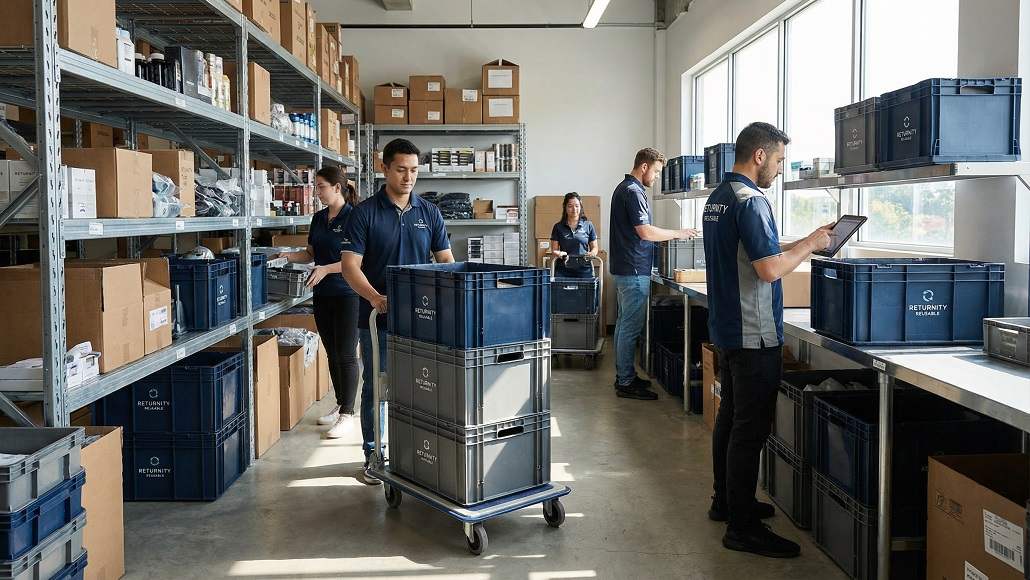

A major national retail chain has adopted The Last Box, Returnity’s reusable packaging boxes, across thousands of its highest-volume locations, marking a large-scale shift in how store backrooms handle fulfillment and logistics. The deployment targets stores facing growing pressure from ecommerce returns, ship-from-store operations, same-day pickup, and seasonal demand spikes.
The system replaces disposable cardboard and other outdated packaging with durable containers designed to circulate through distribution centers and stores. Unlike single-use materials, The Last Box is built to remain in rotation across multiple workflows, including inbound deliveries, internal transfers, order staging, and restocking, while reducing packaging waste and maintaining durability. Within months, the retailer deployed more than 100,000 units, scaling rapidly as associate demand increased and operational impact became evident across high-volume fulfillment activities.
The adoption reflects broader strains on retail backrooms, which have taken on functions far beyond their original design without corresponding updates to layout or tools. “Retail backrooms weren’t built to be fulfillment centers, but that’s what they’ve become,” said Mike Newman, CEO of Returnity. “Teams are managing more products with less space and under tighter timelines. The Last Box brings structure to that complexity and reduces material waste along the way.”
The reusable containers support consistent handling as they move between distribution centers and stores, helping standardize processes that were previously managed with packaging never intended for modern retail use. Other national retailers piloting the system have reported similar outcomes, citing improved inventory handling, fewer damaged or lost goods, and less time spent managing excess cardboard.
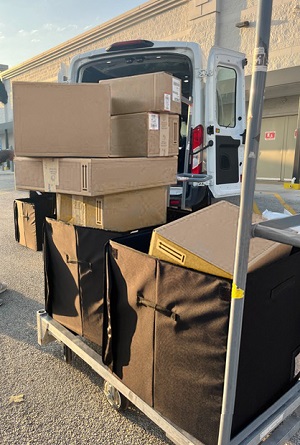
In many locations, The Last Box has become embedded in daily store operations. Retail teams use it to transport and stage internal parcels from distribution centers, streamline pick-and-pack activities for curbside and local delivery, and manage outbound transfers and returns. The impact is particularly visible in modern fulfillment locations that rely on personal-vehicle delivery networks, where limited space and rapid turnover heighten the risk of inefficiencies.
“Some stores were staging orders in hallways or converting small offices just to keep up,” Newman added. “This isn’t just a packaging issue. It’s a systems issue, and better tools are helping retailers restore flow and efficiency.”
As retailers continue shifting toward circular systems and hybrid fulfillment models, the reusable packaging approach is positioned as a scalable option for addressing operational constraints without expanding physical footprints.