


























The Thin Green Line: Lightweight Bottles and Cans Redefine Packaging
In the industrial world, sometimes the greatest impact comes from what is taken away. The movement toward lightweight bottles and cans is a testament to the power of “less is more,” where the strategic reduction of material mass is driving a global shift toward sustainability and operational efficiency. This is not a simple case of making things thinner; it is a complex feat of engineering that requires a deep understanding of structural mechanics, material science, and high-speed manufacturing. As beverage brands look for ways to meet their ambitious carbon reduction goals, the optimization of their primary containers has become a top priority. It is a quest for the perfect balance between minimal weight and maximal performance.
The Engineering Behind Material Reduction
The primary challenge in creating lightweight bottles and cans is maintaining the structural integrity of the container under extreme conditions. A beverage can, for example, must be able to withstand the internal pressure of carbonation while also supporting the weight of several other cans stacked on top of it during transport. Engineers achieve this by using “finite element analysis” (FEA) to simulate how a container will react to different stresses. This allows them to identify exactly where the material is doing the most work and where it can be safely removed. It is a process of refinement that strips away the unnecessary to reveal the essential.
In the world of aluminum cans, this has led to the development of “necking” technology, where the top of the can is made narrower than the body. This reduces the amount of metal needed for the lid, which is the most expensive and material-heavy part of the container. For PET bottles, lightweight bottles and cans often feature intricate ribbing patterns or specially designed bases that provide rigidity even when the walls of the bottle are as thin as a few tenths of a millimeter. This precision engineering ensures that the product remains safe and functional throughout its entire lifecycle. Every gram saved is a victory for both the engineer and the environment.
The Economic Drivers of Lightweighting
While the environmental benefits of lightweight bottles and cans are significant, the economic incentives are equally compelling. In high-volume beverage production, even a tiny reduction in the weight of a single container can lead to massive cost savings. For a company that produces billions of units a year, saving just one gram of aluminum or plastic per unit can equate to millions of dollars in avoided material costs. These savings can then be reinvested into further innovation or used to offset the rising costs of raw materials. It is a strategy that aligns profitability with responsibility.
Furthermore, lightweighting has a transformative effect on logistics. A lighter product is cheaper to ship, as trucks can carry more units without exceeding weight limits, or conversely, use less fuel to carry the same number of units. This reduction in “ton-miles” is a critical metric for supply chain managers looking to optimize their operations. Lightweight bottles and cans are essentially a way to “ship less air” and more product, making the entire distribution network more efficient and resilient. It reduces the logistical friction that can slow down business growth and increase consumer prices.
Environmental Impact and Carbon Footprint Reduction
The environmental case for lightweight bottles and cans is centered on the reduction of the “embodied carbon” of the packaging. Producing aluminum and plastic is energy-intensive, and the more material that is used, the higher the carbon footprint of the container. By using less material, brands are directly reducing the amount of energy and water consumed during the manufacturing process. This is a crucial step toward achieving “Net Zero” emissions and meeting the expectations of increasingly eco-conscious consumers. It represents a tangible commitment to the health of the planet that goes beyond mere rhetoric.
Moreover, lightweighting facilitates the move toward a circular economy. A lighter container requires less energy to recycle, and because the materials used are often of higher purity to maintain strength at lower thicknesses, they are easier to process in modern recycling facilities. Lightweight bottles and cans are a tangible example of how industrial design can be used to mitigate the environmental impact of mass consumption, proving that economic growth and ecological stewardship can go hand-in-hand. They are a physical manifestation of the industry’s progress toward a more sustainable future.
Overcoming the Challenges of High-Speed Production
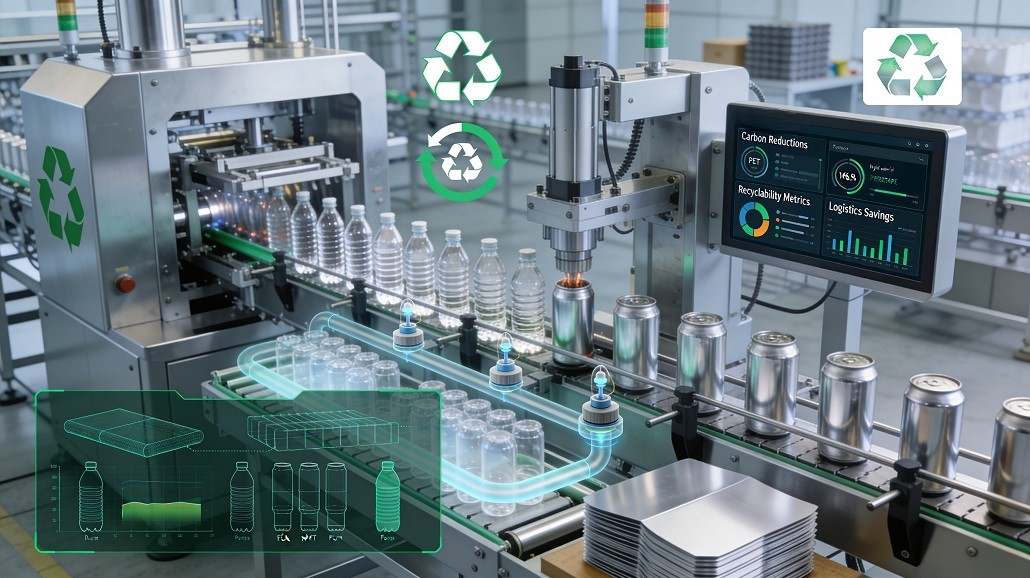
One of the biggest hurdles in adopting lightweight bottles and cans is the compatibility with existing production lines. Traditional filling and packaging equipment were designed to handle heavier, more rigid containers. Lightweight bottles, in particular, can be prone to “buckling” or “toppling” when subjected to the high speeds and forces of a modern bottling line. To overcome this, manufacturers are investing in advanced handling systems that use air-cushioned conveyors and vacuum-assisted transfer modules. These technologies provide the “gentle” touch required to manage ultra-light containers without compromising throughput.
These systems provide a “gentle” touch that protects the fragile containers while allowing the line to run at peak efficiency. Additionally, the use of precision torque control during the capping process ensures that the bottle is sealed tightly without crushing the neck. This evolution of the production environment is what makes lightweight bottles and cans a viable reality for global brands. It is a reminder that innovation in the product must be matched by innovation in the process. The factory of the future must be as agile and sophisticated as the containers it produces.
The Consumer Perception of Lightness
There is also a psychological component to the shift toward lightweight bottles and cans. In the past, “heavy” was often associated with “quality” or “premium.” However, as consumer awareness of environmental issues grows, lightness is becoming a badge of honor. Brands are increasingly using their lightweight packaging as a marketing tool, explaining the benefits to the consumer and encouraging them to feel good about their purchase. A lighter bottle is easier to carry, easier to pour, and takes up less space in the recycling bin all of which enhance the user experience. It turns a functional necessity into a sustainable choice.
As we look to the future, we can expect to see even more radical approaches to lightweighting. This might include the use of hybrid materials that combine the strength of metal with the lightness of polymers, or “3D-printed” structures that optimize material placement on a microscopic scale. The journey of lightweight bottles and cans is far from over; it is a continuous process of refinement that reflects our deepening commitment to a more efficient and sustainable world. Every step toward a lighter container is a step toward a better planet.
The Role of Material Purity and Recyclability
A critical aspect of lightweight bottles and cans is the reliance on high-quality, pure materials. To achieve structural integrity with less mass, the material must be free of defects and contaminants. This drive for purity also makes the containers more valuable in the recycling stream. High-grade rPET (recycled PET) and aluminum are in high demand, and lightweight containers provide a steady source of these valuable resources. In this way, the move toward lightness is not just about using less; it is about using better, creating a virtuous cycle that supports the long-term health of the packaging industry.
In conclusion, the rise of lightweight bottles and cans represents a masterful blend of science, economics, and ethics. By challenging the status quo and asking “how little do we really need,” the beverage industry is setting a new standard for responsible manufacturing. These thin, high-tech containers are the front line of the battle for a more sustainable future, proving that every gram counts in our effort to protect the planet while serving the needs of a growing global population. The thin green line of lightweighting is the path toward a more responsible and rewarding beverage industry.
The Global Standard for Sustainable Logistics
Looking ahead, lightweight bottles and cans will become the global standard for all beverage categories. From everyday water bottles to premium juices and alcoholic beverages, the drive for material efficiency will leave no corner of the industry untouched. This global adoption will create a more uniform and efficient logistics network, where every container is optimized for both its internal product and its external journey. It is the ultimate expression of industrial harmony, where every element of the supply chain works together to achieve the highest possible standard of performance and sustainability.