














The global packaging industry is currently witnessing a realignment of priorities that happens once in a generation. For decades, the market was dominated by a relentless focus on cost-reduction and the exploitation of petroleum-based polymers. However, we have entered a new era where “value” is increasingly defined by environmental integrity, social responsibility, and long-term resilience. This transformation is at the heart of the market demand shifts driving moulded fibre packaging growth. From the boardroom of multinational corporations to the aisles of local supermarkets, the preference for renewable, compostable, and plastic-free materials is no longer a niche trend it is a powerful market force that is reshaping the competitive landscape of the $1 trillion packaging sector.
This growth is not a bubble; it is a structural shift driven by three primary pillars: the conscious consumer, the ESG-focused investor, and the forward-thinking brand strategist. These stakeholders are collectively moving away from the “linear” model of consumption toward a “circular” one, where moulded fibre is seen as the ideal material to close the loop. As a result, the moulded fibre packaging market is experiencing unprecedented rates of compound annual growth, attracting billions of dollars in new investment for manufacturing infrastructure and R&D. For any business in the packaging supply chain, understanding these demand shifts is the key to navigating the risks and opportunities of the next decade.
The Rise of the “Conscious Consumer” and the Haptic Shift
The most visible driver of the moulded fibre packaging market is the changing behavior of the global consumer. A new generation of shoppers, led by Millennials and Gen Z, is actively voting with their wallets for brands that demonstrate a genuine commitment to the planet. These consumers are not just looking for a “recyclable” logo; they are looking for tangible evidence of sustainability. The tactile, organic feel of moulded fibre provides that evidence in a way that plastic never can. This “haptic shift” where the physical sensation of the material conveys a message of environmental care is a major psychological driver of sustainable packaging demand.
Market research consistently shows that a significant majority of consumers are willing to pay a premium for products with eco-friendly packaging. Furthermore, many consumers now report “packaging guilt” when they receive products encased in non-recyclable plastic, a sentiment that can lead to negative brand associations. In contrast, moulded fibre is viewed as a “hero material” that is easy to dispose of and inherently benign. This positive consumer sentiment is forcing retailers to demand more fibre-based solutions from their suppliers, creating a powerful “pull” effect through the entire distribution chain. In this environment, the material choice is no longer just about protection; it is a critical component of the brand’s emotional connection with its audience.
Corporate ESG Mandates and the Decarbonization Push
While consumer pressure is the most visible driver, the internal mandates of large corporations are perhaps the most powerful. Almost every major global brand has now committed to ambitious ESG (Environmental, Social, and Governance) goals, which often include a complete phase-out of single-use plastics and a significant reduction in scope 3 carbon emissions by 2030 or 2040. Moulded fibre is the “low-hanging fruit” for meeting these targets. Because it is bio-based and has a established recycling pathway, it offers an immediate and measurable way to reduce a company’s environmental impact.
This decarbonization push is driving a massive reallocation of corporate procurement budgets toward fibre packaging growth. Brands are looking to de-risk their supply chains by moving away from volatile, oil-dependent plastics toward stable, renewable fibre streams. Furthermore, as companies are increasingly required to report on their carbon footprint to investors and regulators, the lower “embodied carbon” of moulded fibre becomes a significant financial asset. By switching to fibre, companies can show clear, data-driven progress toward their net-zero goals, which in turn improves their ESG ratings and access to capital. In the modern financial world, sustainability is a marker of operational excellence and long-term viability.
The “Amazon Effect” and the Transformation of Logistics
The explosion of e-commerce, often referred to as the “Amazon Effect,” has fundamentally changed the type of packaging the market demands. In a retail store, the package must attract the eye; in e-commerce, the package must survive the journey. This shift in focus has created a huge opening for moulded fibre. As e-commerce platforms seek to reduce their shipping volumes and eliminate the mess and waste of plastic void-fill, they are turning to custom-engineered fibre inserts. These inserts are lightweight, durable, and fully recyclable the “holy trinity” of e-commerce logistics.
This logistical demand is not just about the final delivery to the consumer; it is also about the entire B2B supply chain. Manufacturers are increasingly using moulded fibre to protect high-value components during transport between factories. This reduces damage rates and eliminates the need for expensive and environmentally damaging cleaning of returnable plastic crates. The ability of fibre to be “right-sized” and designed for extreme nestability makes it a winner in the high-efficiency world of modern logistics. As e-commerce continues to grow as a percentage of total retail, the demand for high-performance fibre solutions will only continue to accelerate, making it a cornerstone of the eco packaging trends of the 21st century.
Regional Growth and the Globalization of Fibre
While the demand for sustainable packaging was initially led by Western Europe and North America, it has now become a truly global phenomenon. The Asia-Pacific region, in particular, is seeing an explosion in moulded fibre manufacturing capacity. This is driven by a combination of domestic regulatory pressure such as China’s “zero-waste city” initiatives and India’s plastic bans and the region’s role as the “factory of the world.” Global brands are demanding that their Asian suppliers move away from plastic to ensure their products are compliant with environmental laws in export markets.
This globalization of the moulded fibre packaging market is leading to a more mature and resilient industry. We are seeing the development of regional “fibre hubs” that utilize local agricultural waste streams such as bagasse in India or bamboo in China to create high-quality packaging. This localized production reduces transportation costs and further lowers the carbon footprint of the material. As the technology and infrastructure become more widespread, the “cost barrier” that once limited fibre to niche applications is disappearing, allowing it to compete with plastic in every geographic market. The industry is moving from a localized craft to a globally standardized industrial powerhouse.
Technological Maturity and the Diversification of Use
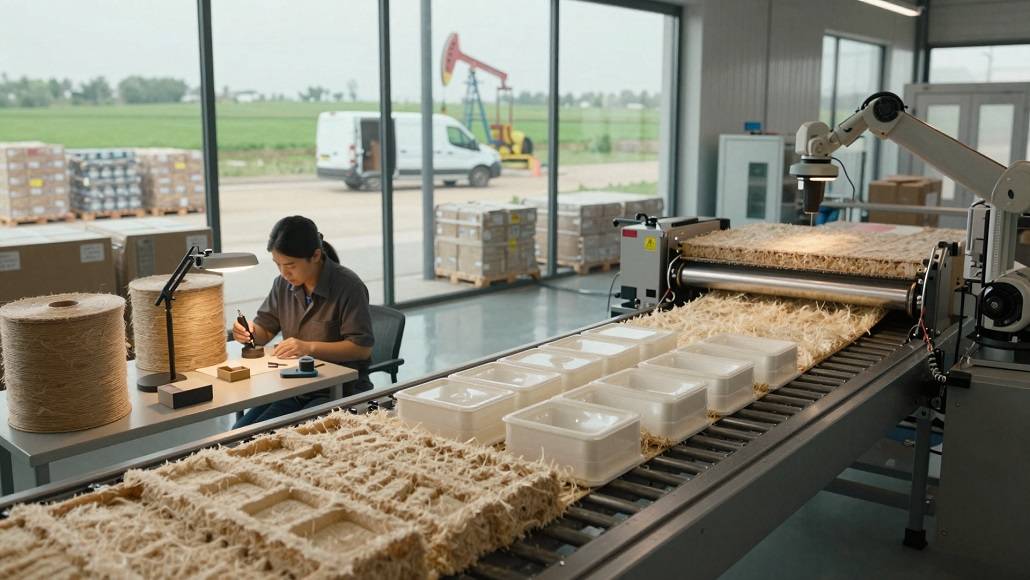
Another key shift driving market growth is the technological maturity of the fibre moulding process. In the past, fibre was limited by its rough finish and lack of precision. However, the advent of high-speed thermoforming and dry-moulding technology has expanded the “addressable market” for fibre into premium sectors like cosmetics, pharmaceuticals, and luxury spirits. These industries have high standards for aesthetics and moisture protection, which modern fibre technology can now meet. This “market expansion” into high-value categories is significantly increasing the total value of the moulded fibre sector.
We are also seeing the use of fibre in “hybrid” packaging solutions, where it is used to provide structural strength in combination with thin, bio-based barriers. This allows fibre to enter the high-volume beverage and liquid-food markets, traditionally the stronghold of plastic and glass. The ability of the fibre industry to innovate and solve complex engineering challenges is a major factor in its current growth trajectory. As more “proof-of-concept” projects move into full-scale production, the confidence of brand owners is growing, leading to a “bandwagon effect” where companies feel they must adopt fibre to stay competitive.
The Outlook for the Next Decade
As we look toward the future, the packaging industry outlook is one of continued disruption. The transition from plastic to fibre is not a temporary adjustment; it is the beginning of a new era. We expect to see further consolidation in the industry as large paper and pulp companies acquire niche fibre moulding firms to build their “sustainable packaging” portfolios. We also anticipate a surge in “next-generation” fibres derived from seaweed, mycelium, and other non-wood sources that will offer even more specialized properties.
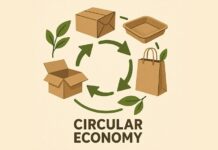
The market demand shifts driving moulded fibre packaging growth are part of a broader “circular revolution” that is re-evaluating our relationship with materials and waste. In a world of increasing resource scarcity and climate instability, the materials that will win are those that can be produced sustainably, perform reliably, and disappear completely at the end of their life. Moulded fibre checks all of these boxes. Its growth is a testament to the fact that when technology, regulation, and consumer desire align, industrial change can happen at an incredible speed. The next ten years will be the decade of the fibre, and the market is only just getting started.