



















Residual oxygen remains the most persistent constraint on packaged food quality. Vacuum sealing and gas flushing remove most of the air in a pack, yet trace oxygen trapped in the headspace or dissolved into the product keeps working against the brand long after the seal closes. Oxygen scavenging films answer that gap by building the scavenging reaction into the packaging material itself, so the pack continues to capture oxygen throughout its shelf life rather than only at the moment of sealing. The technology, commercialized first in Japan and North America, has since entered mainstream film extrusion programs across Europe, and converters now treat it as a standard option for premium chilled and ambient lines. For food manufacturers under pressure to cut synthetic preservatives while meeting longer distribution windows, the film format has become one of the most practical tools available.
Why Residual Oxygen Keeps Limiting Shelf Life
Oxygen damage in packaged food follows thresholds far lower than most consumers assume. Cured meats begin to lose their characteristic color once headspace oxygen rises above roughly half a percent. Beer develops stale and light-struck flavor notes at dissolved oxygen levels measured in single-digit parts per million. Fried snacks surrender crispness as oxidation turns their oils rancid, and vitamins in fortified beverages degrade measurably during storage. Sensitivity varies by category, but the direction is consistent: less residual oxygen translates directly into longer, more stable quality.
The oxygen sources are multiple. Headspace air left after filling, oxygen dissolved into the product during processing, oxygen entering through valves and closures, and oxygen permeating gradually through the packaging wall all contribute to the total burden. Gas flushing addresses the headspace effectively, but it does little for dissolved oxygen, and even the best barrier films cannot stop permeation completely across a six or nine month shelf life.
Loose scavenger sachets solved part of the problem decades ago, and they still perform well in bulk and industrial packs. Their weaknesses are commercial rather than chemical. Sachets complicate high-speed filling lines, carry an accidental ingestion risk that regulators and retailers scrutinize, and generate consumer complaints when they end up in the pantry. Embedding the scavenger into the film removes those frictions while preserving the chemistry that makes the concept work.
How Oxygen Scavenging Films Work at the Material Level
At the core of every design sits a redox reaction that consumes oxygen irreversibly. Iron-based systems dominate the market: fine iron powder dispersed within the polymer matrix oxidizes in the presence of moisture, binding oxygen into inert iron oxides. Ascorbate systems use the oxidation of vitamin C derivatives and suit clear or low-moisture applications. Enzyme-based layers immobilize glucose oxidase and related catalysts, while photoinitiated systems activate only when exposed to light, which gives packers control over when scavenging begins.
Activation control matters because a scavenger that starts working while the film sits in storage wastes its capacity before the pack is ever filled. Moisture-activated systems trigger when the product’s own water activity hydrates the scavenger layer, which makes them well suited to fresh and chilled foods. Light-activated systems stay dormant until the sealing line’s inspection lighting or the retail shelf exposes them. Designers size the scavenger load against the total oxygen burden: headspace volume, dissolved oxygen, expected permeation across the shelf life, and, in respiring products, any oxygen drawn in through membrane patches.
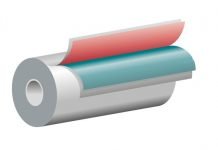
Placement within the film structure is equally deliberate. Multilayer coextrusion allows the scavenger to sit in the sealant layer, where it contacts product moisture, or in a core layer shielded by barrier skins that keep outside oxygen from consuming the capacity prematurely. The scavenging rate is tuned so the pack reaches low residual oxygen within hours or days of filling, then continues mopping up permeation for the remainder of its life.
Permeation matching deserves particular attention in film design. A scavenger sized for a high-barrier laminate will exhaust quickly in a breathable structure, and one sized for a breathable pack may never activate fully inside a near-perfect barrier. Converters therefore model the oxygen ingress of the chosen structure across the target shelf life and specify scavenger capacity with a defined safety margin, a calculation now supported by published test methods and supplier design tools.

Commercial Formats and Integration into Packaging Lines
The market has moved well past a single film type. Converters now offer the scavenging function in several physical formats, each matched to different substrates, machinery and product categories. Understanding the options clarifies where each one fits:
- Coextruded sealant films carry the scavenger in the innermost layer of a flexible pouch or bag, which suits dry foods, powders and snacks running on vertical form-fill-seal equipment.
- Laminated structures position the scavenging adhesive between barrier and print webs, a common choice for retort pouches and premium chilled packs that need higher barrier performance.
- Scavenging lidding films and labels bring the function to rigid trays, where the lidding web carries the capacity while the tray itself remains a standard barrier structure.
- Closure and cap liners serve glass and PET bottles for beer, juice and sauces, capturing oxygen that enters through the closure thread over time.
- Combined structures pair the scavenger with an integrated oxygen indicator, giving quality teams visual confirmation that the system remains active.
Line integration decisions follow from the format. Packers must store unactivated film rolls under defined humidity and light conditions, verify activation timing against their sealing process, and confirm that the scavenger layer does not alter seal windows or hot-tack behavior. None of these adjustments is trivial, but converters have standardized them across hundreds of installations, and changeover typically amounts to revised roll storage protocols and a validation run rather than new machinery.
Performance Evidence and Regulatory Standing
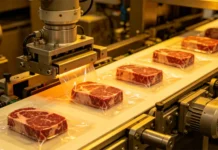
Field results depend on the category, but the pattern across published case work is consistent. In chilled meats and cured products, scavenging lidding systems routinely pull headspace oxygen below a tenth of a percent within a day of sealing and hold it there, protecting color far longer than gas flushing alone. Beer packed with scavenging closure liners shows measurably lower dissolved oxygen after weeks of storage, which brewers associate with slower development of stale flavor notes. In snacks and nuts, oxygen scavenging films have supported shelf-life extensions ranging from several weeks to several months, depending on the barrier structure around them. Manufacturers publish such figures carefully, and packers should treat vendor claims as a starting point for their own storage trials rather than as guarantees.
Measurement practice underpins those results. Headspace analyzers based on fluorescence-quenching oxygen sensors allow packers to verify residual oxygen non-destructively at line speed, and luminescent patches printed inside the pack give continuous readings through transparent windows. Such tools matter because scavenging performance varies with product water activity and storage temperature, and a capacity rating measured at room temperature says little about behavior inside a chilled display cabinet. Packers converting to oxygen scavenging films therefore build oxygen measurement into their validation protocols from the first trial onward, sampling packs on a defined frequency and recording results against specification.
The regulatory picture is comparatively mature in the two largest markets. Iron-based scavenging systems have held clear status in the United States for years, with the components accepted as food-contact substances under FDA processes. In the European Union, scavenging films fall under Framework Regulation (EC) No 1935/2004 and the plastics implementing measures, with the scavenging function subject to migration limits and, where a function is claimed, to the requirement that it be demonstrable and technically justified. Labeling rules require truthful communication: a pack that scavenges oxygen does not need special consumer warnings, but any front-of-pack shelf-life claim must be substantiated. Packers adding scavenging layers to structures already approved for their categories typically complete supplementary migration testing on the new layer rather than restarting the approval process.
Adoption Economics and Where the Technology Goes Next
The commercial case rests on arithmetic that varies by brand. A scavenging structure carries a material premium, typically expressed per pack, and that premium must be offset by measurable gains: fewer quality rejections in distribution, a wider shipping radius, longer promotional windows, and reduced reliance on synthetic antioxidants in the recipe. Brands selling premium chilled products through long retail chains generally recover the cost quickly; commodity ambient lines with short shelf lives often do not.
Sustainability teams ask harder questions. The scavenger adds functional mass to the film, and early multilayer structures complicated recyclability. Current development work pushes scavenging capacity into mono-material polyolefin structures so the pack remains recyclable within established streams, and several converters now offer such grades commercially. The volume of scavenger required is small relative to the total film, which softens the impact on material flows.
The next stage of development combines scavenging with condition monitoring. Film structures that both remove oxygen and indicate its presence give retailers an objective freshness signal at the shelf edge, and pilot programs in several European markets are testing that pairing. In chilled protein categories, oxygen scavenging films already work alongside modified atmosphere packaging technologies for meat and seafood, capturing the residual oxygen that gas flushing alone cannot eliminate, and that combination model is likely to extend into prepared meals, dairy and beverage categories as costs continue to fall.