

























As the global industry shifts toward sustainable materials, the primary question from engineers and logistics managers is no longer just “Is it green?” but “Will it work?” The transition from synthetic polymers to cellulose-based solutions depends entirely on the material’s ability to perform under pressure, resist moisture, and maintain its structural integrity throughout the rigors of the supply chain. This is why performance testing and quality in moulded fibre packaging have become the foundation of the industry’s modern growth. Far from being “just paper,” today’s moulded fibre is a sophisticated engineering substrate that must meet rigorous ASTM, ISO, and ISTA standards to ensure it can protect everything from delicate electronics to heavy industrial components and perishable food items.
Maintaining high moulded fibre packaging quality requires a holistic approach that begins with the raw material and extends to the final post-production validation. Because fibre is a natural material, its properties can vary depending on the source whether it is virgin wood pulp, recycled cardboard, or agricultural residues like wheat straw. Quality control must therefore be integrated into every step of the manufacturing process, utilizing advanced sensor technology and automated testing to ensure that every batch of pulp and every finished container meets exact specifications. This commitment to consistency is what allows brands to scale their sustainability efforts with confidence, knowing that their “eco-friendly” choice will not result in a “performance-compromised” reality.
Standardizing Strength: The Engineering of Resilience
The first and most critical test for any protective packaging is its structural strength. In the world of fibre, this is often measured through a series of compression and burst tests. The Edge Crush Test (ECT) and the Box Compression Test (BCT) are essential for determining how much weight a fibre tray can support when stacked in a warehouse. Unlike plastic, which can sometimes “creep” or deform over time under a constant load, high-quality moulded fibre is designed with rigid geometries such as arches and ribs that distribute forces evenly. Performance testing allows engineers to fine-tune these designs, ensuring that the packaging provides maximum protection with the minimum amount of material.
For e-commerce and electronics, shock absorption is the key metric. The industry utilizes standardized “drop tests” and vibration simulations (such as those defined by ISTA 3A) to evaluate how well the fibre cushioning protects the product from the impacts of transit. High-quality moulded fibre has a unique “crumple zone” effect; it can absorb and dissipate energy more effectively than rigid plastics, often protecting delicate components more reliably. By documenting these results through formal packaging performance testing, manufacturers can provide the data-driven assurance that high-end brands require before they make the switch away from traditional foam inserts.
Moisture Management and the Cobb Test
One of the historical “weak points” of fibre-based materials has been their sensitivity to humidity and moisture. However, the modern industry has addressed this through the integration of bio-based sizing agents and surface treatments. The “Cobb Test” is the industry standard for measuring the water absorptiveness of the fibre surface. By exposing the material to a specific amount of water for a set period, testers can determine how much liquid is absorbed. High-quality moulded fibre should achieve a low Cobb value, indicating that it can resist moisture and maintain its strength even in the high-humidity environments of a refrigerated truck or a seaside warehouse.
This focus on moisture resistance is critical for the foodservice and fresh produce sectors. A fibre tray for berries, for example, must be able to withstand the moisture released by the fruit without losing its shape or becoming a breeding ground for mould. Performance testing in this area also involves evaluating the “wicking” effect how quickly liquid moves through the fibre matrix. By optimizing the blend of fibres and additives, manufacturers can create a material that is “breathable” yet “water-repellent,” a dual-performance characteristic that is difficult for plastic to achieve. This level of material science is what defines modern moulded fibre packaging quality.
Consistency in High-Volume Manufacturing
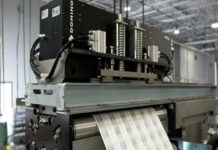
When producing millions of units, the biggest quality challenge is consistency. Small variations in the pulp consistency, the vacuum pressure during forming, or the temperature in the drying oven can lead to deviations in wall thickness and dimensional accuracy. To manage this, leading manufacturers utilize real-time monitoring systems that use laser sensors and high-speed cameras to inspect every piece as it comes off the line. This “inline” quality control allows for immediate adjustments to be made to the production parameters, ensuring that every unit meets the required tolerances.
Dimensional stability is particularly important for automated packaging lines. If a fibre tray is slightly warped or if its dimensions vary by more than a millimeter, it can cause expensive jams in the denesting or sealing equipment. Therefore, packaging validation involves rigorous “fit-for-purpose” testing, where the fibre products are run through the client’s actual production lines to ensure a seamless integration. This “real-world” testing is the final step in proving that sustainable packaging is ready for prime time. By eliminating the “variability risk,” manufacturers can ensure a reliable supply for large-scale use, a key requirement for any global brand.
Supply Chain Reliability and Material Traceability
Quality is not just about the physical product; it is also about the integrity of the supply chain. In the modern regulatory environment, brands must be able to prove the origin of their materials to comply with anti-deforestation and recycling mandates. This is where material traceability becomes a critical component of moulded fibre packaging quality. High-quality manufacturers provide detailed documentation showing where their fibre was sourced, whether it carries FSC (Forest Stewardship Council) certification, and exactly what percentage of recycled content it contains.
This level of transparency is essential for brands that are reporting on their ESG (Environmental, Social, and Governance) progress. Knowing that their packaging is not only high-performing but also ethically sourced and fully compliant with international sustainable packaging standards is a major value-add. It protects the brand from the risk of supply chain scandals and ensures that their sustainability claims are backed by hard data. In this sense, “quality” extends from the microscopic bonding of the fibres to the global network of forestry and recycling that provides the raw material.
Environmental Stress Testing: Beyond the Lab
While standardized laboratory tests are essential, they do not always reflect the “real-world” stresses that packaging will face. Therefore, many manufacturers are now performing “environmental stress testing,” where the moulded fibre is subjected to extreme temperature cycles and varying humidity levels to simulate a global shipping journey for example, from a humid factory in Vietnam to a freezing warehouse in Chicago. By measuring the fibre packaging strength before and after these cycles, engineers can predict the long-term performance of the material and identify any potential points of failure.
This proactive approach to quality ensures that there are no “surprises” when the product reaches the end-user. It also allows for the development of specialized “heavy-duty” fibre grades for particularly demanding applications, such as the shipping of heavy automotive parts or dangerous goods. By pushing the material to its limits in a controlled environment, manufacturers can continue to expand the boundaries of what moulded fibre can achieve. This constant cycle of “test-learn-improve” is what is driving the rapid innovation in the sector, turning “pulp” into a high-performance industrial material.