



















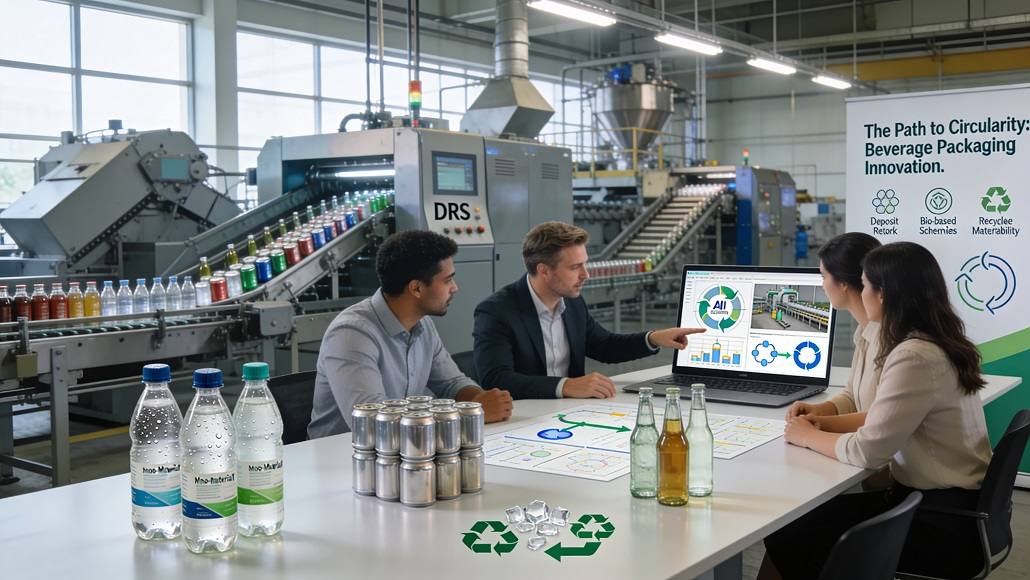
The Path to Circularity: Recyclable Materials Transform Beverage Packaging
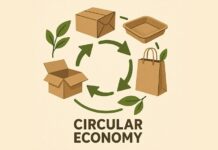
The beverage industry is currently navigating a fundamental shift in its approach to resource management, driven by a growing recognition that the traditional “take-make-waste” model is no longer viable. Recyclable materials beverage packaging is at the center of this transformation, providing the physical foundation for a truly circular economy. As global awareness of plastic pollution and climate change reaches an all-time high, the ability to create, recover, and reuse packaging materials has become a critical indicator of a brand’s long-term health and relevance. This movement is not just about choosing better materials; it is about redesigning the entire lifecycle of the beverage container to ensure that it never becomes waste.
The Rise of Mono-Material Design and High-Purity Substrates
A significant breakthrough in how recyclable materials beverage packaging is being implemented is the move toward mono-material structures. In the past, packaging often consisted of complex layers of different plastics, foils, and coatings that were nearly impossible to separate during the recycling process. This meant that even if a container was “technically” recyclable, it often ended up in a landfill because it was too difficult or expensive to process. Today, the focus is on simplifying the material profile. By using a single type of polymer for the bottle, the cap, and even the label, manufacturers are making it dramatically easier for recycling facilities to recover high-quality resin that can be turned back into new bottles.
This focus on purity is essential for maintaining the value of the recycled material. When different plastics are mixed together, the resulting recycled content (PCR) is often of lower quality and can only be used for “downcycled” products like park benches or construction materials. By prioritizing mono-materials and clear, unpigmented plastics, the beverage industry is ensuring a steady supply of food-grade recycled content that can be reused indefinitely. Recyclable materials beverage packaging is thus turning from a liability into a valuable resource that supports a closed-loop system.
The Evolution of Aluminum and Glass Recyclability
While much of the focus is on plastics, the traditional materials of the beverage industry aluminum and glass are also seeing significant innovation. Aluminum remains one of the most successful examples of recyclable materials beverage packaging, as it is infinitely recyclable without any loss in quality. In fact, nearly 75% of all aluminum ever produced is still in use today. Recent trends are focused on increasing the “recycled content” of new cans and developing new alloys that require less energy to melt and reform. The aluminum can is the original circular package, and its role is expanding as brands move away from single-use plastics.
Glass, another infinitely recyclable material, is being revitalized through “lightweighting” and improved recovery systems. While glass is heavy and energy-intensive to transport, its inert nature and 100% recyclability make it a favorite for premium beverage brands. The industry is now focusing on increasing the use of “cullet” (recycled glass) in the manufacturing process, which significantly lowers the melting temperature and energy consumption of glass furnaces. By strengthening the infrastructure for glass recovery and reuse, recyclable materials beverage packaging is proving that even the oldest materials can be part of a modern, sustainable solution.
The Role of Chemical Recycling and Advanced Recovery Systems
A major catalyst for the success of recyclable materials beverage packaging is the emergence of chemical recycling. Unlike mechanical recycling, which uses heat and pressure to melt plastic, chemical recycling breaks the material down to its original chemical building blocks (monomers). This allows for the removal of dyes, additives, and contaminants that mechanical recycling cannot handle. This means that even heavily soiled or colored plastic can be turned back into virgin-quality material. This technology is a vital safety net that ensures a higher percentage of collected plastic is actually returned to the production loop.
However, the best materials are only as effective as the systems that recover them. Recyclable materials beverage packaging is being supported by a new generation of “smart” recovery systems, including Deposit Return Schemes (DRS) and AI-powered sorting facilities. These systems incentivize consumers to return their containers and use advanced optical sensors to identify and sort materials with incredible speed and accuracy. By improving the quality and quantity of the material collected, these systems are providing the “fuel” for the circular economy, ensuring that the investments in material science are not wasted in the garbage bin.
Consumer Education and the Importance of Transparency
The success of recyclable materials beverage packaging ultimately depends on the participation of the consumer. This has led to a surge in transparent labeling and education campaigns that explain exactly how and where to recycle a specific container. Brands are moving away from vague “recyclable” claims and toward specific instructions, such as “remove cap before recycling” or “rinse bottle for better recovery.” This transparency builds trust and empowers the consumer to be a responsible part of the product’s lifecycle.
Furthermore, the rise of third-party certifications and “impact scores” is helping consumers make more informed choices. When a shopper can see that a bottle is made from 100% recycled material and is 100% recyclable, they are more likely to support that brand. This market pressure is a powerful driver of innovation, as beverage companies realize that sustainability is no longer a “nice-to-have” but a fundamental requirement for brand growth. Recyclable materials beverage packaging is thus becoming a key pillar of consumer-facing brand identity.
The Economic Benefits of a Recyclable Supply Chain
Beyond environmental stewardship, the shift toward recyclable materials beverage packaging is driven by compelling economic logic. As virgin plastic prices remain volatile and carbon taxes become more common, the use of recycled content provides a more stable and cost-effective alternative. Furthermore, by building a closed-loop system, beverage companies are securing their own supply of raw materials, reducing their dependence on global commodity markets and fragile supply chains. The “circular” model is not just greener; it is more resilient and predictable.
Moreover, the transition to recyclable materials is fostering a new era of cross-industry collaboration. Beverage giants are partnering with waste management firms, tech startups, and governments to build the infrastructure needed for a sustainable future. These partnerships are creating jobs, driving investment in local communities, and establishing new standards for industrial efficiency. Recyclable materials beverage packaging is the common thread that is pulling these diverse stakeholders together toward a shared goal of a world without waste.
Future Horizons: Bio-Based Recyclability
The next frontier for recyclable materials beverage packaging is the development of bio-based materials that are also fully recyclable. These “plant-based” plastics offer the double benefit of a lower carbon footprint during production and a clear path to recovery at the end of their life. Researchers are working on resins derived from wood waste and agricultural byproducts that can be integrated into existing PET recycling streams without any negative impact. This represents the ultimate goal of sustainable packaging: a container that is grown from the earth and can be returned to the production cycle indefinitely.
In conclusion, the transformation of beverage packaging through recyclable materials is a journey toward a more responsible and efficient way of life. By simplifying designs, investing in recovery technology, and engaging with consumers, the industry is proving that it is possible to deliver high-quality products while protecting the planet. Recyclable materials beverage packaging is not just a trend; it is the blueprint for the future of global commerce, where every container is a valuable asset in a never-ending cycle of use and renewal. The transition is complex, but the momentum is undeniable, and the rewards for the industry and the environment are profound.

