




















The Evolution of Sustainable Beverage Packaging Innovation in the Modern Era
The global beverage landscape is currently navigating one of its most transformative eras, defined by a shift from the traditional linear consumption model to a sophisticated circular economy. This evolution is not merely a response to environmental pressure but a strategic recalibration of how brands interact with consumers and ecosystems. Sustainable beverage packaging innovation has moved beyond the peripheral concerns of niche brands to become the central pillar of global distribution strategies. As manufacturers grapple with the dual challenges of performance and preservation, the integration of new materials and smarter designs is redefining the standard for what constitutes a viable product on the shelf. The urgency of this transition is underscored by changing legislative frameworks across Europe and North America, where extended producer responsibility is moving from a concept to a mandatory operational requirement. Brands that fail to innovate in their packaging lifecycle face not only reputational risk but significant financial penalties.
The Paradigm Shift Toward Circular Materiality and Resource Recovery
Central to the current wave of progress is the fundamental reimagining of material lifecycles. For decades, the focus was primarily on cost-efficiency and shelf stability, often at the expense of end-of-life disposal. Today, sustainable beverage packaging innovation is synonymous with the development of mono-material structures and high-purity polymers that facilitate effortless recycling. The goal is to eliminate the “downcycling” phenomenon, where high-grade plastic becomes low-grade waste. Instead, leading innovators are perfecting “bottle-to-bottle” recycling loops, ensuring that a PET container can be reborn indefinitely as a beverage vessel without losing its structural integrity or aesthetic clarity. This closed-loop system is the holy grail of modern beverage logistics, providing a roadmap for an industry that has historically been one of the largest contributors to single-use waste.
This shift is supported by massive investments in chemical recycling technologies. Unlike mechanical recycling, which can degrade plastic fibers over time, chemical recycling breaks down polymers into their original monomers. This allows for the removal of impurities and pigments, resulting in virgin-quality recycled content. By leveraging these advancements, beverage companies are significantly reducing their reliance on fossil-fuel-derived virgin plastics, thereby decoupling production growth from environmental degradation. The result is a more resilient supply chain that remains insulated from the volatility of oil prices while meeting the stringent requirements of environmentally conscious regulators. Furthermore, the development of these technologies has spurred cross-industry collaborations between beverage giants and waste management firms, creating a unified infrastructure for material recovery that was previously fragmented and inefficient.
Advancements in Bio-Based Substrates and Plant-Derived Polymers
While plastic recycling remains a priority, the emergence of bio-based alternatives offers a glimpse into a post-petroleum future. Sustainable beverage packaging innovation is increasingly exploring the use of agricultural byproducts such as sugarcane, corn starch, and even seaweed to create functional containers. These materials provide the necessary oxygen and moisture barriers required for carbonated drinks and sensitive juices while being naturally biodegradable. The challenge has always been scalability and cost, but as production facilities modernize, the price gap between bio-plastics and traditional polymers is narrowing, making them a feasible choice for mass-market applications. Some of the most exciting developments involve wood-fiber-based bottles that incorporate a thin, bio-based barrier film, offering the tactile appeal of paper with the performance of plastic.
These bio-polymers are not just environmentally friendly; they often possess unique properties that can improve the product experience. For instance, certain plant-derived resins have superior thermal insulation properties compared to traditional PET, keeping beverages colder for longer periods without the need for additional insulating sleeves. As research into synthetic biology continues to mature, we can expect to see the development of bespoke polymers designed specifically for the needs of different beverage categories, from high-acidity energy drinks to delicate craft ales. The integration of biology into the packaging world represents a final frontier in sustainable beverage packaging innovation, promising a future where our containers are grown rather than mined.
Architectural Efficiency and Advanced Lightweighting Strategies
A less visible but equally impactful trend in sustainable beverage packaging innovation is the systematic reduction of material mass, commonly referred to as lightweighting. By utilizing advanced structural engineering and computer-aided design, manufacturers can create bottles and cans that use significantly less material without compromising their ability to withstand the internal pressure of carbonation or the external stress of transport. This reduction in mass translates directly into a lower carbon footprint across the entire logistics network. When a truck carries thousands of bottles, a reduction of even a few grams per unit results in massive fuel savings and reduced tailpipe emissions over a single shipping season. The mathematics of lightweighting are compelling: a 10% reduction in bottle weight across a global fleet can equate to thousands of tons of avoided CO2 emissions annually.
Furthermore, lightweighting does not exist in a vacuum; it often pairs with smart design modifications that enhance the durability of the packaging. For instance, the introduction of ribbing patterns or reinforced bases allows a thinner-walled bottle to maintain its shape during high-speed filling and stacking. This architectural precision ensures that the product remains safe for the consumer while minimizing the volume of resources extracted from the environment. It represents a marriage of mathematics and ecology that characterizes the modern approach to industrial design. Engineers are now using finite element analysis to identify the specific points of stress on a container, allowing them to strip away material where it is not needed and reinforce only the critical load-bearing sections. This surgical approach to design is a hallmark of the latest sustainable beverage packaging innovation.
Consumer Engagement Through Smarter Packaging and Digital Transparency
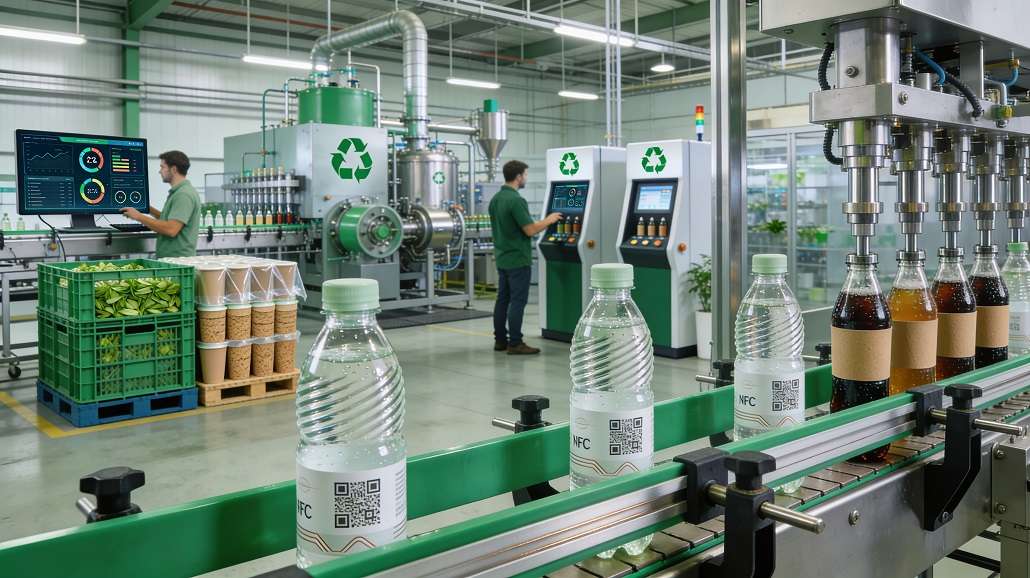
In the modern marketplace, the package is no longer just a vessel; it is a communication tool. Sustainable beverage packaging innovation is increasingly incorporating digital elements to bridge the gap between physical products and digital transparency. QR codes and NFC tags are being integrated into labels to provide consumers with real-time data regarding the origin of the materials, the carbon footprint of that specific unit, and localized instructions on how to properly recycle the container. This level of transparency builds trust and empowers the user to become an active participant in the circular economy. When a consumer can scan a bottle and see the journey of its recycled content, the abstract concept of sustainability becomes a tangible reality.
Moreover, the rise of “smart” labels that change color to indicate optimal consumption temperatures or the freshness of the product helps to reduce food waste. When a consumer knows exactly when a beverage is at its peak, or conversely, when it has truly expired, they are less likely to discard it prematurely. By minimizing waste at the consumer level, these technologies extend the sustainable impact of the packaging far beyond the manufacturing plant. The integration of such intelligent systems marks the beginning of a more connected and accountable beverage ecosystem. We are moving toward a future where the package can “talk” to the refrigerator, notifying the household when a product is nearing its use-by date or suggesting the best way to reuse the container after the beverage is consumed.
Strategic Integration of the Circular Economy into Corporate Operations
The ultimate objective of sustainable beverage packaging innovation is the total integration of the circular economy into corporate DNA. This requires a holistic view that includes not just the container, but the secondary and tertiary packaging as well. Shrink wraps, pallet stabilizers, and transport crates are all being redesigned to be reusable or fully compostable. Brands that adopt this comprehensive approach are finding that it not only reduces environmental impact but also streamlines operations and lowers long-term costs. The circular model encourages a mindset of resource management rather than resource consumption, which is essential for long-term viability in a world of finite supplies. This shift also requires a change in how companies calculate return on investment, moving away from short-term margin goals toward long-term value creation and risk mitigation.
As we look toward the next decade, the focus will likely shift toward the standardization of materials and the development of global recovery infrastructures. The most successful innovations will be those that are universally compatible with existing waste management systems, ensuring that no matter where a product is sold, it can be recovered and reused. This global perspective on sustainable beverage packaging innovation is the final piece of the puzzle, turning local successes into a worldwide standard of excellence that protects the planet while fueling the global beverage trade. Collaboration between competitors is becoming more common as the industry realizes that building a circular infrastructure is a collective challenge that no single entity can solve alone.
The journey toward 100% sustainable packaging is complex and requires constant iteration, but the momentum is undeniable. With every gram of plastic saved and every new bio-material perfected, the industry moves closer to a future where the act of enjoying a beverage is in perfect harmony with the natural world. This commitment to innovation is what will define the leading brands of the future, as they transition from being mere providers of products to being stewards of the environment. The convergence of consumer awareness, regulatory pressure, and technological breakthroughs is creating a “perfect storm” for progress, ensuring that sustainable beverage packaging innovation remains at the forefront of the global industrial agenda for years to come.
The Role of Refillable and Reusable Systems
While much of the focus has been on recycling, the re-emergence of refillable systems represents a significant frontier in sustainable beverage packaging innovation. Modern refillable models are lightyears ahead of the glass milk bottles of the past. Today’s systems utilize durable, lightweight polymers and smart tracking to ensure that bottles can be returned, cleaned, and refilled dozens of times. These decentralized loops reduce the energy-intensive process of melting down and reforming glass or plastic. In many urban centers, automated “milk-run” style logistics are being tested, where electric vehicles collect empty containers while delivering fresh ones. This return to reuse, powered by modern technology, offers a compelling alternative to the single-use model and represents one of the most promising avenues for reducing the environmental footprint of the beverage sector.
Sustainable Aesthetics and Minimalist Design
Finally, sustainable beverage packaging innovation is influencing the very aesthetic of our drinks. Brands are moving away from heavy, multi-layered labels and metallic inks that interfere with recycling streams. Instead, we see a rise in minimalist designs that use laser-etching directly onto the bottle or water-soluble inks that wash away easily in recycling facilities. This “naked” packaging trend not only makes the recycling process more efficient but also signals a brand’s commitment to transparency. By stripping away the unnecessary, companies are revealing the product itself, fostering a sense of purity and honesty that resonates deeply with modern consumers. This shift proves that sustainability and premium branding are not mutually exclusive; rather, they are becoming increasingly synonymous in the eyes of the global audience.
In conclusion, the future of the beverage industry lies in its ability to adapt and evolve. The innovations we see today are just the beginning of a broader movement toward a more responsible and efficient way of doing business. By prioritizing the health of the planet alongside the satisfaction of the consumer, the industry is securing its place in a world that increasingly values purpose over profit. Sustainable beverage packaging innovation is the engine of this change, driving us toward a future where every sip is a step toward a better world.

