






















The global manufacturing sector is currently undergoing a period of profound change, often referred to as the Fourth Industrial Revolution. While much of the attention has been focused on the rise of robots and artificial intelligence, the most critical element of this evolution is the people who operate, manage, and maintain these systems. The packaging industry workforce transformation is not just a side effect of automation; it is the fundamental driver of industrial progress. As factories become smarter and more connected, the traditional roles of the floor worker are being redefined, requiring a strategic shift toward advanced skills development, the integration of digital tools, and a renewed focus on holistic safety. This transition is creating a more productive, resilient, and inclusive workplace that is prepared for the challenges of the twenty-first century.
The Shift from Manual Labor to Technical Mastery
For decades, the packaging industry was characterized by repetitive manual tasks and a focus on physical throughput. However, the rapid deployment of high-speed automation and robotic systems has moved these traditional roles toward the margins. Today, the packaging industry workforce transformation is defined by a shift from “muscle” to “mind.” Workers who once spent their days manually loading machines or packing boxes are now being retrained as technicians, data analysts, and system supervisors. This transition is elevating the dignity of industrial work, replacing monotonous tasks with roles that require problem-solving, critical thinking, and a deep understanding of complex mechanical and digital systems.
Upskilling and the Need for Continuous Learning
As technology evolves, the skills gap has become a significant challenge for the industry. To address this, forward-thinking companies are investing heavily in industrial skills development. This is not a one-time training session but a commitment to continuous, lifelong learning. Companies are partnering with vocational schools and universities to develop curricula that are specifically tailored to the needs of the modern smart factory. This upskilling is essential for ensuring that the existing workforce is not left behind by the pace of change. By providing clear pathways for advancement and the tools needed to master new technologies, the industry is building a more capable and loyal workforce.
The Role of Augmented Reality (AR) in Training
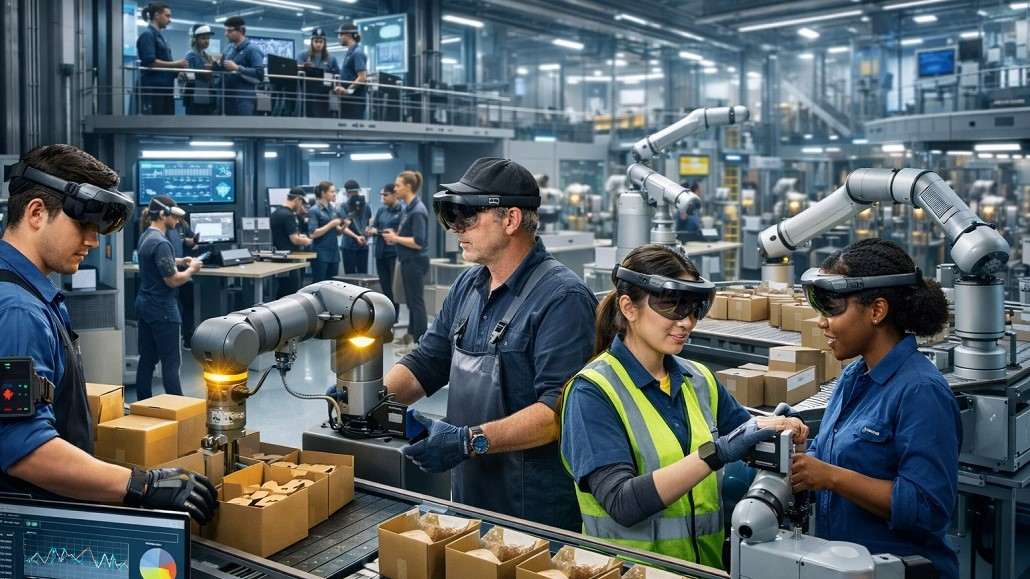
One of the most exciting aspects of the packaging industry workforce transformation is the use of immersive technology for training and troubleshooting. Augmented Reality (AR) headsets allow new workers to “see” the internal workings of a machine while they are learning how to operate it. These digital tools provide step-by-step instructions and safety warnings in real-time, significantly reducing the “time-to-competence” for new hires. Furthermore, AR allows for remote support; a technician in a different country can see exactly what a local operator sees through their headset, guiding them through a complex repair as if they were standing right next to them. This level of digital integration is making industrial work more accessible and reducing the risk of costly downtime.
Enhancing Safety Through Technology and Culture
In a high-speed manufacturing environment, safety has always been a top priority. However, the packaging industry workforce transformation is bringing a new level of sophistication to workplace protection. We are moving beyond simple physical barriers and toward “intelligent” packaging safety systems. Sensors integrated into the machinery can now detect the presence of a human worker and immediately slow down or stop the operation to prevent an accident. Wearable technology can monitor a worker’s heart rate, body temperature, and even their posture, providing early warnings about fatigue or potential strain-related injuries. These data-driven systems are creating a “safety net” that is proactive rather than reactive.
Cultivating a Human-Centric Safety Culture
While technology is vital, the most effective safety systems are those that are supported by a strong corporate culture. The packaging industry workforce transformation involves a shift toward “human-centric” safety, where every worker is empowered to take ownership of their environment. This involves open communication, regular safety audits led by the workers themselves, and an environment where near-misses are reported and analyzed without fear of reprisal. By treating safety as a shared value rather than a set of rules, companies can create a more engaged and protective workforce. In the modern factory, safety is not just a department; it is a way of life that is supported by every level of the organization.
The Intersection of Automation and Human Wellbeing
A common fear is that automation will lead to the “dehumanization” of the workplace. However, when implemented correctly, technology can actually improve human wellbeing. By taking over the “dirty, dull, and dangerous” tasks, robots are allowing human workers to focus on more meaningful and less physically taxing work. This leads to higher job satisfaction and lower rates of burnout. Furthermore, the use of collaborative robots (cobots) allows humans and machines to work side-by-side, combining the precision of the machine with the creativity and adaptability of the human. This synergy is a hallmark of the packaging industry workforce transformation, proving that technology is a tool for human empowerment rather than a replacement for it.
Attracting the Next Generation of Industrial Talent
The packaging industry is currently facing a demographic challenge as the “Baby Boomer” generation reaches retirement age. To maintain productivity, companies must find ways to attract the next generation of talent the “digital natives” who have grown up with technology. The packaging industry workforce transformation is essential for making industrial careers appealing to these younger workers. By highlighting the high-tech nature of the modern factory and the opportunities for creative problem-solving, the industry can overcome the “greasy floor” stereotype that has long plagued manufacturing. Today’s factory floor looks more like a high-tech laboratory than a traditional warehouse, and this is a powerful selling point for a tech-savvy generation.
Diversity and Inclusion as a Business Imperative
As the workforce changes, there is also a growing recognition of the importance of diversity and inclusion. A more diverse workforce brings a wider range of perspectives and ideas, which is essential for innovation in a globalized economy. The packaging industry workforce transformation includes a concerted effort to recruit more women, people from underrepresented backgrounds, and individuals with diverse skill sets. Companies are implementing flexible work arrangements, mentorship programs, and inclusive hiring practices to ensure that they are drawing from the widest possible talent pool. A workplace that reflects the diversity of the world is a workplace that is better equipped to serve its global customers.
The Rise of the “Gig” Economy and Flexible Work
Even in a traditional manufacturing setting, the desire for flexibility is growing. We are beginning to see the influence of the “gig” economy in the packaging industry, with some companies utilizing specialized on-call technicians for specific high-level tasks. While the core of the workforce remains full-time, this added flexibility allows companies to scale their expertise as needed. Furthermore, the rise of “remote” roles in areas like data analysis and supply chain management is allowing people to work for a packaging company without ever setting foot on the factory floor. This broadening of the definition of an “industrial worker” is a key component of the ongoing workforce evolution.
Conclusion: The Human Element of the Smart Factory
The transformation of the packaging workforce is one of the most exciting and significant developments in modern industry. While the machines may be the visible face of progress, it is the people who are the real source of innovation and resilience. The packaging industry workforce transformation is creating a new class of “industrial professionals” who are comfortable at the intersection of the physical and digital worlds.
As we look to the future, the companies that will thrive are those that recognize that their people are their most valuable asset. By investing in education, prioritizing safety, and embracing a culture of continuous improvement, the packaging industry is building a workforce that is not just ready for the future it is creating it. The journey toward a smarter and more inclusive industrial world is well underway, and the human spirit is at its very heart. In the end, the “smart factory” is only as smart as the people who bring it to life every day.

