





















Direct-to-consumer shipping has reshaped how brands engineer secondary and transit packaging. According to U.S. Census Bureau retail e-commerce reports, online sales continue to claim a substantial share of total U.S. retail volume, pushing fulfillment networks to process millions of individual parcel shipments daily. Unlike traditional palletized retail freight, parcel shipments face repeated conveyor drops, automated sorting equipment, and variable warehouse stacking loads.
To survive this distribution environment without inflating shipping fees or creating excessive waste, modern e-commerce packaging must balance four competing operational requirements: structural transit protection, dimensional efficiency, responsible material selection, and consistent brand presentation. Custom mailer boxes have become a primary structural format for achieving that balance. Rather than treating a shipping box as an afterthought, packaging engineers and procurement teams increasingly design mailers as integrated systems tailored to specific product weights, fulfillment workflows, and customer expectations.
What Makes Mailer Boxes Important for Modern Product Packaging?
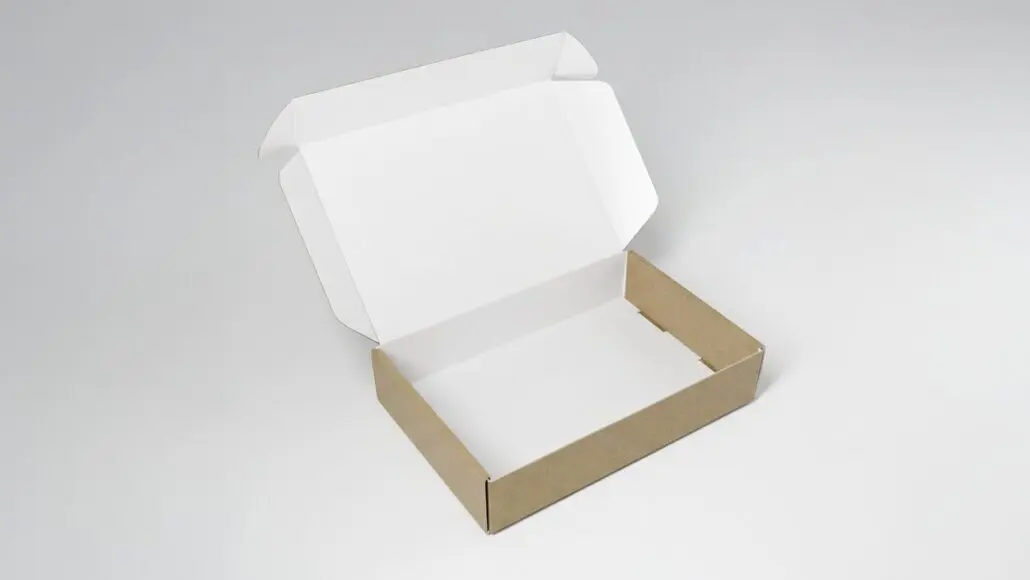
Custom mailer packaging are self-locking, single-piece shipping containers engineered to fit specific product dimensions and parcel transit requirements. Unlike standard slotted cartons that require top and bottom tape seals, a custom mailer box uses interlocking side flaps and a hinged tuck lid to form a rigid structure without external adhesive during assembly.
This structural geometry creates double-layered side walls once folded, delivering higher crush resistance around the perimeter than a basic regular slotted container (RSC) of comparable board grade. For D2C brands and subscription businesses, that construction eliminates the need for an outer overbox. Products ship directly inside a single container that protects contents in transit while presenting a clean, organized interior upon opening.
The Modern Mailer Packaging Framework
- 01. Protection: Matching board grade, flute profile, and internal inserts to product weight, fragility, and parcel carrier drop hazards.
- 02. Efficiency: Right-sizing internal dimensions to cut dimensional weight charges, reduce void fill, and speed up flat-packed fulfillment.
- 03. Materials: Selecting corrugated board or Custom kraft boxes paperboard based on structural load, print compatibility, and verified end-of-life recyclability.
- 04. Experience: Aligning exterior durability and interior printing with unboxing ergonomics without compromising structural integrity.
Choosing the Right Materials for Mailer Box Construction
Material selection determines how a mailer performs under compression, humidity, and printing presses. In commercial packaging, buyers primarily choose between corrugated fiberboard and solid kraft paperboard depending on product weight and transit exposure.
Corrugated Board for Shipping Protection
Most parcel-ready corrugated mailer packaging relies on a single-wall corrugated board composed of an arched fluted medium bonded between two flat linerboards. The flute profile dictates wall thickness, cushioning performance, and print smoothness:
- E-flute (approx. 1/16 inch thick): Contains roughly 90 flutes per linear foot. Its dense, thin profile resists crushing, folds cleanly along tight score lines, and provides a smooth outer surface for high-resolution graphics. E-flute suits lightweight cosmetics, apparel accessories, electronics, and subscription kits.
- B-flute (approx. 1/8 inch thick): Contains roughly 47 flutes per linear foot and offers greater puncture resistance and vertical stacking strength. B-flute is better suited for heavier glass jars, multi-unit shipments, or fragile goods that require stronger protective shipping packaging.
Kraft Paperboard for Packaging Design
When products are lightweight, non-fragile, or placed inside an outer poly mailer or master carton, kraft paperboard boxes offer a lighter-weight alternative to fluted corrugated board. Unbleached kraft paperboard is produced primarily from virgin or high-strength softwood sulfate pulp, giving the sheet high tear resistance relative to its caliper thickness.
Because unbleached kraft retains its natural brown fiber tone, brands frequently use it for minimalist aesthetics, apothecary goods, dry food pouches, and soft textiles. Darker brown fibers absorb ink differently than white clay-coated sheets, meaning bold black, white, or high-contrast spot colors reproduce more reliably than subtle pastel tones. Brands evaluating custom kraft packaging options should confirm caliper thickness (typically 16 pt to 24 pt for folding mailers) to ensure the structure resists corner denting during fulfillment. For many small-parcel operations, kraft paper box packaging works best as an inner retail mailer or padded-envelope insert rather than a standalone heavy-duty parcel shipper.
| Specification Factor | Corrugated Mailer Board (E-Flute / B-Flute) | Solid Kraft Paperboard (16 pt – 24 pt) |
|---|---|---|
| Structural Construction | Fluted medium laminated between inner and outer liners | Single-ply dense unbleached sulfate fiber sheet |
| Crush & Drop Protection | High; absorbs edge impacts and vertical stacking loads | Moderate; resists tearing but offers minimal crush cushioning |
| Typical Product Weight | Light to heavy items (1 lb to 15+ lbs depending on ECT) | Lightweight, non-fragile items (under 1 to 2 lbs) |
| Print Surface Quality | Smooth on E-flute; slight rib texture visible on B-flute | Smooth natural fiber finish; best with dark or opaque inks |
| Best Parcel Use Case | Standalone e-commerce shipping without an outer carton | Inner retail kits, apparel sleeves, or overboxed mailers |
Balancing Product Protection With Customer Experience
In direct-to-consumer commerce, the shipping box is often the first physical touchpoint a buyer experiences. However, visual appeal fails if the contents arrive scuffed, leaking, or disorganized.
Structural Strength and Protective Inserts
Packaging inserts are necessary whenever a shipment contains multiple loose components, fragile glass or ceramic surfaces, or heavy items that could shift under sudden deceleration. Die-cut corrugated packaging inserts and dividers lock items into fixed positions, preventing product-on-product impact while reinforcing the outer walls against side compression. For multi-SKU subscription boxes or electronics kits, structural inserts also create an organized visual layout that requires zero loose void fill.
Custom Printing and Brand Presentation
Modern custom printed mailer boxes allow brands to separate transit durability from interior brand storytelling. Because outer surfaces encounter conveyor scuffing, dirt, and shipping labels, many operations keep exterior graphics clean and minimal while concentrating detailed color work, setup instructions, or QR codes on the inside lid.
Production methods scale with order volume. Digital inkjet printing suits short runs, seasonal tests, and multi-SKU personalization without plate fees. Flexographic and lithographic offset printing deliver lower unit costs and tighter color consistency on medium-to-high production runs. Teams comparing structural layouts, board grades, and print finishes can review custom mailer box options to align dieline engineering with brand presentation goals.
Conclusion
Meeting modern e-commerce and distribution demands requires viewing branded mailer boxes as engineered operational assets rather than commodity containers. By evaluating every specification through the four pillars of protection, efficiency, materials, and customer experience, brands avoid the common trap of optimizing for unit price or exterior graphics at the expense of transit performance. Businesses evaluating new packaging formats should compare material specifications, product dimensions, shipping conditions, and end-of-life requirements before finalizing a design.