



















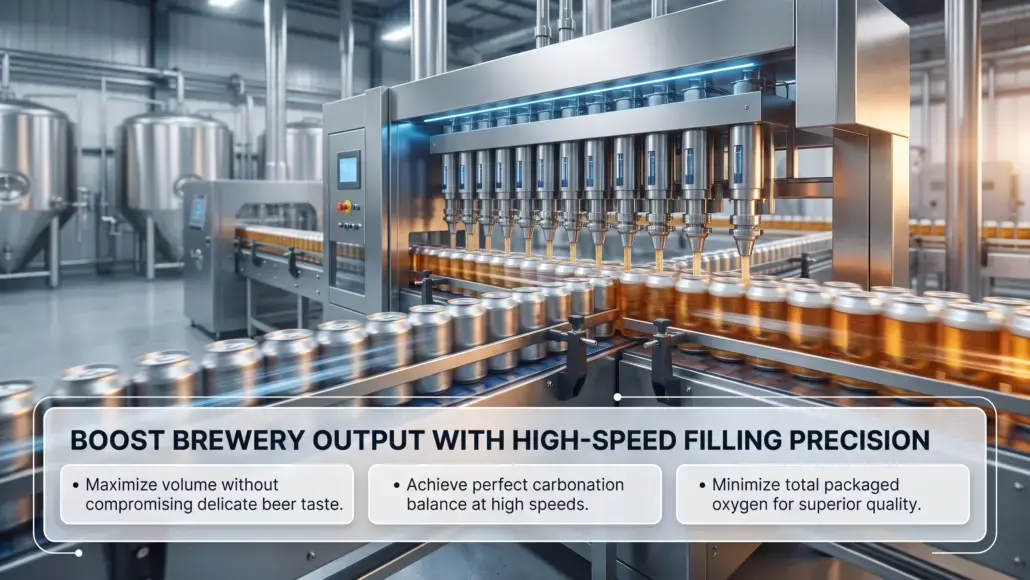

The implementation of high-speed filling systems remains a central pillar for large-scale breweries seeking to optimize their output without compromising the delicate sensory profile of their products. High-speed operations require a sophisticated balance between mechanical throughput and fluid dynamics to ensure that carbonation levels remain stable while total packaged oxygen (TPO) is kept to an absolute minimum. The transition from traditional mechanical valves to electronically controlled filling systems represents a significant shift in how breweries manage their primary packaging stages. By utilizing electromagnetic flow meters and precise pneumatic controls, modern systems can achieve filling speeds exceeding 80,000 containers per hour. This mechanical acceleration is not simply a consequence of moving components faster; it involves the careful management of pressure differentials and laminar flow to prevent excessive foaming, which is the primary cause of product loss and reduced throughput in legacy lines.
At the heart of these advancements is the shift toward counter-pressure filling technology that utilizes multiple stages to prepare the container. The process begins with the evacuation of air from the bottle or can, often followed by a CO2 flush to displace any remaining oxygen. Maintaining a low oxygen environment is critical because beer is highly susceptible to oxidation, which leads to stale flavors and shortened shelf life. High-Speed Filling Systems address this by ensuring that the transition between the filling valve and the container is airtight. The precision of modern sensors allows for the detection of even minor pressure variations that could indicate a faulty seal, allowing the system to bypass that specific station without halting the entire carousel. This selective operation maintains a continuous flow and prevents the disruptive stop-start cycles that historically plagued high-capacity packaging lines.
Mechanical Synchronization and Fluid Control Systems
The mechanical synchronization required to maintain high speeds involves the integration of servo-driven motors that replace traditional gears and chains. Servo technology allows for independent control of the carousel rotation, the infeed stars, and the discharge conveyors. This level of control ensures that each container is handled with extreme gentleness even at high velocities, reducing the risk of breakage or deformation. Additionally, the fluid control systems have evolved to utilize probe-less filling techniques. In these setups, electronic flow meters measure the exact volume of liquid entering the container rather than relying on a physical probe to sense the fill level. This reduces the number of components in contact with the product, which simplifies the cleaning process and reduces the risk of microbiological contamination. The removal of the vent tube in certain designs also eliminates a common source of turbulence, allowing the beer to enter the container more smoothly and at higher speeds.
The management of foam, or “fobbing,” is another critical area where High-Speed Filling Systems demonstrate their value. Controlled foaming is necessary just before the closure is applied to displace any oxygen in the headspace, but excessive foam during the filling process leads to inaccurate fill levels and sticky machinery. Modern filling valves utilize a multi-speed filling profile, where the initial fill is slow to establish a stable base, followed by a rapid fill phase, and finally a slow top-off. This profile is adjusted in real-time based on the temperature and carbonation levels of the beer. The integration of temperature sensors directly into the filling bowl ensures that the system can compensate for the slight variations in viscosity and gas solubility that occur during a production shift, maintaining a consistent volume across millions of units.
Oxygen Management and Product Integrity
Oxygen management is the most significant technical challenge in high-speed operations. Even a few parts per billion of oxygen can significantly degrade the quality of a premium lager or ale. Modern filling systems utilize double pre-evacuation cycles where the container is vacuumed twice and purged with CO2 between each cycle. This level of thoroughness was previously impossible at high speeds due to the time required for each stage, but the development of high-capacity vacuum pumps and larger carousel diameters has made it feasible. The filling valves themselves are designed with specialized geometries that promote laminar flow, ensuring that the beer slides down the inner walls of the container rather than splashing into the center. This reduces the surface area exposed to the headspace gas, further limiting oxygen pickup.
Beyond the filling valve, the transition to the capper or seamer is a critical window for potential contamination. High-speed lines minimize this distance and often incorporate a CO2 or nitrogen under-cap gas system. This system injects a precise burst of inert gas into the headspace just milliseconds before the closure is applied. The timing of this injection must be perfectly synchronized with the speed of the line to ensure that the gas effectively displaces the ambient air without causing the beer to splash out. The precision of these systems is such that they can maintain TPO levels below 30 parts per billion even when the line is running at its maximum rated capacity. This dedication to product integrity is what allows large breweries to export their products globally while maintaining a consistent flavor profile for consumers. The mechanical stability of the seaming process is also critical, as any micro-fracture in the can flange or bottle rim during high-speed handling can lead to gradual CO2 loss. High-Speed Filling Systems Improving Beer Packaging Line Efficiency prioritize the gentle transfer of containers between stations, utilizing star wheels with specialized coatings that dampen vibration and prevent structural stress on the glass or aluminum.
Data Integration and Real Time Performance Monitoring
The inclusion of sophisticated data acquisition systems allows for a level of transparency that was previously unattainable. Every filling valve on a modern carousel can be monitored independently, providing data on fill volumes, pressure cycles, and cleaning efficiency. If a particular valve begins to show a deviation from the set parameters, the system can flag it for maintenance before it results in a batch failure. This predictive maintenance approach is essential for High-Speed Filling Systems as it prevents unplanned downtime. The data collected is often fed into a centralized SCADA system, allowing production managers to view the overall equipment effectiveness (OEE) in real-time. By analyzing this data, breweries can identify bottlenecks in the line, such as an inefficient infeed system or a slow discharge conveyor, and make adjustments to optimize the total output.
Cleaning in place (CIP) processes have also been improved through automation. High-speed fillers feature hygienic designs with minimal dead spaces where bacteria could proliferate. The CIP cycles are now fully automated and can be programmed to run during shift changes or when switching between different beer styles. The use of automated dummy bottles, which move into place to seal the filling valves during cleaning, reduces the manual labor required and ensures that every valve is thoroughly sanitized. This high level of hygiene is particularly important for unpasteurized craft beers that rely on strict process control to remain shelf-stable. The ability to switch between products quickly without a lengthy manual cleaning process significantly increases the overall flexibility and efficiency of the packaging line.
Sustainable Resource Management in High Speed Operations
Sustainability has become a core concern for the packaging industry, and high-speed filling systems are evolving to reduce their environmental footprint. One of the primary areas of focus is the reduction of CO2 consumption. Traditional filling systems often wasted significant amounts of CO2 during the purging and counter-pressure stages. Modern designs utilize gas recovery systems that capture the CO2 vented from the containers during the filling process and recycle it for use in the pre-evacuation or purging stages. This can reduce total CO2 usage by up to 40 percent, representing a significant cost saving and a reduction in the brewery’s carbon footprint. Additionally, the move toward water-less lubrication systems for the conveyors and carousels reduces water consumption and improves the overall cleanliness of the production environment.
The energy efficiency of the drive systems has also seen marked improvements. The use of regenerative braking on the large carousels allows the system to recover energy when the line slows down or stops, which can then be fed back into the brewery’s power grid. The optimization of the vacuum systems also reduces the electrical load required to maintain the necessary pressure differentials. These incremental improvements, when viewed across a high-volume production environment, result in substantial operational savings. The focus on resource management ensures that High-Speed Filling are not just about speed, but also about the responsible and cost-effective use of materials and energy in the modern manufacturing context. Additionally, the integration of modular valve assemblies allows for faster upgrades as new technologies emerge, ensuring that the filling equipment remains at the peak of operational efficiency throughout its multi-decade lifespan. By reducing the total ownership cost through energy savings and reduced material waste, these systems represent a logical investment for facilities focused on long-term sustainability and high-output stability. The continuous evolution of nozzle geometry and pressure regulation will likely lead to even greater reductions in gas consumption, cementing the role of high-speed filling as the definitive solution for modern beverage packaging requirements.