


















The global food industry faces an unprecedented sustainability challenge. In 2023, plastic production reached nearly 413.8 million metric tons, with approximately 40 percent directed toward packaging applications. The traditional linear packaging model—where materials are extracted, used once, and discarded—has become increasingly untenable in the face of mounting environmental pressures and regulatory scrutiny. Circular packaging models for food sustainability now represent a fundamental reimagining of how the industry approaches material stewardship, waste reduction, and environmental responsibility.
Circular packaging moves beyond traditional recycling toward comprehensive strategies that include reuse, refill, material recovery, and closed-loop systems. This transformation is not merely an environmental imperative; it has become a commercial and competitive necessity. The circular packaging market is accelerating rapidly, with forecasts predicting hundreds of millions in revenue growth between 2025 and 2034. For food companies seeking to maintain market relevance while meeting evolving consumer and regulatory demands, understanding and implementing circular packaging models has transitioned from a sustainability option to a strategic business requirement.
The Fundamentals of Circular Packaging Design
Understanding Circular Economy Principles in Food Packaging
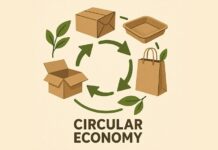
Circular packaging models for food sustainability fundamentally challenge conventional thinking about material lifecycle. Rather than viewing packaging as a single-use consumable, circular approaches treat materials as valuable resources that cycle continuously through the economy. This perspective requires reimagining every stage of the packaging journey: material selection, design architecture, logistics infrastructure, and end-of-life planning.
The Ellen MacArthur Foundation’s research demonstrates that brands leveraging reuse and refill systems can reduce packaging waste by up to 70 percent over multiple use cycles. This dramatic reduction reflects the core principle of circular design: maximum material efficiency through repeated utilization rather than disposal-based thinking.
Implementing circular packaging models for food sustainability demands integration across multiple dimensions. Material selection must prioritize durability, compatibility with food safety standards, and compatibility with existing collection and processing infrastructure. Design engineering must optimize for stacking, transport efficiency, and consumer convenience while maintaining structural integrity across multiple use cycles. Logistics planning must ensure cost-effective return mechanisms that make reuse economically viable for both brands and consumers.
Design Innovation and Material Selection
Contemporary circular packaging design embraces several material strategies. Mono-material packaging, which utilizes a single consistent material throughout, has gained prominence because it dramatically simplifies recycling processes and improves material recovery rates. Instead of requiring complex separation procedures that often result in quality degradation, mono-material systems enable seamless reprocessing into new packaging applications.
Advanced material innovations complement traditional recycling approaches. Paper-based barrier systems replace plastic-dependent solutions for certain applications, reducing reliance on petroleum-derived materials. Edible coatings, exemplified by products like Apeel, protect food products while eliminating packaging waste entirely. Biopolymers derived from renewable sources such as cornstarch and sugarcane offer compostable alternatives to conventional plastic-based solutions.
The structural design of circular packaging emphasizes both protection and efficiency. Engineered structures incorporate ribs, corrugations, and strategically positioned supports that maximize durability while minimizing material volume. This approach eliminates unnecessary material bulk without compromising the protective capacity essential for food safety and product integrity.
Reuse and Refill Systems: Practical Implementation
From Pilot Programs to Scaled Operations
Reusable and refillable packaging systems represent one of the most impactful circular packaging strategies currently reshaping the food industry. These systems extend the operational lifespan of packaging materials dramatically, reducing dependence on single-use options and delivering substantial environmental advantages. European countries including the United Kingdom, France, the Netherlands, Germany, Norway, and Spain have emerged as leaders in implementing robust reuse infrastructure supported by comprehensive regulatory frameworks and extended producer responsibility policies.
The transition from pilot programs to commercially viable, scaled operations requires careful attention to logistics infrastructure. Reusable packaging (RPC) systems demonstrably reduce solid waste and energy consumption substantially when properly managed. Studies show that returnable packaging can generate large reductions in waste and energy use across supply chains, provided that sanitization procedures are rigorous and cycling rates remain consistently high.
The economic viability of reuse systems depends critically on several interdependent factors. Return rates must exceed minimum thresholds to justify the infrastructure investment in collection, sanitization, and redistribution. Standardization across brands and product categories increases system efficiency by allowing consolidated collection and shared processing infrastructure. Pooling arrangements, where multiple manufacturers share standardized containers and collection networks, dramatically reduce per-unit costs and improve return rates.
Technology Integration for Enhanced Efficiency
Digital technologies increasingly support reuse system optimization. Radio-frequency identification (RFID) tags and near-field communication (NFC) systems enable real-time tracking of packaging throughout collection and redistribution cycles. These technologies provide visibility into system performance, identify bottlenecks, and optimize routing for collection trucks and distribution networks.
Blockchain integration introduces transparency and trust into reuse systems. By creating immutable records of packaging journey, blockchain solutions verify material compliance, track sanitization procedures, and provide consumer assurance regarding food safety standards. Walmart and other major retailers are actively exploring blockchain solutions to maintain food integrity throughout supply chains that incorporate reusable packaging components.
Material Recovery and Closed-Loop Systems
Advanced Recycling Technologies
While reuse represents the highest-value circular strategy, comprehensive circular systems integrate multiple recovery pathways. Advanced recycling technologies, sometimes termed “chemical recycling” or “molecular recycling,” now enable processing of previously difficult-to-recycle materials into new packaging applications without significant quality degradation. These technologies address historically problematic waste streams—multi-layer materials, colored plastics, and contaminated packaging—that traditional mechanical recycling processes struggle to handle effectively.
The maturation of advanced-sorting technologies complements chemical recycling innovations. Sophisticated spectroscopic systems now distinguish between polymer types with unprecedented accuracy, enabling separation and processing of mixed waste streams that would previously have ended in landfills. While these solutions remain capital-intensive in current deployments, their progressive maturation throughout 2025 signals an inflection point for the sector’s capacity to recover materials previously considered economically unfeasible to recycle.
Extended Producer Responsibility (EPR) Frameworks
Extended producer responsibility represents perhaps the most significant policy lever reshaping circular packaging models for food sustainability globally. Under EPR frameworks, producers assume financial responsibility for end-of-life management of packaging they place on the market. This economic incentive fundamentally realigns decision-making, encouraging designers and manufacturers to consider disposal economics and material recovery feasibility at the design stage rather than treating these as afterthought concerns.
In 2025, India, Canada, and several United States jurisdictions are implementing or updating national EPR frameworks. The European Union’s regulatory approach mandates that at least 10 percent of packaging for beverages, food, and personal-care products be reusable by 2030. These regulatory developments signal unmistakable policy direction, creating both pressure and opportunity for food companies to advance circular packaging strategies.
Overcoming Practical Challenges in Circular Transition
Food Safety and Regulatory Compliance
Implementing circular packaging models for food sustainability introduces technical and regulatory complexities that linear systems do not encounter. Food safety remains paramount; recycled materials must meet stringent contamination standards, and reusable packaging systems require sanitization procedures that eliminate pathogenic organisms while preserving material integrity.
Regulatory frameworks governing food contact materials vary significantly across jurisdictions, creating complexity for multinational brands. European regulations establish strict parameters for material composition, migration testing, and traceability of recycled materials. Brands transitioning to circular systems must invest in comprehensive testing protocols and documentation systems ensuring compliance across multiple regulatory domains.
Material compatibility presents another significant consideration. Some food products, particularly those with high acidity, alcohol content, or aggressive solvents, present challenges for certain sustainable materials. Packaging design must balance consumer expectations regarding sustainability with authentic product protection capabilities. Misalignment between material properties and product requirements can compromise food safety or create premature material degradation.
Cost Structure and Economic Viability
The transition from linear to circular packaging models requires substantial capital investment in collection infrastructure, processing facilities, and logistics networks. While long-term operational economies often justify this investment, the initial financial burden creates barriers for smaller producers and emerging brands with limited capital resources.
The economics of reusable systems depend critically on utilization rates and collection efficiency. If return rates fall below critical thresholds, per-unit costs escalate dramatically, eroding the economic advantage that motivated the circular transition. Building consumer participation in reuse systems requires convenient access to collection points and positive incentives—either deposit mechanisms or rewards programs—that overcome behavioral barriers.
Material costs for circular-compliant packaging sometimes exceed conventional alternatives, particularly during early-stage scaling when production volumes remain limited. However, these cost premiums typically narrow substantially as manufacturing scales and competition intensifies. The analysis of circular system economics must incorporate avoided disposal costs and potential regulatory penalties that linear systems increasingly face.
Industry Innovation and Success Models
Leading Implementation Examples
Coca-Cola Europacific Partners demonstrates measurable progress through packaging redesign initiatives. By reducing 500 milliliter PET bottle weight by 15 percent, the company conserved nearly 10,000 tonnes of PET annually across its supply chain. This lightweighting approach, while not strictly circular, exemplifies the material efficiency principles fundamental to successful circular transitions. Each gram saved at scale generates significant environmental and cost advantages.
TerraCycle’s Loop system represents a sophisticated reusable packaging model operating at meaningful scale. The platform partners with major consumer goods brands to deliver products in reusable containers through a centralized return and sanitization infrastructure. While initially launched in limited geographies, Loop’s operational model provides valuable insights into consumer behavior, logistics feasibility, and economic viability of subscription-based reuse systems.
The beverage industry has pioneered deposit return schemes in many European jurisdictions, creating established consumer behavior patterns and collection infrastructure that support circular packaging initiatives. These proven systems provide templates that food industry participants can adapt and refine for category-specific applications.
Emerging Circular Packaging Innovations
Mycelium-based packaging, constructed from mushroom root networks and agricultural waste, represents an emerging frontier in material innovation. These materials offer complete biodegradability while meeting protective requirements for certain food applications. Similarly, plant-based packaging innovations harness agricultural byproducts previously disposed of as waste, creating value from residual materials.
Intelligent packaging systems increasingly integrate data capabilities that support circular economy objectives. QR codes and digital product passports enable consumers to understand material composition and optimal disposal pathways. Nestlé’s 2024 pilot in Japan increased correct recycling rates by 12 percent through QR code-enabled transparency regarding material type and recovery instructions. These digital systems transform passive packaging into active participant in material recovery processes.
Scaling Circular Packaging Models
Strategic Requirements for Market Transformation
Scaling circular packaging models for food sustainability from niche initiatives to industry-standard practice requires coordinated action across multiple stakeholder groups. Brands must invest in supply chain redesign and accept margin compression during transition phases. Packaging suppliers must develop manufacturing flexibility to serve both circular and linear channels during extended transition periods. Retailers must allocate shelf space and logistics resources to reusable packaging systems despite their initially lower volume efficiency compared to conventional alternatives.
Regulatory frameworks increasingly support circular transitions through incentive structures and mandatory requirements. However, policymakers must balance circular economy promotion with other sustainability priorities, food safety imperatives, and economic competitiveness concerns. Harmonization across jurisdictions reduces compliance complexity and enables global supply chains to adopt unified circular approaches rather than fragmenting into multiple regional systems.
Consumer education and participation prove essential for reuse system success. The environmental and economic benefits of circular packaging accumulate only when return rates remain consistently high. Brands must communicate advantages clearly and make participation convenient through accessible collection infrastructure.
Future Trajectory and Long-Term Vision
By 2035, circular packaging design is projected to become the baseline expectation rather than a differentiated advantage. Bio-based materials, reuse systems, and digital product passports will transition from innovation to mainstream operation, supported by strong global regulations and intensified investment flows. Packaging optimization will leverage artificial intelligence and machine learning to predict stress points, test performance in silico, and eliminate unnecessary material with unprecedented precision.
The evolution of circular packaging models for food sustainability represents fundamental reconceptualization of industrial systems. Rather than optimizing individual product footprints, circular approaches drive systemic changes across supply chains, manufacturing strategies, and corporate sustainability agendas. Food companies that successfully implement these transitions will discover not merely environmental compliance benefits, but durable competitive advantages through enhanced brand reputation, operational efficiency, and reduced exposure to escalating resource costs and regulatory penalties.