














In a move that may as well be called a landmark for the packaging industry, 55 founding organizations have gone on to commit to the new UK Packaging Pact, which is set to launch in April 2026.
The new pact, which is initiated by the Waste and Resources Action Programme – WRAP in partnership with PackUK and is backed by the UK government, goes on to extend its scope beyond plastics to all the packaging materials and also pledges to move the industry practices throughout the design, recovery, and reuse, as well as data integration.
Broadening the scope of the packaging shift
It is well to be noted that the new UK Packaging Pact goes ahead and replaces the earlier UK Plastics Pact, which was in existence between 2018 and 2025 and apparently focused exclusively on plastic packaging.
The Plastics Pact went on to attain quite prominent results, including the eradication of 99.8% of identified problematic plastic items along with a rise in recyclability of rigid plastics to 96 % as per the reporting by WRAP.
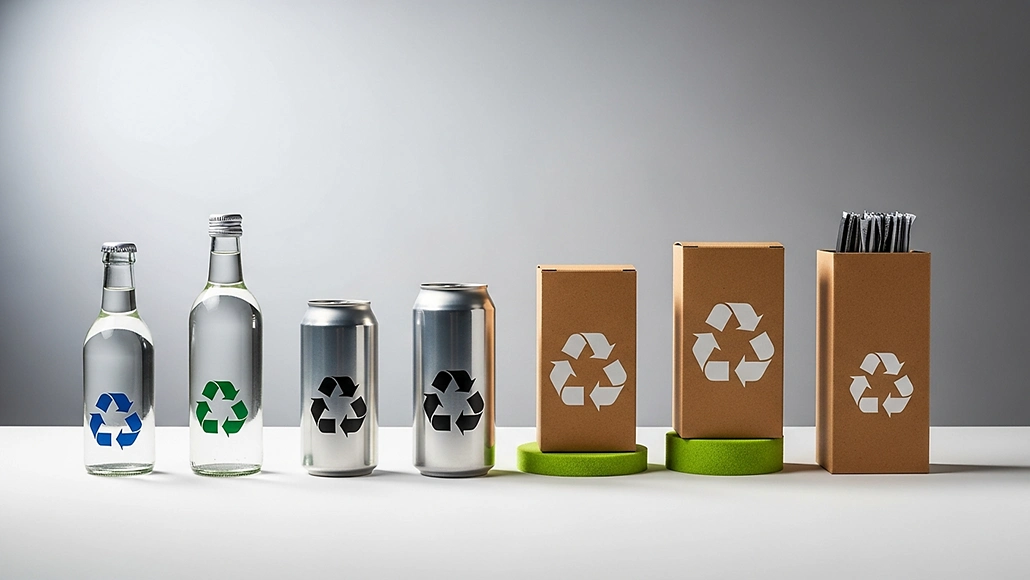
The new pact also widens the agenda to include materials like glass, metal, and cardboard, as well as multi-material packaging, and spans categories from food and drink to beauty and pet products, as well as household goods.
As per its framework, the pact specifies four major principal objectives –
- optimize packaging design in order to decrease the material usage, increase the recycled content, and also eradicate unnecessary components;
- scale reuse as well as the refill systems in order to shift away from the single-use packaging;
- support investment within circular infrastructure throughout collection, sorting, and recycling, along with their reprocessing;
- harmonize data along with traceability in order to enhance the decision-making throughout the value chain.
Sector, government collaboration at scale
Notably, the list of 55 founding pledgers has in it major UK retailers, manufacturers, and also waste-management firms. Among those that are named are Tesco, ASDA, Lidl, Arla, Haleon, Ocado Retail, Yeo Valley, and GoUnpackaged, along with Biffa and SUEZ, as well as Veolia – the waste-management companies.
It is also worth noting that the UK government has also stressed the role of extended producer responsibility – EPR, deposit-return schemes, as well as the forthcoming regulatory environment, as being part of this transition.
One of the senior ministers commented that the businesses as well as the government must make sure that packaging is getting used repeatedly and that the pact goes on to represent a collective move to go further and faster when it comes to greener packaging practices.
Implications for the packaging value chain
When it comes to the packaging producers, retailers, and brand owners, as well as waste-management firms, this new pact goes on to signal a prominent shift in terms of expectations.
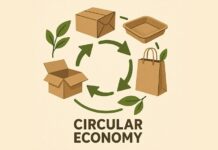
The circular packaging system concept, which is embedded in the pact, goes on to mean that packaging is going to be judged not only on the basis of design for recyclability but also on its role in reuse and refill as well as material recovery cycles.
The pact goes on to set out a ten-year timeline between 2026 and 2035 for industry transformation, therefore offering a platform in which the businesses can align along with legislative change, gain a competitive edge due to early action, and also influence the evolving regulation.
From a supply chain point of view, the key implications are –
- manufacturers may be required to redesign packaging portfolios in order to lessen the single-use components and also favor materials having high recycled content;
- retailers will be required to incorporate refill as well as reuse models in a much wider way;
- waste-management and recycling firms must also scale infrastructure and go ahead and collaborate along with the value chain in order to make sure that the recovered materials get processed domestically;
- data-systems will have to evolve so that traceability, reporting, and also transparency become consistent practices.
The emphasis of the pact on harmonizing data is especially quite timely given the regulatory developments like the Simplified Recycling reforms and the EPR regime of the UK.
When it comes to the global packaging industry observers, the UK initiative provides a case study in voluntary partnership that’s aligned to policy. It showcases how a national framework can convene the business and government as well as innovators in order to reshape the packaging systems. Although voluntary in nature, the timing – which is much ahead of major regulation goes on to give this pact a strategic relevance.
The commitment made by the founding organizations and the April 2026 launch date now indeed set the pace for the packaging transformation of the UK.
Notably, the businesses that operate in the packaging value chain are advised to evaluate the alignment with the goals of the pact, assess their present packaging strategy in terms of reuse as well as recovery, and also engage in cross-sector partnership so as to prepare for the next circular packaging era.