



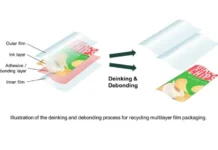











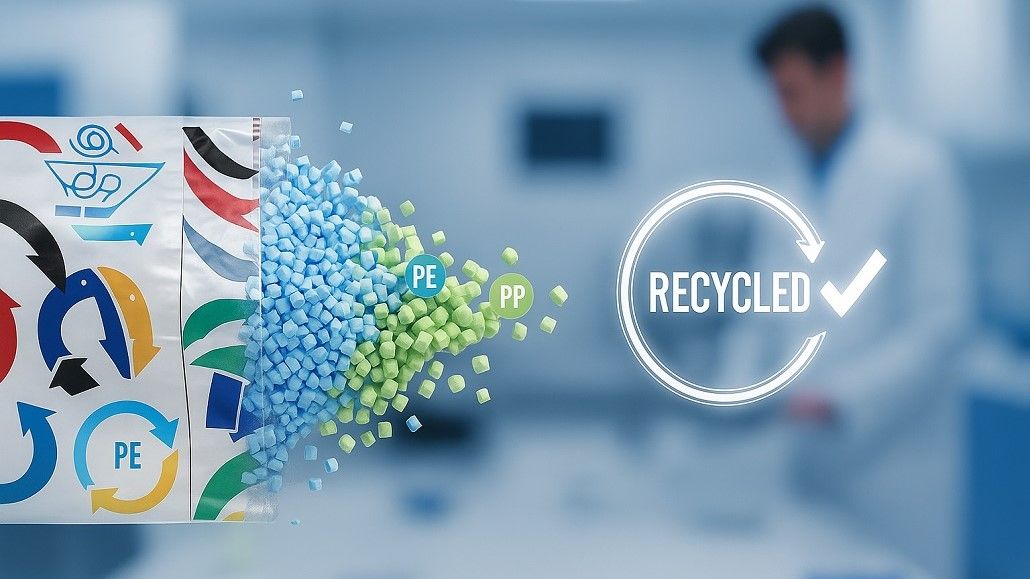

RecyClass has confirmed that a new set of nitrocellulose-free ink works for surface and reverse printing on flexible plastic packaging. The finding came after the inks were run through established polyethylene (PE) and polypropylene (PP) recycling streams without causing issues in processing. With the results in hand, RecyClass ink approval was issued, and the organization also noted its ongoing role as an audit framework recognized by the Circular Plastics Alliance.
Testing for the inks was handled by the PO Films Technical Committee under the Recyclability Evaluation Protocol for PE films. The group looked at four polyurethane (PU) ink systems and one acrylic-based formulation. None of them caused changes in recycled pellet quality or in the films produced from those pellets. The color held up as expected, and the trials did not show an increase in volatile emissions. A separate run with a polyvinyl butyral (PVB) ink produced a similar outcome, allowing RecyClass to confirm compatibility with current PE and PP recycling streams.
RecyClass plans to adjust its Design for Recycling guidelines based on the study. It also repeated its existing recommendation that ink coverage stay under 5% of a package’s total weight, a limit already in place to help reduce the chance of recycling disruptions. These results give RecyClass ink approval more weight for packaging suppliers looking at ink options for flexible formats.
RecyClass continues to carry out recyclability and traceability assessments across the plastics sector. The system is expanding as well: GS Caltex recently became the first company in Asia to earn a RecyClass certification for an end-of-life vehicle plastics recycling value chain. The Korea Herald reported that the RecyClass system is projected to cover more than 60% of Europe’s plastics recycling sector by 2025 and is now widely referenced as a benchmark for circular plastics. The confirmation of these nitrocellulose-free inks adds another reference point for companies watching how RecyClass ink approval shapes material choices in flexible packaging.