


















Key Takeaways:
- Packaging automation trends are revolutionizing industrial manufacturing by integrating advanced robotics and filling line automation to achieve unprecedented levels of production efficiency. This shift toward fully automated packaging allows companies to eliminate human error, reduce labor costs, and maintain a continuous, 24/7 production cycle, ensuring that they can meet the growing global demand for high-volume consumer and industrial goods.
- The implementation of smart packaging systems and real-time monitoring is enabling a transition toward predictive maintenance and optimized packaging operations. By utilizing AI-driven data analytics, manufacturers can identify bottlenecks in the production line before they cause downtime, ensuring that the integration of robotics in packaging leads to a seamless, high-speed, and cost-effective fulfillment process.
The fourth industrial revolution, or Industry 4.0, has brought about a fundamental restructuring of the manufacturing landscape, and perhaps nowhere is this more evident than in the packaging sector. As global consumer demand continues to rise and supply chains become increasingly complex, the traditional methods of manual or semi-automated packaging are no longer sufficient. We are now witnessing a surge in packaging automation trends that are redefining the limits of production efficiency. By integrating robotics, artificial intelligence, and sophisticated filling line automation, manufacturers are able to move products from the factory floor to the shipping dock with a level of speed and precision that was once the stuff of science fiction.
The Rise of Robotics and Cobots in Modern Facilities
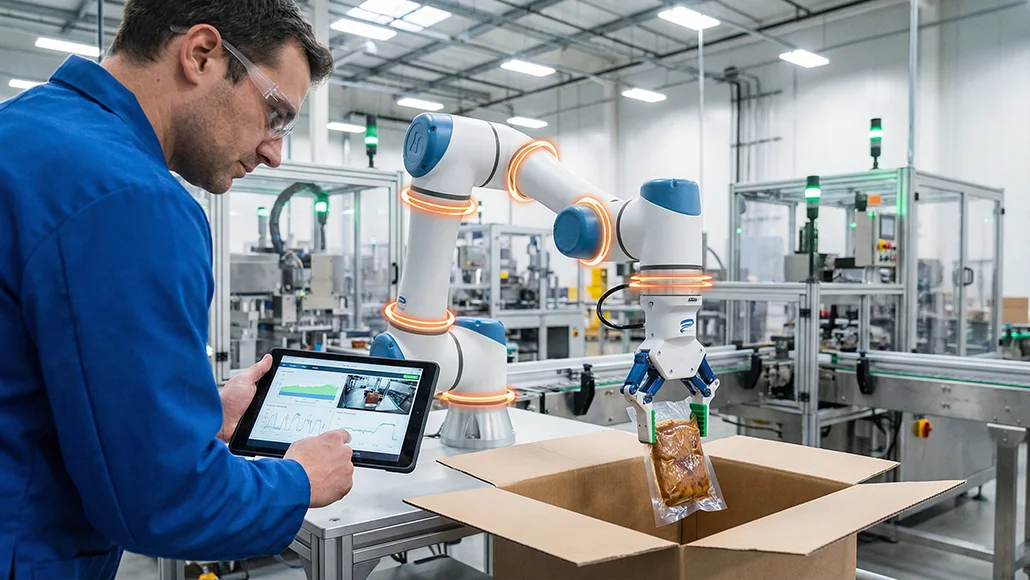
Central to current packaging automation trends is the proliferation of robotics in packaging. We have moved far beyond the simple, fixed-arm robots of the past. Today’s industrial robots are highly agile, equipped with multi-axis movement and sophisticated sensors that allow them to handle a diverse range of products. One of the most significant developments in this area is the rise of “cobots,” or collaborative robots. Unlike traditional industrial robots that must be caged for safety, cobots are designed to work alongside human operators. They are equipped with force-sensing technology that causes them to stop instantly if they come into contact with a person, making them an ideal solution for tasks that require both human intuition and robotic precision.
High-Speed Picking, Placing and Palletizing
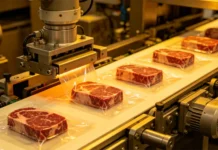
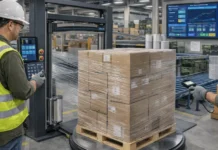
The application of robotics in packaging is most visible in the “pick and place” stage of the production line. Modern robotic arms, often equipped with vacuum grippers or soft-touch end-effectors, can sort and pack items at speeds exceeding 100 cycles per minute. This level of automated packaging is essential for high-volume sectors like food processing and pharmaceuticals. Beyond simple packing, robotics are also transforming the end-of-line processes. Automated palletizing systems can stack boxes with perfect mathematical precision, ensuring maximum stability and space utilization for transport. These systems can work tirelessly around the clock, significantly boosting production efficiency and reducing the physical strain on human workers.
Vision Systems and Quality Control
What makes modern robotics in packaging truly revolutionary is the integration of high-speed machine vision. Cameras mounted on the robotic arms can inspect every item for defects, correct orientation, or missing components in milliseconds. If a bottle cap is slightly misaligned or a label is crooked, the system can identify the error and divert the faulty product without stopping the entire line. This real-time quality control is a critical part of packaging automation trends, as it ensures that only perfect products reach the consumer. By combining vision with AI, these systems can even learn to recognize new product variations on the fly, offering a level of flexibility that is vital in today’s rapidly changing market.
Filling Line Automation: Precision at Scale
While robotics handle the external movement, filling line automation is responsible for the internal precision of the package. Whether it is liquids, powders, or granules, the technology used to fill containers has become incredibly sophisticated. Modern filling systems utilize electromagnetic flowmeters and mass flow sensors to ensure that every container is filled to the exact milligram. This level of automated packaging minimizes “product giveaway” the costly practice of slightly overfilling containers to ensure regulatory compliance. Over a high-volume production run, the savings generated by this precision can be astronomical, making filling line automation one of the most profitable investments a manufacturer can make.
Modular Designs for Rapid Changeovers
In the past, changing a production line to accommodate a different bottle size or product type could take hours or even days. One of the key packaging automation trends today is the move toward modular and tool-less design. Modern filling lines can be reconfigured in minutes using “plug-and-play” components and digital presets. This flexibility is essential for manufacturers who need to produce a wide variety of products in smaller batches to meet diverse consumer needs. By reducing downtime during changeovers, these smart packaging systems significantly enhance overall production efficiency, allowing for a more agile and responsive manufacturing operation.
Aseptic and Cleanroom Automation
In sectors like dairy, beverage, and pharmaceuticals, hygiene is paramount. Filling line automation has evolved to include fully aseptic systems that operate in sterile environments without human intervention. These systems utilize robotic sanitization and UV sterilization to ensure that no contaminants enter the package. By automating the entire process from bottle sterilization to final sealing manufacturers can significantly extend the shelf life of their products without the need for artificial preservatives. This intersection of safety, science, and automation is a hallmark of current packaging automation trends, driving innovation in global health and nutrition.
Smart Packaging Systems and Data-Driven Monitoring
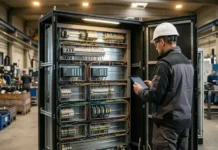
The true intelligence of modern packaging automation lies in the software that governs the physical machines. We are now seeing the widespread adoption of smart packaging systems that utilize the Industrial Internet of Things (IIoT) to monitor every aspect of the production line. Sensors embedded in conveyors, motors, and filling heads collect vast amounts of data in real-time. This data is then analyzed by AI algorithms to provide a holistic view of the factory’s performance. This level of transparency is a vital component of automated packaging, allowing managers to see exactly where bottlenecks are occurring and how they can be resolved.
Predictive Maintenance and Reducing Downtime
One of the most valuable applications of smart packaging systems is predictive maintenance. By analyzing the vibration patterns and temperature of a motor, for instance, the system can predict when a part is likely to fail before it actually does. This allows maintenance teams to replace the part during a scheduled break rather than during an unplanned emergency. In high-volume production, even an hour of downtime can cost thousands of dollars. Therefore, the ability to predict and prevent failures is one of the most important packaging automation trends for maintaining high production efficiency and ensuring a steady flow of goods to the market.
Energy Optimization and Sustainability
Packaging automation trends are also increasingly focused on environmental responsibility. Smart packaging systems can monitor the energy consumption of every machine on the line, identifying areas where power is being wasted. For example, conveyors can be programmed to slow down or stop during gaps in production, and high-efficiency servo motors can be used to reduce overall electricity usage. Furthermore, automated systems can optimize the use of packaging materials, ensuring that only the exact amount of film or adhesive is used for each package. This focus on resource efficiency is not only good for the planet but also significantly reduces operational costs for the manufacturer.
The Human Factor in an Automated World
As robotics in packaging become more prevalent, the role of the human worker is undergoing a transition. While manual, repetitive tasks are being automated, there is an increasing demand for skilled technicians who can program, maintain, and oversee these complex systems. The workforce of the future must be adept at data analysis and mechanical troubleshooting. Manufacturers are investing heavily in training programs to help their employees adapt to this new reality. This shift is a positive one; it moves workers away from dull, dirty, and dangerous jobs toward more mentally engaging and higher-paying roles, ultimately improving the quality of life within the industrial sector.
Conclusion: The Path to Infinite Efficiency
The evolution of packaging automation trends is a journey toward a more efficient, safe, and sustainable future. By embracing robotics in packaging, filling line automation, and smart packaging systems, manufacturers are not just increasing their production speed they are fundamentally reimagining what is possible. As technology continues to advance, we can expect to see even more integration between AI, robotics, and the physical world. The “dark factory,” where production happens entirely without human intervention, is becoming a reality in some sectors. For the consumer, this means products that are safer, cheaper, and more readily available than ever before. For the industry, it represents the pinnacle of production efficiency, ensuring that the global manufacturing engine continues to run at peak performance.