


















As global trade continues to evolve amid shifting economic and operational dynamics, integrated logistics has become central to supply chain efficiency. In this exclusive interaction with Packaging World Insights, Chris Teunissen shares insights into how DP World is strengthening its contract logistics capabilities, enhancing commercial strategy, and delivering integrated, seamless supply chain solutions that support manufacturers and packaging stakeholders worldwide.
Chris Teunissen, Global SVP, Contract Logistics – Commercial Operations, DP World
- Beyond boxes and pallets, how does the approach of DP World to export packing turn precision and compliance into a form of insurance when it comes to your high-value cargo?
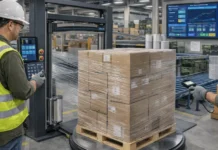
At DP World, export packing is engineered as a strategic safeguard, not just containment. With over 80 years of expertise and precision tools like our proprietary Assembly Operating System (AOS), we ensure each component is correctly picked, packed and labelled. This reduces the margin for error to near zero and enables full traceability across the chain.
We combine warehousing, fulfilment and returns in one flow to strengthen visibility and reduce risk across the chain. Our packing operations are powered by automated validation and smart technology, designed to stop if anything goes wrong. For example, a global automotive OEM we support needed flawless part-by-part shipments from Europe and the U.S. to multiple global assembly sites. Our system flagged any mispicked part before it left the warehouse – avoiding costly downstream failures. This provides our customers with the peace of mind that their high-value cargo is protected – physically and procedurally – through every stage of the journey.
- You have mentioned peace of mind in global logistics on your website. What does that truly look like, and how is it engineered into every layer of the export packing process of DP World’?
Peace of mind comes from confidence that every step of your logistics chain is secure, visible and resilient. At DP World, that confidence is built into our operations through Control Tower oversight, AOS-based error prevention and quality standards embedded at every stage. We remove complexity by putting logistics in the hands of trusted experts, so our clients can focus on growing their business.
- ISPM 15-certified materials happen to be a standard, but how does DP World’s on-site expertise transform this certification into a dynamic shield against the unpredictable journey of international shipping?
DP World’s export packing incorporates ISPM 15-compliant materials as baseline, but it’s the on-site engineering and quality checks that create a truly resilient solution.
Our packaging engineers go beyond compliance by applying customised corrosion protection, technical purity inspections and vacuum sealing for vulnerable parts. These aren’t off-the-shelf solutions – they’re built on-site based on cargo type, routing and exposure risks. This is particularly important for sectors like automotive, heavy industry and energy, where the risk to unprotected components is not just cost but operational downtime at the receiving end.
- In a world that happens to be focused on sustainability, how can an export packing service actually help companies lower their carbon footprint while at the same time improve the safety of their shipments?
Sustainability and safety can go hand in hand. DP World’s export packing integrates sustainability into every layer, from packaging design to supply chain optimisation. We reduce overpacking through engineered fit-for-purpose crates, use returnable containers to limit waste and consolidate operations on-site to reduce handling and emissions. We also localise packing operations near production sites to reduce emissions from unnecessary transport legs.
A good example of this was our work with a global technology company. Their previous packaging setup was leading to low box utilisation and excessive void fill, which meant more material was being used than necessary and more space taken up in each shipment than needed. After we introduced on-demand box cutting technology, carton utilisation increased by more than 30% and total waste fell by 74% per year. Cardboard use dropped from around 1.3 million square feet to 355,000 square feet annually, and plastic packing materials were entirely removed from the process.
Importantly, the gains were not just environmental. Workflow changes improved packing speeds by more than 30%, making the operation more efficient day to day.
Examples like this show that improving sustainability does not mean compromising on performance or product integrity. For another customer, we implemented a returnable container system that not only cut waste by 30% but saved significant freight cost through better stackability.
- What are the hidden risks involved in transporting delicate machinery that only a specialist team with custom solutions such as crating and vacuum packing can truly mitigate?
Delicate cargo like electronics, bare metal parts faces, or high-precision components comes with unique challenges such as corrosion, moisture, vibration, static charge and contamination. Our export packing specialists mitigates these risks through engineered crating, tailored vacuum packing and specialist anti-corrosion treatments. This is where our sector-specific expertise matters most, ensuring correct part orientation and layering to prevent internal movement. These measures safeguard sensitive components during long-haul, multimodal transport.
- How does optimizing packing configuration do more than just reduce waste? How does it become a strategic tool so as to enhance the overall supply chain efficiency and also cost-effectiveness?
Optimised packing is a strategic lever in supply chain performance. Using tools like 3D design software and barcode-enabled sequencing, we optimise cargo space utilisation, streamline container flows from warehouse to final assembly. These efficiencies lead to fewer touchpoints, lower freight costs and shorter lead times – directly benefitting downstream assembly or production schedules.
For example, we worked with a global auto OEM to redesign crate dimensions that aligned with their container stack strategy. This adjustment reduced container moves by 12% and labour time by 20%. The solution goes beyond waste reduction and builds in operational efficiency that compounds over time. By working closely with our customers, we reduced unnecessary handling and minimise waste by designing logistics flows around their needs – without compromising on care or speed.
- When it comes to dangerous goods, wherein a single error can be catastrophic, what specific protocols does DP World execute that go beyond the standard compliance so as to guarantee a secure handling?
Handling dangerous goods involves compliance with international standards such as IMDG (International Maritime Dangerous Goods), IATA (International Air Transport Association) and ADR (Accord Dangereux Routier). DP World enhances this through – hazard classification and packaging design at source, integrated IT systems for inventory control, staff training aligned with Six Sigma practices and temperature-controlled facilities with continuous monitoring. These protocols minimise incident risk and ensure safe, compliant handling at every step.
When the stakes are high, precision and reliability matter even more. Our approach minimises error margins and gives full visibility across each shipment.
- How does the option between on-site and off-site packing services go on to create a strategic advantage for businesses having intricate or time-sensitive global supply chain requirements?
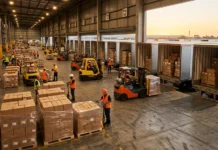
It’s about matching service models to customer need. We provide both on-site and near-site export packing solutions, enabling faster turnaround, real-time quality control and direct integration with manufacturing schedules. This flexibility reduces handling time, improves visibility and supports Just-in-Time (JIT) production environments, which is critical for high-velocity or complex global operations.
- When it comes to oversized loads, what distinct engineering and material challenges must be solved so as to make sure that they arrive not just safely, but also on time, anywhere across the world?
Oversized cargo often requires custom crating, shock-absorbing materials, structural reinforcements and multimodal route planning. Our engineers address these challenges by developing purpose-built crates, managing corrosion prevention and coordinating secure handling across road, sea and rail modes. Materials like shock-absorbing foam, reinforced timber frames and custom-engineered lifting slings are designed to safely handle irregular or oversized cargo. This ensures timely and damage-free delivery, regardless of geography.
- With a commitment to recyclability and reusability, how is the use of sustainably sourced materials by DP World actively reshaping the environmental effect of the global logistics sector
Sustainability is not an afterthought at DP World – it’s embedded into the way we design and deliver export packing and logistics solutions. Our approach to recyclable and reusable materials is guided by a clear objective – to reduce environmental impact without compromising on quality, safety or efficiency.
We engineer packing solutions that use sustainably sourced timber, recyclable wraps and returnable containers to reduce single-use waste. By optimising crate dimensions and reducing excess materials, we minimise overpacking and maximise container utilisation -helping our customers lower their carbon footprint while improving operational performance.
This focus on circularity is reinforced through real-world initiatives. For example, in Europe, we’ve launched a trailer refurbishment programme that extends equipment life by up to five years. This avoids the emissions associated with manufacturing new units and can prevent up to 30,000 tonnes of embedded CO₂ emissions over the life of the programme. It’s one way we’re actively turning environmental responsibility into operational advantage.
Through these strategies, we support our customers in meeting Scope 3 reduction targets and aligning with increasingly ambitious ESG commitments. By integrating sustainable materials and smarter design into every layer of our logistics offering, we’re helping reshape the global logistics sector into one that is not only faster and more reliable – but also future-ready.