

















In the highly regulated world of pharmaceutical manufacturing, the integrity of bulk active pharmaceutical ingredients (APIs) is paramount. These raw materials serve as the foundation of modern medicine, and any compromise in their purity can have catastrophic consequences for patient safety and product efficacy. For manufacturers operating within the European Union, the standards for handling these sensitive substances are dictated by the Good Manufacturing Practice (GMP) guidelines, with a specific focus on the recently updated Annex 1. A critical component of this regulatory framework is the implementation of sterile barrier packaging, a system designed to prevent the ingress of microorganisms and particulate matter during storage, transportation, and subsequent processing. As the pharmaceutical industry moves toward more complex biological and highly potent APIs, the sophistication of these packaging solutions must evolve to meet the increasingly stringent requirements for contamination control and product stability.
The Regulatory Evolution of EU GMP Annex 1
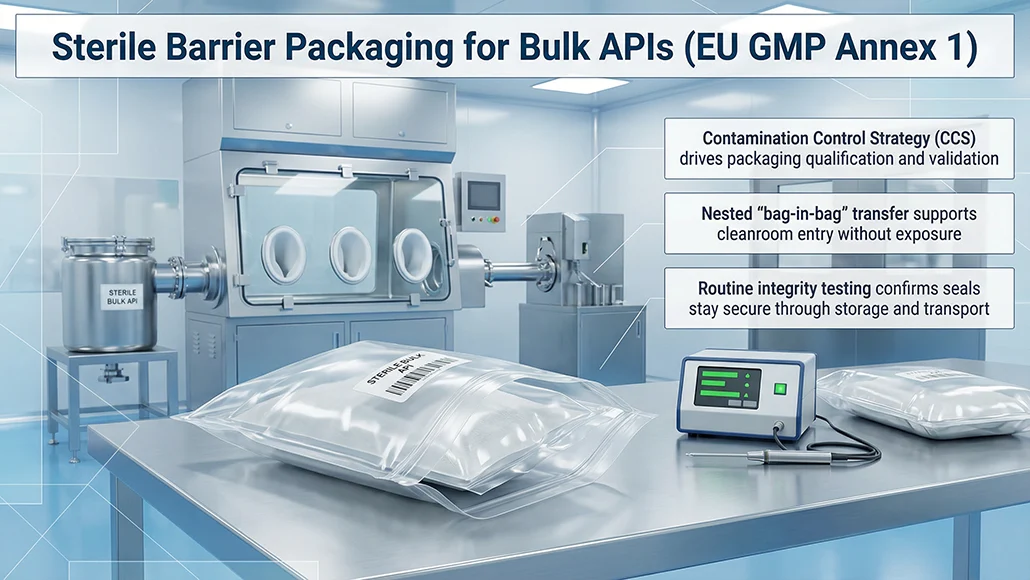
The latest revision of EU GMP Annex 1 has introduced significant changes to the way sterile products and their components are handled. This updated guidance emphasizes a holistic approach to contamination control, moving away from a purely reactive model of testing toward a proactive strategy of risk management. For manufacturers of bulk APIs, this means that every stage of the packaging process must be meticulously validated to ensure that sterility is maintained. The concept of a contamination control strategy (CCS) is now a central requirement, demanding that companies provide a comprehensive overview of all technical and organizational measures in place to prevent contamination. This includes the selection and qualification of sterile barrier packaging materials, which must demonstrate their ability to withstand the rigors of sterilization processes such as gamma irradiation, ethylene oxide, or steam, without compromising their physical or chemical properties.
Material Science and the Performance of Barrier Systems
The choice of materials for sterile barrier packaging is a critical decision that directly impacts the stability and shelf life of bulk APIs. These materials must provide an absolute barrier against microbial penetration while also offering resistance to moisture, oxygen, and light, which can degrade sensitive chemical structures. Commonly used materials include high-density polyethylene (HDPE), various fluoropolymers, and multi-layer laminate films. Each of these materials offers distinct advantages in terms of mechanical strength, transparency, and chemical compatibility. For example, some highly potent APIs may require the use of specialized liners that prevent the leaching of plasticizers or other additives into the product. The interaction between the API and the packaging material must be thoroughly investigated through extractable and leachable (E&L) studies, ensuring that the container-closure system does not adversely affect the quality of the ingredient.
Maintaining Aseptic Integrity During Transfer and Handling
One of the most challenging aspects of using sterile barrier packaging for bulk APIs is the transfer of the product between different cleanroom environments. The “bag-in-bag” or “nested” packaging configurations are often used to facilitate this process, allowing for the outer layers to be removed as the product moves into progressively higher grades of cleanroom. This technique is essential for preventing the introduction of environmental contaminants from the warehouse or transport areas into the aseptic processing zone. Additionally, the use of rapid transfer ports (RTPs) and split butterfly valves has become standard practice for the sterile transfer of bulk powders. These mechanical interfaces allow for a closed-system transfer, where the sterile barrier packaging is connected directly to the processing equipment without exposing the API to the surrounding atmosphere. This level of containment is not only necessary for product sterility but also for the protection of operators handling highly potent or hazardous substances.
Validation and Integrity Testing of Barrier Systems
The reliability of sterile barrier packaging is dependent on a rigorous program of validation and routine integrity testing. Manufacturers must demonstrate that the packaging system can maintain its barrier properties throughout its intended lifecycle, including during the stresses of shipping and long-term storage. This validation process often involves a combination of physical and microbial challenge tests. Physical tests, such as bubble point testing, pressure decay, or high-voltage leak detection, provide a non-destructive way to verify the seal integrity of the packaging. Microbial challenge tests, on the other hand, involve exposing the packaging to a high concentration of microorganisms to confirm that it remains impermeable. For bulk APIs stored in large-format bags or containers, the validation must also account for the potential for pinholes or tears that could occur during handling. The transition to the new Annex 1 requirements has placed an even greater emphasis on the use of validated integrity testing methods that are sensitive enough to detect micro-leaks that could compromise sterility.
Environmental Monitoring and Cleanroom Compatibility
The performance of sterile barrier packaging is intrinsically linked to the environment in which it is used. Under EU GMP guidelines, the filling and sealing of sterile APIs must take place in a Grade A environment, typically within an isolator or a restricted access barrier system (RABS). The packaging materials themselves must be introduced into these environments through validated sterilization or decontamination cycles. For materials that cannot be autoclaved, such as certain plastic films, surface decontamination using vaporized hydrogen peroxide (VHP) is a common method. However, it is essential to ensure that the VHP does not penetrate the packaging or react with the API within. Continuous environmental monitoring, including the sampling of air and surfaces for microbial and particulate levels, provides the necessary data to confirm that the cleanroom is operating within its specified limits. The synergy between a well-designed sterile barrier system and a strictly controlled cleanroom environment is the only way to ensure the ongoing quality of bulk APIs.
The Role of Traceability and Documentation
In the pharmaceutical industry, the mantra of “if it isn’t documented, it didn’t happen” remains as relevant as ever. The use of sterile barrier packaging for bulk APIs requires a comprehensive trail of documentation that tracks the material from the point of manufacture to its final use in a finished drug product. This includes certificates of analysis (CoA) for the packaging materials, records of the sterilization process, and the results of all integrity and validation tests. With the increasing complexity of global supply chains, the ability to trace the history of a sterile barrier system is essential for investigating any potential quality issues. Many manufacturers are now adopting digital solutions, such as blockchain or advanced track-and-trace systems, to enhance the transparency of their packaging logistics. This not only aids in regulatory compliance but also provides an additional layer of security against the introduction of counterfeit or substandard materials into the supply chain.
Economic and Operational Impacts of Compliance
While the implementation of high-performance sterile barrier packaging and the associated regulatory requirements represent a significant investment, the cost of non-compliance is far higher. A single contamination event can lead to the loss of an entire batch of expensive API, not to mention the potential for regulatory fines, product recalls, and damage to the company’s reputation. Beyond the financial risks, there is an ethical obligation to ensure that the medications reaching patients are safe and effective. By investing in the latest packaging technologies and adhering to the principles of EU GMP, manufacturers can achieve a more robust and reliable production process. The operational efficiencies gained from reduced waste, fewer batch failures, and more streamlined regulatory inspections provide a clear return on investment over the long term. In a market where quality is a primary differentiator, the excellence of a company’s sterile barrier strategy is a key indicator of its overall commitment to manufacturing excellence.
Future Trends in Sterile API Packaging
The future of sterile barrier packaging for bulk APIs is being shaped by the rise of personalized medicine and the growing importance of biopharmaceuticals. These new classes of drugs often involve smaller batch sizes and more sensitive molecules that require specialized handling and storage conditions. We are likely to see the development of “smart” packaging that can monitor and report on its own integrity and environmental conditions in real-time. There is also an increasing focus on sustainability, with researchers looking for ways to reduce the environmental impact of pharmaceutical packaging without compromising on safety or sterility. This includes the exploration of bio-based polymers and more efficient recycling programs for cleanroom materials. As the regulatory landscape continues to evolve, the pharmaceutical industry must remain agile, embracing new technologies and methodologies to ensure that the sterile barrier remains an unbreakable link in the chain of patient care. The pursuit of perfection in contamination control is an ongoing journey, and sterile barrier packaging will continue to be at its forefront.