

















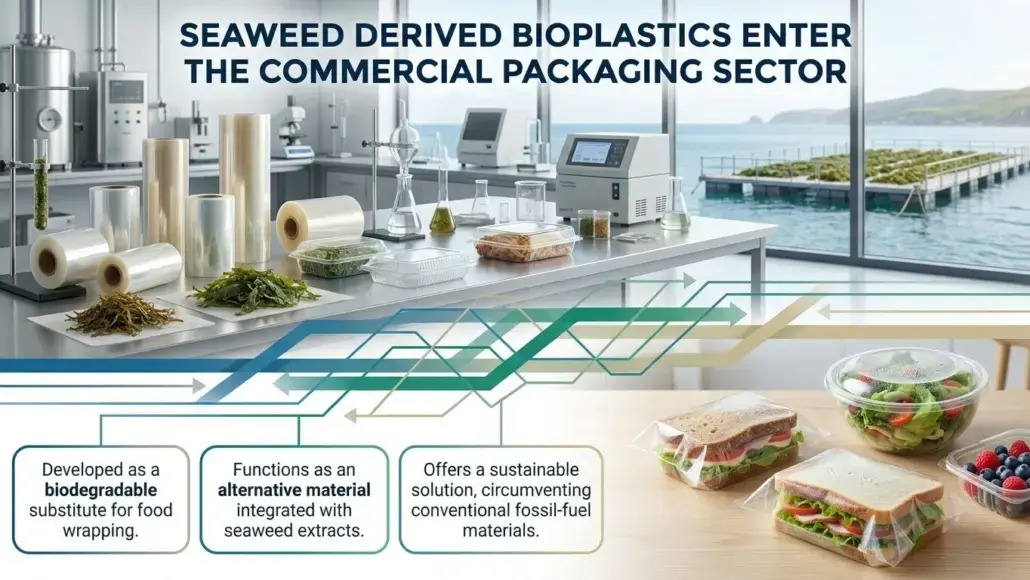

Researchers at Aberystwyth University in Wales have developed a biodegradable substitute for conventional food wrapping. Published in the journal Algal Research, the findings from academics at the Institute of Biological, Environmental and Rural Sciences (IBERS) detail how seaweed derived bioplastics function as an alternative material. The integration of seaweed extracts provides a biodegradable packaging solution that circumvents the use of conventional fossil-fuel materials.
Conventional commercial films are primarily manufactured from fossil fuels. According to a university statement, these materials accounted for nearly one-third of the 400 million tonnes of plastic produced worldwide in 2022. Consequently, packaging waste remains a critical environmental issue, with approximately 15 billion kilograms of plastic infiltrating marine environments annually.
Dr Jessica Adams from IBERS at Aberystwyth University stated: “It is good news for the planet that seaweed grown in the UK can be used to create more sustainable plastics.”
The research team located in west Wales utilized alginate an extract from seaweed alongside other biological compounds to enhance the flexibility and durability of the material so that it could be formed into food wrap. To manufacture the film, these extracts are processed into a powder, mixed with water, heated, and subsequently poured into moulds.
The team is currently assessing the material for its antibacterial performance, resistance to water, and overall durability. The continuous evaluation of these biological compounds aims to ensure functional versatility for this biodegradable packaging.
PhD student Luke Barnett, who led the study, emphasized the ongoing transition within the packaging sector. “While bioplastics have a long history, plastic packaging, including films, is now starting to shift to environmentally friendly alternatives,” Barnett noted. “These more natural sources for packaging will help reduce the effect plastic pollution is having on the environment.”
Advancing the use of seaweed derived bioplastics is intended to directly target and reduce the high volume of packaging waste generated globally.
This scientific work received financial backing from the BBSRC and food company Samworth Brothers.
Professor Anne Ferguson-Smith, BBSRC executive chair, remarked on the application of the research: “Bioscience has a vital role to play in tackling environmental challenges, and this research shows how natural resources such as seaweed can inspire innovative alternatives to fossil-fuel derived plastics.”
She further added, “Through our investments, BBSRC supports partnerships between academia and industry to turn discovery research into practical solutions that improve lives and livelihoods while advancing a more sustainable circular bioeconomy.”