














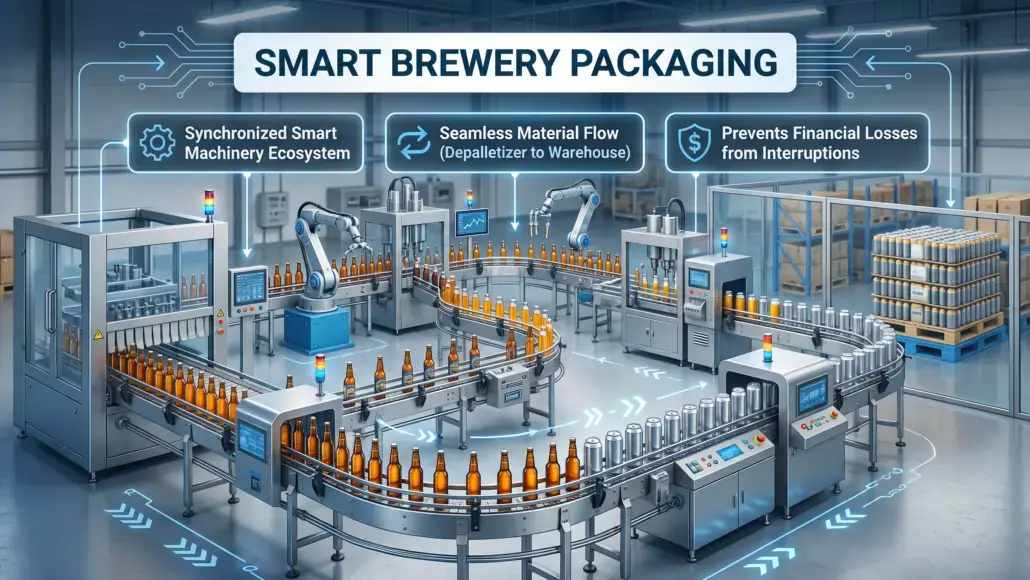
The systematic integration of Packaging Line Automation Improving Beer Production Efficiency represents a significant evolution in the modern brewery environment, moving beyond simple mechanical tasks to a fully synchronized ecosystem of smart machinery. High-volume beer production requires a seamless flow of materials from the depalletizer to the final warehouse stage, and any interruption in this sequence can lead to significant financial losses and wasted capacity. Automation at this scale is not merely about replacing manual labor, it is about enhancing the precision of every movement to minimize structural stress on the containers and maximize the uptime of the entire facility. By utilizing advanced programmable logic controllers (PLCs) and high-speed communication protocols, breweries can now coordinate the speeds of multiple machines in real-time, ensuring that the filler, labeller, and packer operate as a single unified entity rather than a series of isolated stations.
One of the primary drivers of this increased efficiency is the implementation of intelligent conveyor systems. Traditional conveyors operated at fixed speeds, often leading to bottle-to-bottle collisions and excessive noise, which not only damaged the primary packaging but also reduced the overall life of the machinery. Modern smart conveyors utilize distributed sensor networks to monitor the density of containers at every point on the line. When a downstream machine experiences a temporary delay, the conveyor system can automatically adjust its speed or activate accumulation tables to prevent a backup that would force the upstream filler to stop. This ability to buffer production is a critical component of Packaging Line Automation Improving Beer Production Efficiency, as it allows the filler (the most expensive and critical piece of equipment in the brewery) to run at a consistent, optimized rate for the duration of the production shift.
Advanced Robotics in End of Line Operations
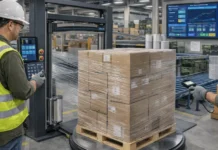
The end-of-line operations, specifically palletizing and depalletizing, have seen the most dramatic improvements through the application of multi-axis robotic arms. Historically, these tasks were physically demanding and prone to errors, particularly when handling complex pallet patterns for different distribution channels. Modern robotic systems can handle multiple layers of bottles or cans simultaneously, using specialized vacuum grippers or mechanical clamps that distribute pressure evenly to avoid damaging the secondary packaging. These robots are programmed with sophisticated motion planning algorithms that allow them to move at high speeds while maintaining a smooth trajectory, which is essential for preventing spills or falling containers. The flexibility of these robotic systems also allows breweries to switch between different pack formats (such as 12-packs, 24-packs, or variety trays) without requiring extensive mechanical retooling.
Beyond simple movement, these robotic systems are often integrated with vision-guided technology. This allows the robot to identify the orientation of incoming products and adjust its grip in real-time, ensuring that labels are facing the correct direction and that the pallet is perfectly balanced for transport. The integration of Packaging Line Automation Improving Beer Production Efficiency in the palletizing stage also improves the safety of the production floor by removing the need for human operators to work in close proximity to high-speed machinery. By automating the heavy lifting and repetitive stacking tasks, breweries can reallocate their skilled workforce to more technical roles, such as system monitoring and preventative maintenance, which further enhances the long-term reliability of the production environment.
Integration of IoT and Real Time Data Analytics
The rise of the Internet of Things (IoT) has provided a new layer of visibility into the performance of the packaging line. Every motor, sensor, and valve can now be equipped with communication modules that feed data into a centralized management system. This data-driven approach is a fundamental aspect of Packaging Line Automation Improving Beer Production Efficiency, as it allows for the identification of micro-stops that were previously invisible to human operators. A micro-stop is a brief interruption, often lasting only a few seconds, that does not trigger a major alarm but cumulatively reduces the line’s overall equipment effectiveness. By analyzing the frequency and location of these stops, maintenance teams can pinpoint the root cause (such as a misaligned guide rail or a worn-out sensor) and resolve the issue before it leads to a catastrophic failure.
Predictive maintenance is another significant benefit of IoT integration. By monitoring variables such as vibration, temperature, and current draw, the automation system can detect the early signs of component wear. For example, a slight increase in the vibration profile of a conveyor motor may indicate an impending bearing failure. The system can then automatically schedule a maintenance task during a planned downtime period, preventing an unscheduled stoppage during a high-demand production run. This proactive strategy ensures that the packaging line remains operational during peak seasons, when the cost of downtime is at its highest. The transition from reactive to predictive maintenance is a key metric in measuring the success of automation initiatives in the beverage sector.
Modular Control Architectures and Scalability
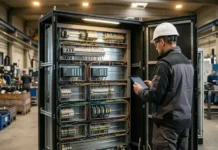
Modern packaging lines are increasingly designed using modular control architectures, which allow for greater flexibility and scalability. Instead of a single, massive control cabinet, the line is divided into smaller zones, each with its own local controller and power distribution. These zones communicate via high-speed Ethernet-based protocols like Profinet or EtherCAT. This modularity simplifies the installation process and reduces the amount of wiring required, which in turn reduces the risk of electrical faults. When a brewery needs to add a new piece of equipment (such as a specialized shrink-wrapper or a high-speed labeller) the modular architecture allows the new machine to be integrated into the existing control network with minimal disruption.
This scalability is particularly important for growing breweries that need to increase their capacity over time. By investing in a comprehensive automation framework from the beginning, a facility can start with a basic line and gradually add more sophisticated features as production volumes grow. This phased approach reduces the initial capital expenditure while ensuring that the brewery is prepared for future growth. The use of open communication standards also prevents vendor lock-in, allowing breweries to select the best machinery for each specific task regardless of the manufacturer. This competitive environment encourages innovation and ensures that Packaging Line Automation Improving Beer Production Efficiency remains a dynamic and evolving field within the industry.
Enhancing Resource Efficiency and Waste Reduction
Automation also plays a vital role in reducing the waste of raw materials and utilities. In the beer production process, the most significant losses often occur during the startup and shutdown of the packaging line. Automated control sequences ensure that these transitions are handled with precision, minimizing the number of containers that are rejected due to incorrect fill levels or misaligned labels. Additionally, the automation of the clean-in-place (CIP) and sterilization-in-place (SIP) processes ensures that the exact amount of chemicals, water, and heat are used for each cycle. This not only reduces the environmental impact of the facility but also lowers the operational costs associated with utility consumption.
The precision of automated filling and capping systems also reduces product giveaway. By maintaining a highly accurate fill level, breweries can ensure that they are meeting regulatory requirements without overfilling the containers. Over thousands of production runs, these small savings in product and packaging materials add up to a significant impact on the bottom line. The implementation of Packaging Line Automation Improving Beer Production Efficiency is therefore not just a technical upgrade; it is a strategic move toward a more sustainable and profitable production model. By applying the power of data, robotics, and smart controls, modern breweries can achieve a level of efficiency and quality that was previously unattainable, ensuring their competitiveness in a crowded global market.
To maintain this stability, breweries must also address the emerging challenges of cybersecurity within their automated systems. As more machines are connected to the cloud for data analysis, the potential for unauthorized access to control networks increases. Packaging Line Automation Improving Beer Production Efficiency now incorporates secure gateway devices and encrypted communication protocols to protect the integrity of the production data. These security measures are integrated directly into the PLC architectures, providing a layered defense that ensures the physical safety of the equipment and the confidentiality of the brewing parameters. This holistic approach to automation, encompassing both physical throughput and digital security, is essential for the long-term viability of modern beverage facilities.
Another critical development is the use of digital twin technology in the design and optimization phase. By creating a virtual replica of the packaging line, engineers can simulate different production scenarios and identify potential bottlenecks before any physical equipment is installed. This reduces the time required for commissioning and ensures that the final line configuration is perfectly matched to the brewery’s specific output goals. The ability to test changes in a virtual environment also allows for more experimentation with new pack formats and line speeds without risking actual production downtime. The combination of digital twins and real-time sensor data creates a powerful feedback loop that allows for the continuous improvement of Packaging Line Automation Improving Beer Production Efficiency. These technical advancements ensure that the packaging sector remains a leader in industrial efficiency, providing the foundation for the next generation of beverage production excellence. The continued refinement of these systems will remain a top priority for packaging engineers as they strive to meet the increasing demands for higher speed, greater flexibility, and lower environmental impact.