


















The transportation of heavy industrial machinery is a logistical undertaking that demands a sophisticated understanding of mechanical engineering and structural physics. Unlike standard freight, which can often be accommodated by off-the-shelf pallets or containers, heavy equipment requires a bespoke approach to containment. The development of engineered crate designs has become the gold standard for manufacturers who must move multi-ton assets across vast distances and varying modes of transport. These crates are not merely wooden boxes; they are highly calculated structures designed to manage dynamic loads, resist external pressures, and provide a stable internal environment for sensitive components. The precision required in these designs is essential to prevent the catastrophic failure of the transport unit under the stress of high-seas turbulence or sudden rail decelerations.
Effective industrial crating begins with a comprehensive analysis of the machinery itself. Engineers must identify the primary load-bearing points and the center of gravity to ensure that the weight is distributed evenly across the base of the crate. A failure to account for an asymmetrical weight distribution can lead to the tilting of the load during lifting, potentially damaging the machinery and endangering the lives of logistics personnel. By employing computer-aided design software, packaging specialists can simulate the forces that will be applied to the crate throughout the supply chain, allowing for the optimization of internal bracing and external reinforcement. This rigorous engineering approach ensures that the finished crate is both as light as possible for shipping efficiency and as strong as necessary for asset protection.
Structural Load Distribution Analysis
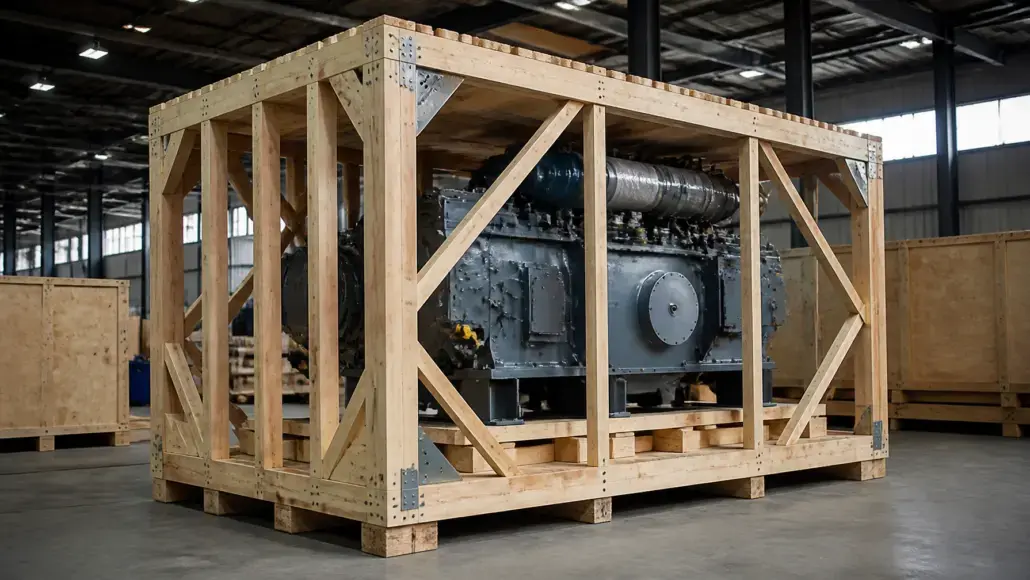
The foundational element of any heavy-duty crate is the base, which must support the entire weight of the machine without bending or breaking. Engineered crate designs utilize a combination of heavy timber skids and steel reinforcements to create a rigid platform. The spacing and orientation of these skids are determined by the location of the machine’s mounting points. By aligning the skids directly under the heaviest parts of the equipment, engineers can minimize the shear forces acting on the baseboards. In cases where the equipment is exceptionally heavy, a double-floored design may be employed, providing an extra layer of structural redundancy.
Once the base is secure, the vertical and horizontal forces acting on the walls and lid must be addressed. During maritime transport, crates are often stacked several units high, placing significant compression loads on the lower structures. Furthermore, the motion of the ship creates lateral forces that can lead to the racking of the crate if it is not properly braced. Diagonal bracing is used to create triangular structures within the walls, providing superior resistance to these shearing forces. This level of structural integrity is critical for maintaining the internal dimensions of the crate, ensuring that any integrated shock absorption systems can function correctly without being compromised by the deformation of the outer shell.
Customisation for Geometric Complexity
Industrial machinery rarely comes in simple rectangular shapes. Protruding components, delicate control panels, and irregular footprints require a high degree of customisation in the crating process. Custom internal blocking and bracing are used to secure the machine in place, preventing any movement within the crate during transit. These internal supports must be carefully padded to avoid surface abrasion, often utilizing high-density foams or rubberized materials. The ability to accommodate these geometric complexities is what differentiates professional engineered crate designs from generic packaging solutions.
- Custom saddles are engineered to support cylindrical or rounded components, distributing the load over a larger surface area to prevent indentation.
- Bolt-down procedures secure the machine directly to the crate base, eliminating the possibility of sliding during sudden movements.
- Internal partitions can be used to separate accessories and smaller components from the main machine body, preventing internal collisions.
- Viewing ports and access panels are integrated into the design to allow for customs inspections or maintenance without dismantling the entire crate.
The integration of these custom features requires a close collaboration between the machinery manufacturer and the packaging engineer. By understanding the specific vulnerabilities of the equipment, the designer can create a protective envelope that addresses every potential risk. This level of detail is particularly important for high-precision instruments where even a few millimeters of movement could result in the loss of calibration. The result is a shipping unit that is perfectly tailored to the asset, providing the highest possible level of security throughout the global distribution network.
Material Selection for Global Transit
The choice of materials for industrial crating is dictated by a combination of strength requirements, environmental considerations, and international regulations. While timber remains the most common material due to its high strength-to-weight ratio and ease of customisation, the use of engineered wood products such as plywood and LVL (Laminated Veneer Lumber) is increasing. These materials offer more consistent performance characteristics and are less prone to the warping or splitting that can occur with natural lumber. For extremely heavy loads, steel frames or hybrid wood-steel designs provide the ultimate in structural stability.
Environmental factors also play a significant role in material selection. Industrial crates must withstand exposure to rain, salt spray, and extreme temperature fluctuations. To combat these elements, the wood is often treated with water-resistant coatings, and the internal environment is protected by high-performance barrier packaging systems. The use of specialized fasteners, such as ring-shank nails and heavy-duty lag bolts, ensures that the crate remains intact even under severe vibration. By selecting the right combination of materials and hardware, engineers can create a transport unit that is resilient enough to handle the most demanding global transit routes.
Reusability and Lifecycle Management
As companies seek to improve their sustainability profiles, the demand for reusable industrial crates has grown. A well-engineered crate represents a significant investment, and the ability to use it for multiple shipments can lead to substantial cost savings and reduced material waste. Designing for reusability involves the use of more durable materials and the implementation of modular assembly techniques that allow the crate to be easily dismantled and reassembled. This approach is particularly effective for closed-loop supply chains where equipment is frequently returned for servicing or refurbishment.
Lifecycle management for these crates involves regular inspections and maintenance to ensure that their structural integrity is maintained. Any damage to the base or bracing must be repaired promptly to prevent failure during the next shipment. Furthermore, the use of tracking technology, such as RFID tags or GPS trackers, allows companies to monitor the location and condition of their reusable assets in real-time. This visibility ensures that the crates are returned to the point of origin efficiently, maximizing their utilization rate. By treating the crate as a long-term asset rather than a disposable item, manufacturers can significantly reduce their overall logistics costs while minimizing their environmental impact.
Compliance with International Standards
The global nature of industrial trade means that engineered crate designs must comply with a complex web of international regulations. The most critical of these is ISPM 15, which governs the treatment of wood packaging materials to prevent the spread of invasive pests. All timber used in export crating must be heat-treated or fumigated and marked with the appropriate certification stamp. A failure to comply with these standards can lead to the impounding of the shipment, resulting in significant delays and financial penalties.

In addition to phytosanitary regulations, crates must often meet specific standards set by maritime and aviation authorities. These include requirements for lifting points, stackability, and the securement of hazardous materials. Professional packaging engineers are well-versed in these requirements, ensuring that every crate they design is fully compliant with the relevant international codes. This expertise is a vital component of the risk management strategy, as it ensures that the shipment will pass through customs and port authorities without issue. By prioritizing compliance and structural excellence, the industrial sector can maintain the flow of heavy machinery across borders, supporting the continued growth of global infrastructure.
The future of heavy machinery transportation lies in the continued refinement of crate engineering and the adoption of new materials and technologies. As machines become larger and more complex, the demands on their protective containment will only increase. The ability to design and build structures that can withstand the rigors of global logistics is a critical skill set in the modern industrial economy. By investing in high-quality engineered crate designs, manufacturers can ensure that their most valuable assets are protected from the moment they leave the factory floor until they reach their final destination, ready to fulfill their operational purpose.

