


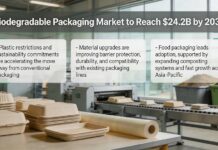
















The 2020 Sustainable Packaging Report from Winsight Grocery explains that sustainability has become one of the largest concerns in food and beverage presently and that packaging is a key component of the journey toward sustainable business practises.
Sustainable packaging isn’t just a nice-to-have any more. Sustainable Packaging Unwrapped, a 2019 research report from GlobalWebIndex, describes it as a must-have for any brand aiming to future-proof its business against the rising wave of consumer scrutiny.
According to the Consumer Brands Association’s Industry View 2020, CPG executives ranked plastics and package waste as the second-most probable issue that would affect their firms. According to CBA, all 25 of the biggest consumer packaged goods firms have pledged to increase recyclable content, reduce packaging, or reuse materials. Within the next ten years, 80% of those companies plan to have entirely reusable packaging for all items.
What is the definition of sustainable packaging?
Although sustainable packaging can be defined in a variety of ways, the Sustainable Packaging
Alliance has a vision for it that includes the following criteria:
- Throughout the life cycle of the packaging, it is useful, secure, and healthful for individuals and groups.
- It meets market effectiveness and cost criteria.
- It is made with clean manufacturing technologies and best practises and maximises the use of recycled and renewable source materials.
- Is made of components that are healthy for the entire life cycle.
- Is built in a way that maximises the use of materials and energy.
- Is effectively recovered and utilised in closed-loop biological and/or industrial cycles
What do customers desire?
GlobalWebIndex polled consumers in the United States and the United Kingdom to find out what they valued most in environmentally friendly packaging. Here’s what they had to say:
- 64% of people want recyclables.
- Reusable items are desired by 53%.
- 46% desire things that aren’t overly packaged.
- Compostable or biodegradable is preferred by 39% of respondents.
- 36% prefer packaging produced from renewable materials.
- 35% prefer packaging that allows them to easily separate different components for disposal.
In addition, over half of customers informed GlobalWebIndex that they had cut back on the number of plastic disposables they used in the previous year.
According to PMMI, The Association for Packaging and Processing Technologies’ 2019 Trends and Advances in Food Packaging and Processing, while customers presently prefer materials made from recycled goods that can also be recycled, the next border of sustainability is the biodegradable and compostable markets.
What direction are companies taking in terms of package sustainability?
The 2020 Sustainable Packaging Report states that statistics on sustainable packaging from prominent industry sources present a picture of an industry pushing for change. Tristanne Davis, senior manager of the Sustainable Packaging Alliance, outlined five trends for 2020 in a previous Packaging Digest article:
- Companies are announcing sustainable packaging targets and developing action plans in greater numbers.
- Companies are looking for new ways to expand the market for recovered plastics.
- Substrates are replaced to satisfy recovery goals, such as paper-based solutions.
- Companies are paying more attention to reusable packaging.
- Material hygiene becomes more essential, with increased attempts to minimise perfluoroalkyl chemicals and polyfluoroalkyl compounds in particular (PFAS).
- For food firms that also need to keep their goods fresh and safe while generating a profit, creating sustainable products is a challenge. However, in today’s world, it’s a difficulty that more businesses will have to face.