

























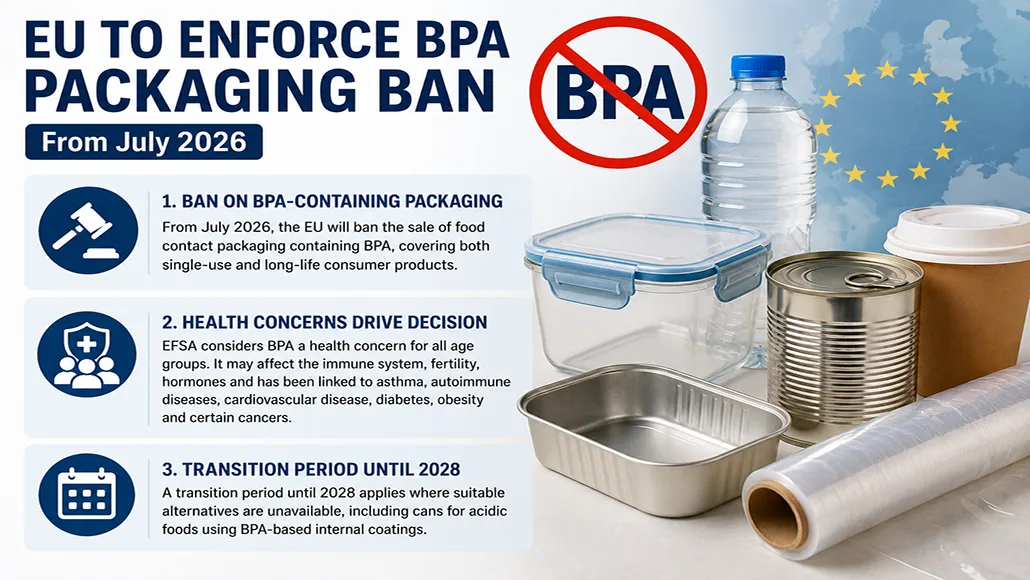

The European Union will begin enforcing a BPA Packaging Ban from July 2026, preventing the sale of food contact packaging that contains Bisphenol A (BPA). The new rules broaden existing EU restrictions, which already apply to products such as baby bottles and thermal paper receipts, according to Deutsche Welle (DW). BPA is a synthetic chemical widely used in the manufacture of polycarbonate, a clear and durable plastic, as well as epoxy resins. These resins are commonly applied as protective inner coatings in food and beverage cans to prevent corrosion and stop metal from passing into their contents. The substance is also used in plastic films, printing inks and adhesives. The legislation will apply to both single-use food packaging and longer-life consumer products, including plastic drinks bottles, lunch boxes and kitchen utensils.
According to the European Food Safety Authority (EFSA), small amounts of BPA and similar chemicals can migrate from packaging into food and beverages. EFSA considers BPA to be a potential health concern for people of all age groups. The authority has also reported that the chemical may affect parts of the immune system and has identified possible links to asthma and autoimmune conditions. Evidence has further suggested a possible increased risk of cardiovascular disease, diabetes and obesity. A key concern remains BPA’s impact on the body’s hormonal system, as the substance may reduce male and female fertility and influence the timing or progression of puberty. It has also been associated with certain forms of cancer. Reflecting these findings, EFSA reduced the tolerable daily intake for BPA from 4 micrograms to 0.2 nanograms per kilogram of body weight, describing this level as safe over a lifetime.
The BPA Packaging Ban includes a transition period that will remain in place until 2028 for applications where suitable alternatives are not yet available. This exemption covers products such as cans for acidic foods that continue to rely on BPA-based internal coatings. These coatings are used to prevent acidic contents from damaging the metal surface and contaminating the food, allowing additional time for manufacturers to adopt alternative materials.