











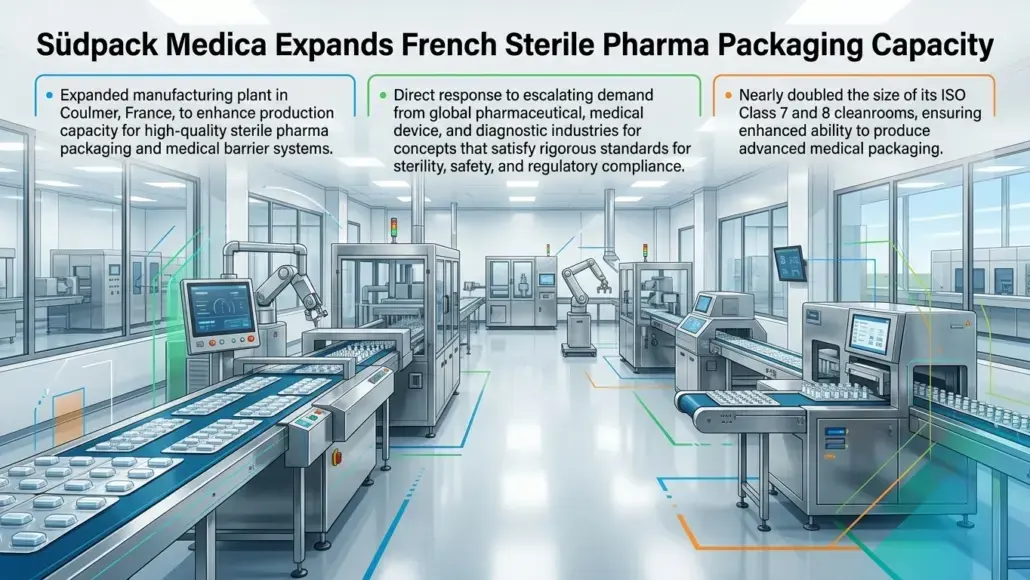

Südpack Medica has officially inaugurated its expanded manufacturing plant in Coulmer, France, to enhance production capacity for high-quality sterile pharma packaging and medical barrier systems. The expansion is a direct response to the escalating demand from the global pharmaceutical, medical device, and diagnostic industries for packaging concepts that satisfy rigorous standards for sterility, safety, and regulatory compliance. By nearly doubling the size of its ISO Class 7 and 8 cleanroom production areas, the site now supports high-volume manufacturing across the entire process chain, ranging from initial film production to the final assembly of finished pouches. This vertical integration ensures a consistent level of quality control and strengthens the security of supply for international healthcare partners.
The Coulmer facility focuses heavily on the production of the MedGuard product line, which encompasses a wide range of pouch systems and packaging concepts for critical applications such as implants, surgical kits, and wound care products. The expansion also enables increased production of specialized header bags designed for large-volume medical devices that undergo ethylene oxide sterilization. Südpack Medica emphasized that the investment underscores its commitment to the Orne region and to the broader European medical infrastructure, providing a reliable foundation for the production of primary packaging that meets the most stringent particulate cleanliness and process control requirements.
Advancing Sustainable and Regulatory-Compliant Packaging
A significant component of the new facility’s mission is the development of packaging solutions that align with the EU Packaging and Packaging Waste Regulation (PPWR). The plant is actively involved in engineering alternative materials, specifically focusing on recyclable mono-PE concepts. These innovative materials are designed to serve as effective replacements for conventional polyamide and PE laminates, which are traditionally more difficult to recycle. By focusing on mono-material solutions, Südpack Medica is helping the life sciences sector transition toward a more circular economy while maintaining the necessary barrier properties and mechanical strength required for sterile pharma packaging.
This focus on sustainable alternatives follows other recent service expansions by the company, such as the introduction of MedHub. This service allows consumers and smaller-scale manufacturers to order high-quality, pre-made medical pouches in standardized sizes and defined batch quantities, streamlining the procurement process for sterile barrier systems. The Coulmer site’s role in material development ensures that these standardized offerings can eventually be transitioned to more sustainable substrates as the market shifts toward recyclable alternatives.
Collaborative Innovation and Market Reliability
The expansion in France builds upon Südpack Medica’s history of collaborative innovation within the biopharmaceutical and vaccine production sectors. The company has previously partnered with industrial leaders such as Dow and Sartorius to manufacture specialized bioprocessing bags, which played a vital role in the safe transportation and production of vaccines. The expanded capacity at Coulmer further solidifies Südpack’s position as a key player in the healthcare supply chain, offering the technical expertise and manufacturing scale required to support complex life science applications.
By integrating material research with industrial-scale cleanroom production, the site provides a reliable environment for the development and commercialization of next-generation packaging concepts. The increased capacity ensures that Südpack can meet the long-term volume requirements of its customers while maintaining the flexibility to develop custom solutions for emerging medical technologies. As regulatory requirements for medical packaging continue to evolve, the expanded Coulmer facility is positioned to deliver the high-performance, compliant, and sustainable solutions required to protect critical medical products worldwide.