







Close
GULF PRINT
& PACK 2026
Friday, January 30, 2026
ACHEMA MIDDLE EAST

The BioICEP Project Turns Non-Biodegradable Plastics into New Biobased Materials for the Packaging and Pharmaceutical Industries

Note* - All images used are for editorial and illustrative purposes only and may not originate from the original news provider or associated company.

Subscribe

- Never miss a story with notifications

- Gain full access to our premium content

- Browse free from any location or device.

Media Packs

Expand Your Reach With Our Customized Solutions Empowering Your Campaigns To Maximize Your Reach & Drive Real Results!

– Access the Media Pack Now

– Book a Conference Call

Leave Message for Us to Get Back

Related stories

AI-Powered Packaging Software Enhances Quality Control and Efficiency

The rapid integration of artificial intelligence into the manufacturing sector is fundamentally redefining the standards of quality control and operational precision. AI-powered packaging software solutions…

Hologram Packaging Technologies Gaining Traction in FMCG and Pharma

The rapid expansion of global trade has necessitated a more robust approach to product security and brand differentiation, particularly within the sensitive sectors of consumer…

Nano-Coatings Improve Barrier Performance in Flexible Packaging

The evolution of the flexible packaging industry is currently reaching a critical milestone through the strategic integration of nano-coatings that dramatically enhance material efficiency and…

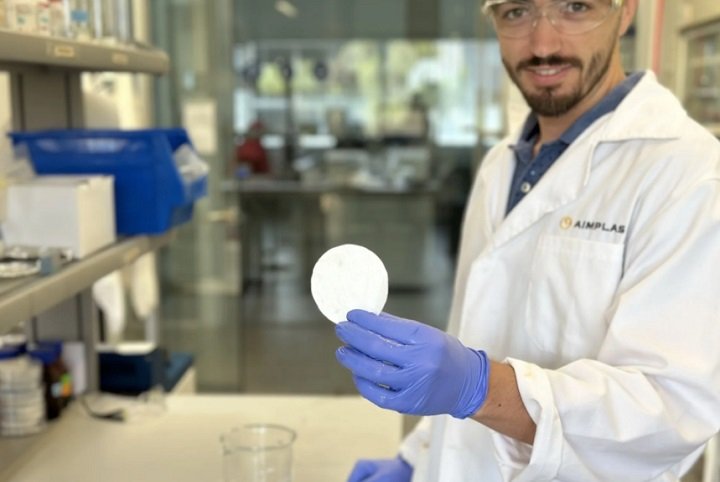
AIMPLAS forms part of the BioICEP project (Bio-Innovation of a Circular Economy for Plastics). It started in February 2020 and is funded by the Horizon 2020 program. The goal of the project is to develop sustainable and environmentally friendly alternatives to traditional petroleum-based plastics.

The project used an innovative cascade process by applying and combining chemical and biological methods to turn fossil-based plastic waste into natural, biodegradable substitutes to be used in the packaging and pharma industries. This has led to obtaining bio-based materials from plastic waste.

The role of AIMPLAS in the project involved the pretreatment of plastics using microwave-assisted thermochemical degradation. This new technology provided promising results by turning non-biodegradable plastic waste (such as low-density polyethylene) into easily biodegradable materials and achieving total degradation in less than 28 days. Another technique used was the depolymerization of polyamides to obtain the monomers of these polymers. Microorganisms are then able to degrade these monomers so they can be turned into products of interest such as bioplastics.

Likewise, AIMPLAS used reactive extrusion technologies that made changes to the structure of the polymeric chains to improve biodegradation of these plastics. AIMPLAS is also the coordinator in charge of dissemination and exploitation of results, as well as communication activities.

Reducing the amount of plastic in the environment
BioICEP met the goal of developing processes to reduce the amount of plastic waste in the environment. With this in mind, the project was made up of partners from different countries and areas of knowledge who were able to address the challenge of developing alternative processes. The purpose was to improve recycling based on a multidisciplinary approach, which was essential for project success. As a result, bio-based materials from plastic waste have been obtained.

The solution proposed by the BioICEP project focused on the use of three technologies that enhance, accelerate and increase the degradation of plastics to levels far beyond what is currently possible. A triple-action depolymerization system broke down plastic waste through three consecutive processes.


Latest stories

Related stories

AI-Powered Packaging Software Enhances Quality Control and Efficiency

The rapid integration of artificial intelligence into the manufacturing sector is fundamentally redefining the standards of quality control and operational precision. AI-powered packaging software solutions…

Hologram Packaging Technologies Gaining Traction in FMCG and Pharma

The rapid expansion of global trade has necessitated a more robust approach to product security and brand differentiation, particularly within the sensitive sectors of consumer…

Nano-Coatings Improve Barrier Performance in Flexible Packaging

The evolution of the flexible packaging industry is currently reaching a critical milestone through the strategic integration of nano-coatings that dramatically enhance material efficiency and…

The Intersection of Food Safety and Sustainable Closure Design

If you work in packaging, you already know that...

Subscribe

- Never miss a story with notifications

- Gain full access to our premium content

- Browse free from any location or device.

Media Packs

Expand Your Reach With Our Customized Solutions Empowering Your Campaigns To Maximize Your Reach & Drive Real Results!

– Access the Media Pack Now

– Book a Conference Call

Leave Message for Us to Get Back

Translate »