











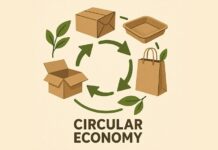



The global food system is currently at a crossroads. We are tasked with feeding a growing population while simultaneously reducing the environmental footprint of the very tools we use to keep that food safe and fresh. This challenge has sparked a period of unprecedented sustainable food packaging material innovation. We are no longer looking for “less bad” versions of old materials; we are engineering entirely new substrates that are designed from the molecular level to be part of a circular economy. For the food industry, this innovation is the key to unlocking growth in a world where “green” is the new standard of quality.
The Evolution of Renewable Packaging Inputs
The first wave of sustainable packaging often relied on simple substitutions, like replacing a plastic tray with a cardboard one. However, the current era of sustainable food packaging material innovation is much more sophisticated.
Bio-Polymers and Plant-Based Plastics
We are seeing a rapid advancement in renewable packaging inputs derived from non-food sources. Materials like PLA (polylactic acid) have been joined by PHA (polyhydroxyalkanoates) polymers produced by microbial fermentation of oils or sugars. Unlike traditional plastics, these materials can be designed to be home-compostable or marine-degradable. The breakthrough here is not just the source, but the performance; modern PHAs can now mimic the moisture and oxygen barrier properties of traditional polypropylene, making them viable for a much wider range of food applications.
Upcycled Agricultural Waste
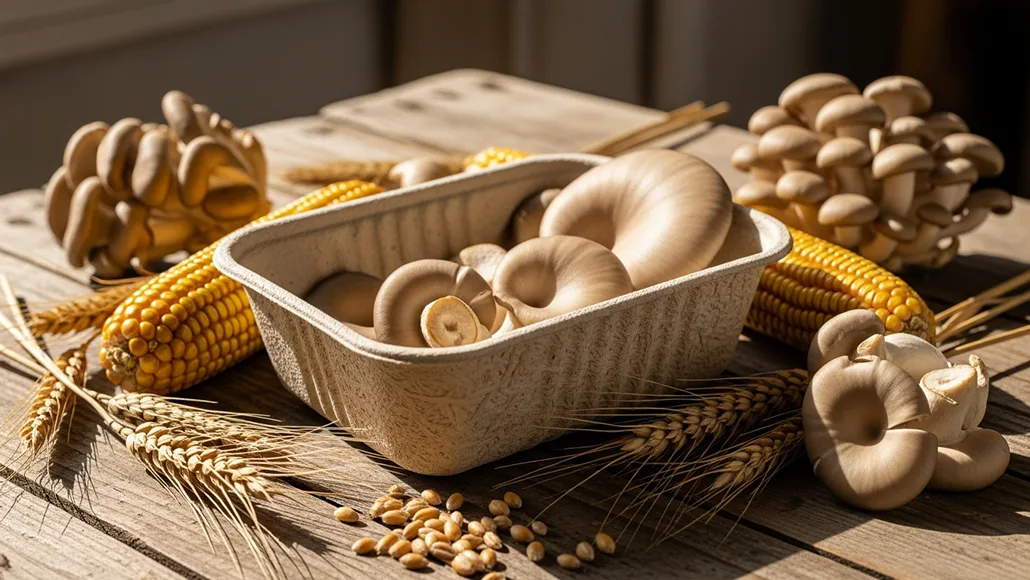
One of the most exciting areas of eco-friendly packaging is the use of “upcycled” materials. By-products from the production of sugar, wheat, and even mushrooms are being converted into high-strength molded fiber packaging. This approach exemplifies the circular economy by taking a waste stream from one industry and turning it into a resource for another. These renewable packaging inputs often have a significantly lower carbon footprint than virgin paper or plastic, providing a double-win for the environment.
The Science of Recyclable Coatings and Barriers
Perhaps the greatest hurdle to sustainability in food packaging has been the “multi-material” laminate. These structures, while excellent at protecting food, are a nightmare for recycling facilities.
Moving Toward Mono-Materials
The focus of sustainable food packaging material innovation has shifted toward creating “high-barrier mono-materials.” By using advanced polymer engineering, we can now create a single-material pouch that provides the same protection as a five-layer laminate. This makes the package infinitely more valuable to the recycling stream, as it doesn’t require the complex separation of layers.
The Role of Recyclable Coatings
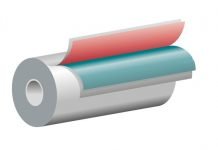
To achieve these barrier properties in paper-based or mono-plastic formats, the industry is turning to recyclable coatings. These are ultra-thin, water-based or vapor-deposited layers that provide resistance to grease, moisture, and oxygen. The innovation lies in the fact that these coatings are designed to break down during the standard pulping or washing process, ensuring that they do not contaminate the recycled material. This is a critical component of sustainable food packaging material innovation, allowing us to use renewable substrates in high-moisture environments like meat or dairy packaging.
Compostable Packaging and the Organic Waste Stream
While recycling is a cornerstone of the circular economy, it is not always the most efficient path, particularly for food-contaminated packaging.
Closing the Loop with Compostables
In applications like tea bags, coffee pods, and greasy fast-food wrappers, compostable packaging offers a superior end-of-life solution. Sustainable food packaging material innovation in this sector is focused on ensuring that these materials break down completely in industrial composting facilities, alongside food waste. This prevents the contamination of dry recycling streams and helps create high-quality compost that can be returned to the soil.
The Infrastructure Challenge
However, the success of compostable packaging is tied to the development of waste infrastructure. For these innovations to truly drive growth, there must be a harmonized system for collecting and processing them. This highlights a key theme in the industry: material innovation cannot exist in a vacuum; it must be supported by systemic change.
Material Efficiency and the Carbon Footprint
Sustainability is as much about “how much” as it is about “what.” Material efficiency is a silent but powerful driver of sustainable food packaging material innovation.
Lightweighting and Structural Optimization
Through advanced computer modeling, engineers are finding ways to remove material from a package without compromising its strength. This “lightweighting” reduces the energy required for production and transportation, directly lowering the product’s carbon footprint. We are seeing structural innovations, such as “micro-fluting” in corrugated board, that provide the same protection as traditional materials with 20% less fiber.
The True Cost of Sustainable Alternatives
It is also important to conduct rigorous Life Cycle Assessments (LCAs) on all new materials. Sometimes, a plastic alternative can actually have a higher carbon footprint due to the energy-intensive nature of its production. True sustainable food packaging material innovation is about finding the optimal balance between material source, performance, and end-of-life impact.
Innovation as a Catalyst for Market Leadership
The transition to a sustainable packaging future is not a hurdle to be cleared; it is a platform for growth. Brands that lead in sustainable food packaging material innovation are discovering that they can command a premium price, build deeper consumer loyalty, and stay ahead of increasingly stringent material regulations. By embracing plastic alternatives, recyclable coatings, and renewable packaging inputs, the food industry is proving that it can be a steward of the environment while continuing to deliver safe, high-quality products to the world.