




















Packaging, once viewed mainly as a protective layer and a way to stand out on store shelves, is now central to how products move, arrive, and are experienced. Packaging’s function was relatively simple: it needed to grab attention, survive long enough to reach a shelf, and convey brand signals that might entice a consumer to lift it.
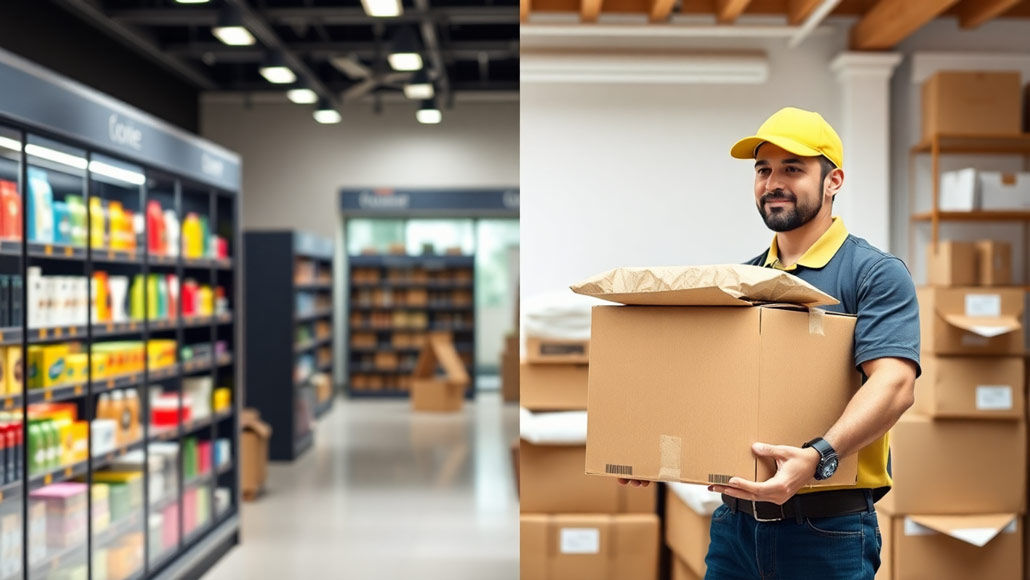
The rise of digital innovations overturned these requirements. With the rapid pace of e-commerce development, packaging must operate differently today. It no longer suffices for it to appear attractive; it must survive courier networks, preserve commodities on long trips, and still be a smooth, brand-like experience when it arrives at a customer’s doorstep. The difference between retail and e-commerce packaging is thus not merely one of looks; it is one of varying uses, each with varying consumer expectations and logistics consequences.
Key Differences Between Retail and E-Commerce Packaging
Durability:
Retail packaging is generally designed for short and routine trips. A carton or pouch in this environment is designed to be light, efficient, and strong enough to survive transport from the production floor to a distribution center and finally onto a store shelf. Its protective role is limited because the path is relatively stable, with fewer handovers and controlled handling.
By contrast, packaging that supports online orders faces a far tougher test. One parcel may travel through multiple depots, be stored for hours in delivery vehicles, and be stacked time and again before finally reaching the consumer. To limit the possibility of damaged goods, e-commerce packaging tends to incorporate heavier corrugated board, inserts, or cushioning. It can even utilize structures that are designed to absorb shock and vibration, features that are not typically required for traditional retail displays.
Design Priorities:
On the consumer side, appearance is a major factor. Packaging serves as an advertisement, vying for attention among dozens of comparable products. Graphics, font, color, and distinctive shapes are carefully chosen to affect instantaneous buying decisions and build brand recognition.
With e-commerce, the situation is different. The customer does not visualize the product until it is purchased, and packaging makes its appearance at a secondary level. Rather than competing on a shelf, it focuses on building the unboxing experience. Quick-open formats, lower material usage, and interior design elements like printed messages or graphics within the box become the driver of consumer interaction. The focus is not so much on allure but on creating loyalty through a positive, functional experience.
Sustainability:
Initiatives on sustainability also vary. For retail, the emphasis usually is on minimizing the total quantity of material, utilizing recycled or compostable substrates, and keeping inks or coatings to a bare minimum that would interfere with recyclability. Buyers expect the brands to be responsible without sacrificing shelf presence.
E-commerce introduces other sustainability challenges. One persistent issue is over-packaging: small products sent in big cartons, filled with layers of plastic wrap or filler. Firms are meeting this by streamlining excessive secondary packaging, developing right-sized formats, and focusing on reusable cushioning materials. The challenge is finding a balance: keeping the product safe through a rigorous transit process without wasteful excess.
Retail vs E-Commerce Packaging
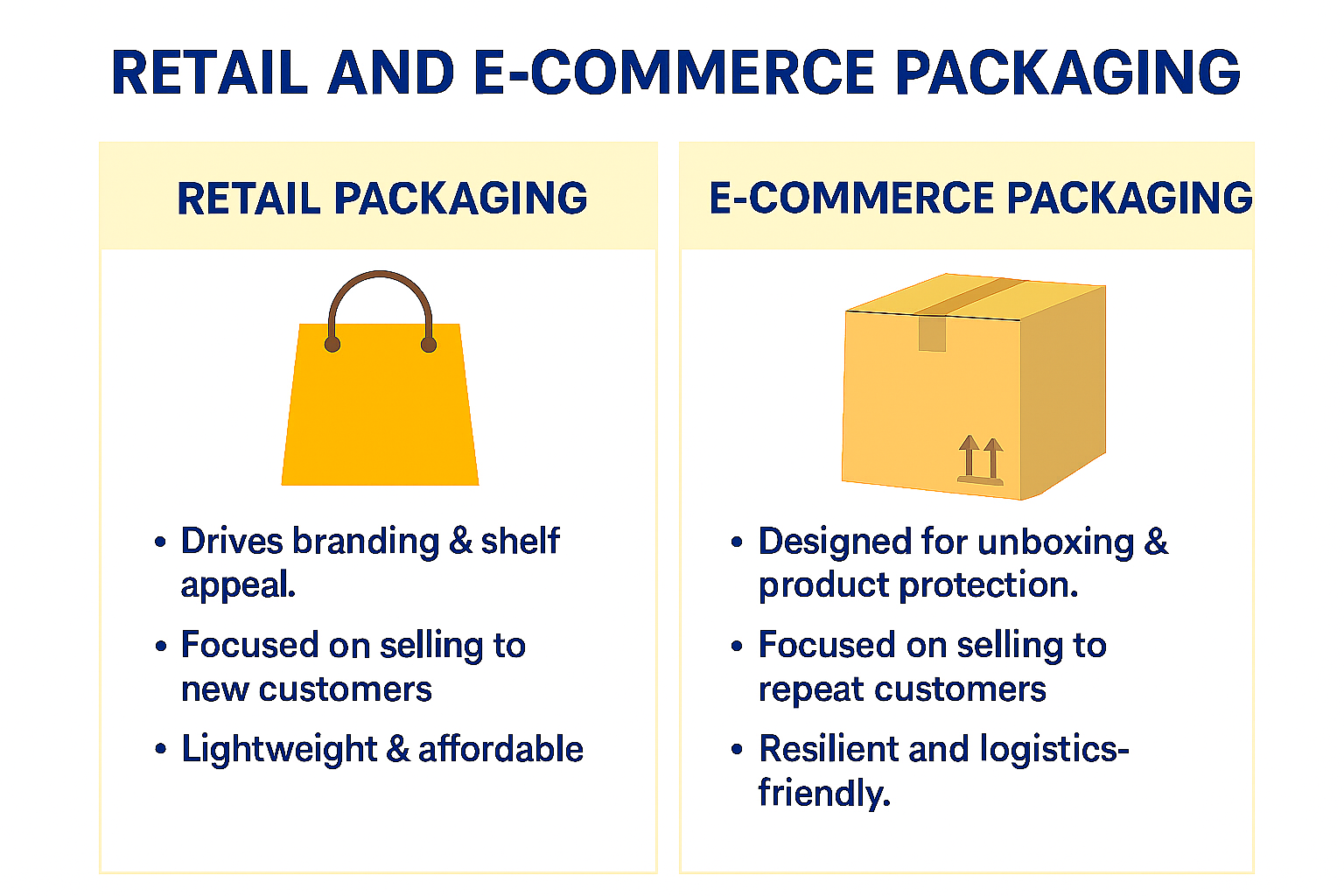
- Retail packaging drives branding and shelf appeal, E-commerce packaging focuses on unboxing and protection
- Retail is selling to new customers; e-commerce packaging is selling to repeat customers
- Retail packaging is light and affordable; e-commerce packaging is resilient and logistics-friendly
Why One Size Doesn’t Fit All
The notion of having one package for both channels is attractive, but in practice it seldom succeeds. A design intended for retail shelves might impress visually but collapse when exposed to the rigors of long-distance shipping. When goods arrive damaged, the costs of replacements and returns mount quickly, and customer trust is put at risk.
Conversely, a box designed for e-commerce, with robust walls and shielding fillers, can look bulky and wasteful if put on a store shelf. To consumers considering alternatives in a retail aisle, such packaging might convey waste instead of value. Each channel, therefore, demands its own logic.
What this shows is that packaging carries different roles depending on where it is used. In physical stores, it is a marketing instrument as much as a protective layer. In e-commerce, it works behind the scenes until the product reaches the buyer, at which point it becomes a medium for customer satisfaction. Identifying these distinctions enables companies to create intentionally, rather than compromising.
Industry Outlook
With omnichannel strategies becoming increasingly prevalent, brands feel compelled to serve both worlds well. Retail and e-commerce packaging will not converge into a single format, but companies are searching for versatile solutions that can perform across environments.
A definitive area of advancement is right-sizing technology. Automated systems, often supported by machine learning, are being introduced to calculate optimal box dimensions. By reducing empty space, these systems cut the need for excess filler, lower shipping costs, and ease consumer concerns about waste.
Sustainability innovations are also on the horizon. Compostable padding, paper-based mailers, and reusable containers are emerging as plastic substitutes. Certain designs bridge both channels, too: a sleeve that can provide branding for in-store exposure also can serve as protection while it ships, or a shipping carton can be used for repeated uses. These developments reflect the industry’s attempt to integrate protection, presentation, and sustainability.
For the future, packaging will be shaped by forces of consumer needs and regulation. Consumers want less waste, easier recycling, and more intelligent packaging rather than too much packaging. Meanwhile, companies seek efficiency of operation and reduced logistics expense. Meeting both demands requires ongoing innovation, tailored solutions, and a recognition that retail and e-commerce packaging are related but distinct disciplines.
Conclusion
The role of packaging has expanded in step with how people buy products. For retail, its function is still rooted in visibility and brand effect. For e-commerce, it needs to navigate tough supply chains while delivering an unboxing that’s enjoyable. Mixing the two typically means extra expense, wasted resources, and diluted consumer trust.
The way forward is addressing each channel with its own strategy. Retail and e-commerce packaging can be viewed as complementary approaches, rather than generic instruments to swap. Spend on designs that emphasize longevity, environmental-friendliness, and user experience to enable companies to develop solutions that work well in varied situations while achieving long-term environmental and operating objectives.