






















Integrating Multimodal Solutions: Air Freight as Part of the End-to-End Cold Chain Logistics
The complexity of modern cold chain logistics demands sophisticated integration across multiple transportation modes, with air freight serving as a critical component in maintaining temperature integrity from origin to final destination. As pharmaceutical distribution becomes increasingly global and perishable goods cross continents to reach consumers, the ability to seamlessly coordinate refrigerated transportation across air, ocean, rail, and road networks has become essential for supply chain success.
Multimodal cold chain solutions represent far more than simple mode connections; they require precise orchestration of temperature management systems, timing coordination, and quality assurance protocols that ensure product integrity throughout complex transportation networks. The challenge lies not just in maintaining required temperatures during transport, but in managing the critical transition points where cargo moves between different carriers, facilities, and environmental control systems.
The Strategic Importance of Air Freight in Cold Chains
Air freight plays a unique and irreplaceable role in multimodal cold chain networks due to its speed capabilities and global reach. While ocean freight provides cost-effective capacity for large volumes and road transport offers flexible last-mile delivery, air transportation bridges time-sensitive gaps that other modes cannot accommodate within cold chain constraints.
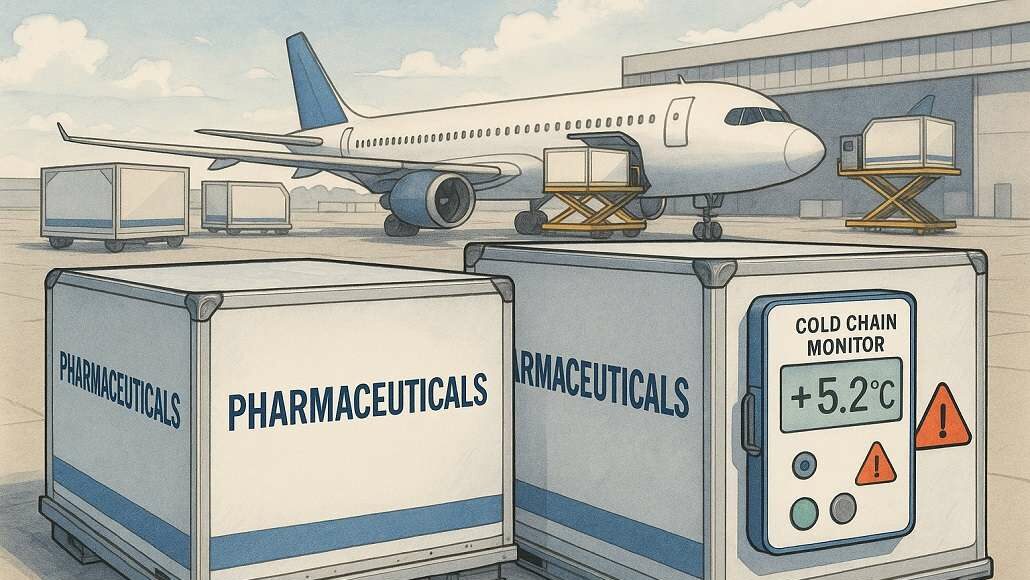
The pharmaceutical industry particularly depends on air freight for products with limited shelf life or strict temperature requirements that cannot tolerate extended ocean transit times. Vaccines, biologics, and specialty medications often require delivery within days rather than weeks, making air transportation essential for global distribution networks.
Fresh produce markets leverage air freight to extend geographic reach and capture premium pricing for out-of-season products. Berries, asparagus, and other highly perishable items rely on rapid air transportation to reach distant markets while maintaining quality and freshness standards.
The integration challenge intensifies when considering that air cargo holds often lack the sophisticated temperature control systems found in dedicated refrigerated trucks or vessels. This limitation requires careful coordination with ground-based cold chain infrastructure to maintain temperature integrity during the air transportation segment.
Temperature Control Technologies Across Transportation Modes
Successful multimodal cold chain integration requires understanding and coordinating different temperature control approaches across transportation modes. Each mode presents unique capabilities and limitations that must be managed through careful planning and technology integration.
Passive temperature control systems rely on insulation and phase change materials to maintain temperatures without external power sources. These systems work effectively across all transportation modes but have limited duration capabilities that must align with transit time requirements. Advanced packaging materials and thermal mass calculations enable passive systems to bridge gaps between active temperature control systems.
Active temperature control systems provide powered cooling and heating capabilities that can maintain precise temperatures over extended periods. Refrigerated trucks, reefer containers, and specialized air cargo containers offer active control, but coordination between systems requires careful attention to power requirements and transfer procedures.
Hybrid systems combine passive and active technologies to provide enhanced reliability and efficiency. These systems may use active control for primary temperature management while incorporating passive elements as backup protection during power interruptions or equipment failures.
Real-time monitoring technologies enable continuous temperature tracking across all transportation modes, providing early warning of excursions and documentation for regulatory compliance. Advanced sensors communicate through cellular, satellite, and wireless networks to provide comprehensive visibility throughout multimodal networks.
Critical Integration Points and Risk Management
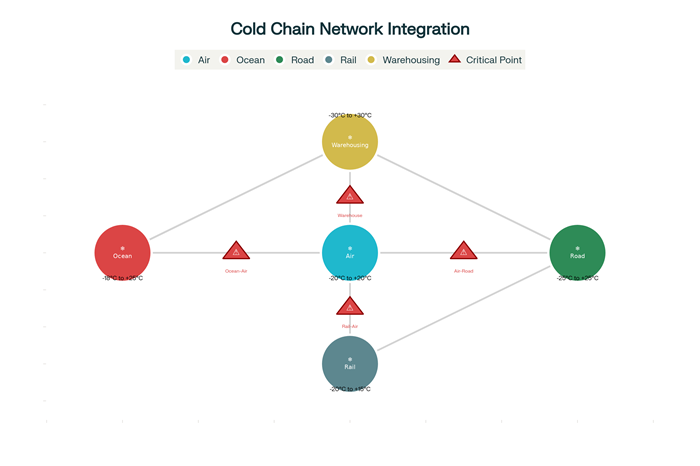
The success of multimodal cold chain operations depends heavily on managing transition points where cargo moves between different carriers and environmental control systems. These handoff points represent the highest risk periods for temperature excursions and require careful coordination to minimize exposure time.
Airport ground operations present particular challenges for air freight integration, as cargo may spend hours on tarmacs exposed to ambient temperatures during loading, unloading, and customs processing. Thermal covers, pre-conditioned containers, and expedited handling procedures help minimize exposure risks during these critical periods.
Warehouse and distribution center operations require specialized facilities with multiple temperature zones and rapid processing capabilities. These facilities serve as integration hubs where air cargo connects with local delivery networks while maintaining temperature integrity throughout storage and transfer operations.
Documentation and compliance management across multiple modes requires coordinated systems that track temperature history, regulatory approvals, and chain of custody information. Electronic systems enable real-time sharing of critical information between carriers and regulatory authorities.
Regulatory Compliance and Quality Assurance
Multimodal cold chain operations must navigate complex regulatory requirements that vary by country, product type, and transportation mode. Good Distribution Practice guidelines for pharmaceuticals establish temperature control and documentation requirements that apply throughout the entire transportation network.
International standards such as IATA Perishable Cargo Regulations provide frameworks for air cargo operations while coordinating with ground-based cold chain standards. Compliance requires understanding how different regulatory regimes interact and ensuring seamless documentation throughout multimodal networks.
Quality assurance protocols must account for the varying capabilities and limitations of different transportation modes while maintaining consistent standards throughout the supply chain. Temperature mapping studies and validation protocols help establish performance baselines and identify potential risk points.
Audit and inspection procedures require coordination across multiple carriers and facilities to ensure compliance throughout complex multimodal networks. Shared documentation systems and standardized procedures enable efficient oversight while maintaining regulatory compliance.
Technology Integration and Digital Platforms
Modern multimodal cold chain operations rely heavily on digital platforms that coordinate activities across multiple carriers, modes, and geographic regions. Transportation management systems with cold chain capabilities enable integrated planning and execution while providing real-time visibility into shipment status and conditions.
Internet of Things integration connects sensors, vehicles, and facilities into comprehensive monitoring networks that provide continuous visibility into cold chain performance. These systems enable predictive analytics that identify potential problems before they affect product integrity.
Blockchain technology provides tamper-proof documentation and chain of custody tracking that spans multiple carriers and jurisdictions. This technology enables trusted data sharing while protecting competitive information and proprietary processes.
Artificial intelligence applications optimize routing, capacity allocation, and resource planning across multimodal networks while considering cold chain constraints and requirements. Machine learning algorithms analyze historical performance data to improve future planning and identify optimization opportunities.
Economic Optimization and Service Design
Successful multimodal cold chain operations require careful balance between service quality and cost efficiency across different transportation modes. Air freight commands premium pricing but provides speed and reliability that justify costs for time-sensitive or high-value products.
Mode selection strategies consider total supply chain costs rather than individual transportation rates, evaluating factors including inventory carrying costs, product loss risks, and customer service impacts. Advanced optimization algorithms help identify the most cost-effective combinations of transportation modes for specific products and routes.
Consolidation strategies maximize efficiency by combining shipments across multiple customers and destinations while maintaining cold chain requirements. Shared consolidation facilities and coordinated routing enable cost savings while preserving individual shipment integrity.
Service level agreements must address the unique requirements of multimodal operations while providing clear performance standards and remedies for service failures. These agreements coordinate responsibilities across multiple carriers while establishing unified accountability for end-to-end performance.
Sustainability and Environmental Considerations
Multimodal cold chain operations face increasing pressure to address environmental impact while maintaining product quality and service levels. Air freight generates significantly higher carbon emissions than other transportation modes, driving interest in optimization strategies that minimize air transportation requirements.
Modal shift strategies seek to reduce air freight utilization by improving the performance and reliability of more sustainable transportation options. Enhanced ocean freight services and improved ground networks can reduce reliance on air transportation for certain product categories.
Energy efficiency improvements across all transportation modes help reduce environmental impact while maintaining cold chain performance. Advanced refrigeration technologies, improved insulation materials, and optimized routing contribute to sustainability objectives.
Carbon offset programs and environmental reporting provide mechanisms for addressing emissions while maintaining operational requirements. These programs enable companies to demonstrate environmental responsibility while serving markets that require rapid delivery.
Future Developments and Emerging Technologies
The future of multimodal cold chain integration continues evolving through technological advancement and changing market requirements. Autonomous vehicles and drone delivery systems promise to improve last-mile cold chain capabilities while reducing costs and environmental impact.
Advanced materials and nanotechnology applications are developing new insulation and phase change materials that extend passive system capabilities and reduce reliance on powered refrigeration. These developments may enable new multimodal routing options and improve overall system efficiency.
Predictive analytics and artificial intelligence applications will enhance integration capabilities by providing better forecasting and optimization across complex multimodal networks. These systems will enable more efficient resource utilization while improving service reliability.
Regulatory harmonization efforts aim to simplify compliance requirements across international boundaries and transportation modes. These developments will reduce administrative complexity and enable more efficient multimodal operations.
Strategic Implementation and Best Practices
Organizations seeking to optimize multimodal cold chain operations should develop comprehensive strategies that address technology, partnerships, and process integration across all transportation modes. Successful implementation requires coordination between logistics, quality assurance, and regulatory compliance functions.
Partnership development with carriers across all transportation modes ensures access to required capabilities while maintaining performance standards. Strategic partnerships enable coordinated planning and execution while sharing risks and rewards across the supply chain.
Performance measurement systems must provide visibility into cold chain performance across all transportation modes while identifying opportunities for improvement. Key performance indicators should address temperature compliance, transit times, and cost efficiency throughout multimodal networks.
Continuous improvement processes help organizations adapt to changing market conditions and technological developments while maintaining operational excellence. Regular reviews of performance data and customer feedback enable ongoing optimization of multimodal cold chain operations.
The integration of air freight into multimodal cold chain solutions represents both a significant opportunity and a complex challenge for logistics professionals. Success requires sophisticated understanding of temperature control technologies, regulatory requirements, and integration strategies that span multiple transportation modes and geographic regions. Organizations that master these capabilities will achieve competitive advantages through superior service quality and operational efficiency in the rapidly evolving cold chain marketplace.