


























Future of Digital Air Cargo: Blockchain, e-AWB and Data-Driven Operations
The air cargo industry stands at the threshold of a digital revolution that promises to transform traditional paper-based processes into streamlined, transparent, and highly efficient operations. As global trade volumes continue expanding and customer expectations for visibility and speed intensify, the adoption of advanced digital technologies has shifted from competitive advantage to operational necessity. The convergence of blockchain technology, electronic air waybills, and sophisticated data analytics is creating an integrated ecosystem that addresses long-standing challenges while unlocking new possibilities for efficiency and innovation.
This digital transformation represents more than mere technological upgrade; it constitutes a fundamental reimagining of how air cargo operations function, from initial booking through final delivery. The traditional fragmented approach, characterized by multiple disparate systems and manual handoffs, is giving way to integrated platforms that provide seamless connectivity across all stakeholders in the supply chain.
Blockchain Technology Revolutionizing Air Cargo
Blockchain technology addresses one of the most persistent challenges in air cargo operations: the lack of a single, trusted source of information shared among all stakeholders. Traditional air cargo processes involve multiple parties including shippers, freight forwarders, airlines, ground handlers, customs authorities, and consignees, each maintaining separate records that often contain inconsistencies and errors.
The implementation of blockchain in air cargo creates an immutable ledger where all transactions and transfers are recorded in real-time, providing unprecedented transparency and accountability. Each stakeholder can access the same information simultaneously, eliminating discrepancies and reducing the time required for reconciliation and dispute resolution.
Smart contracts built on blockchain platforms automate many routine processes, from booking confirmation and payment processing to customs clearance and delivery confirmation. These automated contracts execute predetermined actions when specific conditions are met, reducing manual intervention and accelerating transaction processing.
The security benefits of blockchain technology extend beyond simple data protection to encompass fraud prevention and identity verification. The cryptographic nature of blockchain makes it extremely difficult to alter or forge records, providing enhanced protection against cargo theft, documentation fraud, and other security threats.
Major industry initiatives have demonstrated blockchain’s transformative potential. The partnership between Cargo Community Network and Microsoft resulted in the world’s first blockchain-based air cargo billing and reconciliation system, reducing billing cycles from weeks to hours while minimizing discrepancies and improving revenue recognition.
Electronic Air Waybills Transforming Documentation
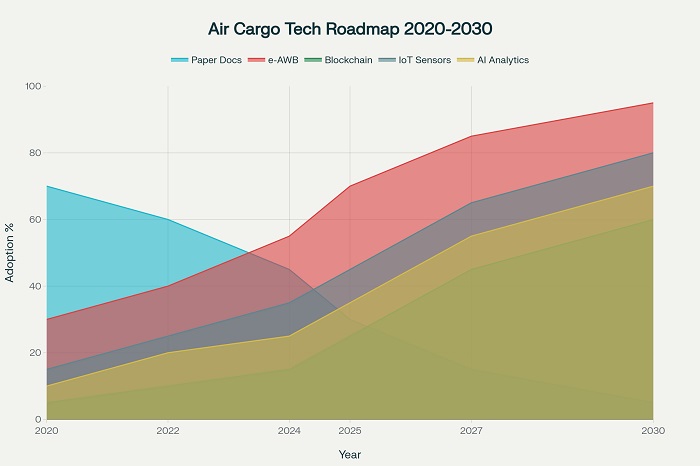
The transition from paper-based air waybills to electronic alternatives represents one of the most significant operational improvements in air cargo history. Traditional paper air waybills created numerous inefficiencies, including printing costs, physical handling requirements, storage needs, and the risk of loss or damage during transportation.
Electronic air waybills eliminate these physical constraints while providing enhanced functionality and integration capabilities. Digital documents can be transmitted instantly across global networks, enabling faster processing and reducing delays associated with document availability and distribution.
The standardization efforts led by IATA have established consistent e-AWB formats and protocols that enable seamless interoperability between different systems and carriers. This standardization eliminates the confusion and errors that often occurred when different parties used incompatible documentation systems.
Integration with customs and regulatory systems streamlines border clearance processes by enabling automated data transmission and validation. Electronic documents can be pre-processed by customs authorities, reducing clearance times and minimizing delays at international borders.
Real-time tracking and status updates become possible when air waybills exist in electronic format, as document status can be updated instantly and shared with all relevant parties. This visibility enables proactive problem resolution and improved customer service through accurate delivery predictions.
Data Analytics and Artificial Intelligence Applications
The digitization of air cargo operations generates vast amounts of data that can be leveraged for operational optimization and strategic decision-making. Advanced analytics platforms process this information to identify patterns, predict outcomes, and recommend actions that improve efficiency and service quality.
Predictive analytics applications analyze historical performance data, weather patterns, and operational factors to forecast potential delays and disruptions before they occur. This predictive capability enables proactive planning and alternative arrangements that minimize impact on customer shipments.
Route optimization algorithms process real-time data including flight schedules, capacity availability, weather conditions, and traffic patterns to recommend optimal routing strategies. These systems can evaluate thousands of potential combinations to identify solutions that balance cost, speed, and reliability according to customer preferences.
Demand forecasting systems analyze booking patterns, seasonal trends, and market indicators to predict capacity requirements and optimize resource allocation. Airlines can use these insights to adjust schedules, allocate aircraft, and price services more effectively.
Artificial intelligence applications are beginning to automate complex decision-making processes that previously required human expertise. Machine learning algorithms can analyze customer communications, extract shipping requirements, and automatically generate appropriate booking recommendations and pricing quotes.
Internet of Things Integration and Real-Time Monitoring
The integration of IoT sensors and devices throughout the air cargo supply chain provides unprecedented visibility into shipment conditions and operational performance. These connected devices monitor various parameters including temperature, humidity, shock, vibration, and location throughout the transportation process.
Flight-safe IoT devices specifically designed for air cargo applications can operate throughout the entire journey from origin to destination, providing continuous monitoring even during flight phases where traditional communication methods are unavailable. These devices store data locally and transmit information when connectivity is available.
Condition monitoring for temperature-sensitive cargo enables immediate alerts when environmental conditions exceed acceptable parameters. This real-time monitoring allows for rapid intervention to prevent product damage and provides detailed documentation for regulatory compliance and insurance purposes.
Location tracking capabilities provide accurate position information throughout the transportation process, enabling precise delivery predictions and proactive customer communication. Advanced tracking systems can identify when shipments deviate from planned routes and automatically trigger investigation and corrective actions.
Predictive maintenance applications use IoT sensor data to monitor equipment condition and predict when maintenance will be required. This predictive approach reduces unexpected equipment failures and improves operational reliability while optimizing maintenance costs.
Integration Challenges and Solutions
The successful implementation of digital air cargo technologies requires addressing significant integration challenges that arise from the complexity and diversity of existing systems. Legacy systems used by various stakeholders often lack the connectivity and compatibility required for seamless digital integration.
API development and standardization efforts create the technical bridges necessary for different systems to communicate effectively. Industry initiatives focus on establishing common protocols and data formats that enable interoperability without requiring complete system replacement.
Change management becomes critical when implementing digital technologies that alter established workflows and procedures. Successful digital transformation requires comprehensive training programs, clear communication, and phased implementation strategies that minimize disruption while building user confidence.
Data security and privacy concerns must be addressed through robust cybersecurity measures and compliance with relevant regulations. The increased connectivity and data sharing enabled by digital technologies create new vulnerability points that require sophisticated protection measures.
Cost justification for digital investments requires clear demonstration of return on investment through improved efficiency, reduced errors, and enhanced customer satisfaction. Business case development must consider both direct cost savings and indirect benefits including improved competitiveness and market positioning.
Regulatory Adaptation and Compliance
The adoption of digital air cargo technologies requires coordination with regulatory authorities to ensure compliance with existing requirements while enabling innovation. Customs agencies, aviation authorities, and international trade organizations must adapt their procedures to accommodate digital processes.
Electronic signature recognition and legal validity of digital documents represent essential regulatory considerations. International agreements and domestic legislation must recognize electronic documents as legally equivalent to paper alternatives to enable full digital transformation.
Data sharing regulations and privacy requirements affect how digital platforms can collect, store, and share information across international boundaries. Compliance with regulations such as GDPR requires careful attention to data governance and privacy protection measures.
Security standards and certification requirements for digital systems ensure that new technologies meet appropriate safety and security criteria. Aviation authorities establish standards for equipment used on aircraft and in airport environments to ensure operational safety.
Future Developments and Emerging Technologies
The future of digital air cargo continues evolving through advancing technologies and changing market requirements. Quantum computing applications may eventually enable even more sophisticated optimization algorithms and enhanced security capabilities.
Artificial intelligence development is progressing toward more autonomous systems that can handle increasingly complex decision-making with minimal human intervention. Natural language processing improvements enable better automated handling of customer communications and documentation processing.
Drone integration and autonomous vehicle technologies promise to extend digital capabilities into first-mile pickup and last-mile delivery operations. These technologies may enable new service levels and cost structures that further transform air cargo operations.
Augmented reality applications for warehouse and cargo handling operations can improve accuracy and efficiency while reducing training requirements. These technologies provide real-time information and guidance to workers handling complex cargo operations.
Strategic Implementation Considerations
Organizations seeking to capitalize on digital air cargo opportunities must develop comprehensive strategies that address technology selection, implementation sequencing, and change management requirements. Successful digital transformation requires alignment between technology capabilities and business objectives.
Partnership strategies become increasingly important as digital transformation often requires collaboration between multiple stakeholders to achieve full benefits. Strategic alliances and technology partnerships can accelerate implementation while sharing costs and risks.
Investment planning must balance immediate operational improvements with long-term strategic positioning. Digital technology investments should be evaluated based on their ability to support future growth and adaptation to changing market conditions.
Performance measurement systems must evolve to capture the full value of digital improvements including enhanced visibility, improved accuracy, and faster processing times. New metrics may be required to demonstrate the business value of digital transformation initiatives.
The future of digital air cargo represents a fundamental shift toward more transparent, efficient, and responsive operations that better serve customer needs while reducing costs and improving reliability. Organizations that successfully navigate this digital transformation will achieve significant competitive advantages while contributing to the evolution of global trade facilitation. As technology continues advancing and adoption accelerates, digital capabilities will become table stakes for participation in the modern air cargo industry.