













The difference between a depalletizer and a palletizer goes beyond product flow. It highlights two critical processes that keep beverage and consumer packaged goods (CPG) manufacturing efficient and competitive. Current market standards, where speed and accuracy are nonnegotiable, palletizing ensures finished products are securely stacked for storage or distribution. Meanwhile, depalletizing keeps production lines supplied with bottles or cans.
These systems form the backbone of warehouse and production efficiency, which can reduce labor strain and streamline operations from start to finish. Mastering palletizing and depalletizing allows manufacturers to gain the agility to meet rising demand, deliver consistent quality and position their operations for long-term growth.
What Is the Difference Between a Depalletizer and a Palletizer?
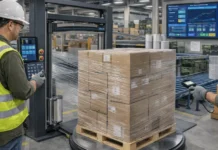
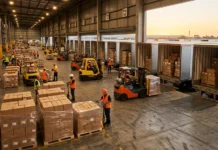
Palletizing and depalletizing are two essential processes in beverage and CPG manufacturing that work together to keep operations efficient. Palletizing refers to stacking finished goods such as cases, cartons or bottles onto pallets for safe storage and transport. It can be done manually, but is increasingly handled by automated systems for greater speed and accuracy.
On the other hand, depalletizing involves removing products from pallets to feed packaging or production lines, which ensures a steady flow of raw materials or empty containers. This process can be done manually or automated, like palletizing, to improve consistency and reduce labor demands.
When comparing palletizers vs. depalletizers, the key difference lies in their direction and purpose. Palletizing handles outbound distribution while depalletizing supports inbound production. They share the same goal of streamlining material handling and boosting overall efficiency.
The Power of Automated Palletizer and Depalletizer Systems
Automated palletizer and depalletizer systems have become essential for manufacturers striving to meet rising production demand with fewer resources. By combining speed, precision and reliability, they deliver the efficiency to stay competitive in fast-paced environments.
Why Automation Matters
In the beverage and CPG industries, rising demand and persistent labor shortages have made automation a critical investment rather than a luxury. Automated palletizer and depalletizer systems fill the gap by delivering the precision and around-the-clock reliability that manual processes cannot match.
These tools keep production lines moving efficiently and ensure consistent handling that reduces errors, protects product integrity and minimizes workplace strain. By embracing automation, manufacturers can scale to meet growing market needs, optimize resources and maintain the competitive edge required in dynamic sectors.
Types of Automated Systems
Advanced solutions like Ska Fab’s full-height automatic depalletizers stand out for manufacturers looking for speed and scale. They can process up to 400 containers per minute, ensuring seamless supply to fast-moving production lines. Ska Fab also offers a line of automatic palletizers to maximize uptime.
Hybrid systems also help bridge the gap in the palletizer vs. depalletizer conversation. They give manufacturers the combined efficiency of traditional models and the adaptability of robotic technology to easily handle inbound and outbound demands.
Core Advantages of Automated Palletizer Systems
Automated palletizer and depalletizer systems give manufacturers a clear advantage by delivering faster stacking and unloading than manual handling. Instead of relying on repetitive labor, these tools move products quickly and accurately, keeping operations on pace with growing demand.
Their ability to build uniform pallet loads and carry out precise depalletizing reduces the risk of damage to bottles, cans or cartons and helps avoid costly downtime. Consistency is critical in maintaining smooth operations in factory environments and meeting customer expectations.
Another major benefit is how easily modern robotic palletizing systems can be integrated into existing production environments. Many are designed for straightforward installation at the end of current lines, which minimizes downtime and disruption during setup.
Once in place, they take on the heavy lifting and repetitive tasks that often lead to worker strain or accidents, creating a safer workplace while freeing employees to focus on higher-value responsibilities. This combination of reliability, efficiency and safety makes automation essential for manufacturers looking to streamline material handling and future-proof their operations.
Training and Workforce Adaptation
Training operators and maintenance staff maximizes the performance and return on investment. Well-prepared teams can quickly troubleshoot issues, reduce downtime and keep production running smoothly, which is especially valuable in fast-paced beverage and CPG operations.
Beyond equipment performance, training also builds worker confidence. It fosters stronger safety awareness, which creates a more resilient and capable workforce. Modern training methods — from interactive digital modules to hands-on simulations — help keep operators informed, engaged and motivated to develop new skills and tackle dynamic challenges. Investing in continuous education protects their automation investment. It empowers their teams to adapt, innovate and support long-term operational success.
Sustainability and Energy Efficiency
Automated palletizer and depalletizer systems contribute directly to sustainability by reducing material waste and minimizing product loss, which lowers costs and strengthens operational efficiency.
Energy-efficient models further support this effort by cutting power consumption and lowering day-to-day operating expenses, making them a wise investment for manufacturers focused on profitability and responsibility. These benefits tie directly into broader environmental, social and governance and sustainability goals, helping companies demonstrate measurable progress toward greener operations.
Industries accounted for 23% of total U.S. greenhouse gas emissions in 2022. This impact is primarily driven by the burning of fossil fuels for energy and chemical reactions required to transform raw materials into goods. By choosing automation that emphasizes energy efficiency and waste reduction, beverage and CPG manufacturers can do their part to reduce emissions while improving competitiveness in a sustainability-conscious market.
Choosing the Right System
Choosing the right palletizer and depalletizer system requires careful evaluation to ensure it fits current operations and future growth plans. The best results come from partnering with experienced integrators and equipment providers who understand manufacturers’ unique needs. By weighing the following factors, they can make wiser investments that deliver long-term value and efficiency.
- Production volume: Match system capacity to current output while allowing room for future increases.
- Packaging type: Consider whether the system can effectively handle bottles, cans, cartons or mixed formats.
- Available floor space: Evaluate layout constraints to ensure equipment fits seamlessly into existing operations.
- System flexibility: Look for solutions that adapt to different packaging designs and line configurations.
- Ease of integration: Prioritize systems designed for smooth installation and compatibility with existing conveyors or software.
- Maintenance and support: Choose equipment with reliable service options and accessible replacement parts.
- Return on investment: Balance upfront costs with long-term savings from efficiency, labor reduction and lower product loss.
Staying Competitive Through Smarter Material Handling
Automation reinforces streamlined operations by delivering the speed, precision and reliability that manual processes cannot match. Understanding the difference between a depalletizer and a palletizer highlights how both tools work together to optimize material flow and reduce inefficiencies across the facility. To stay competitive in fast-moving industries, manufacturers should evaluate their material handling systems and consider how automation can strengthen long-term performance.