
















Confectionery is so often tied to nostalgia. After all, how many of our childhood memories involve picking our favourite sweet treats from the shelf, carefully unwrapping them, and enjoying a few minutes of indulgence?
But while nostalgia is an important part of the confectionery sector, it’s equally important for the industry to look to the future. Confectionery businesses are subject to the same regulatory pressures and evolving consumer demands as any other food brand. And, just like many food brands, this pressure is driving the industry towards reducing plastic packaging.
This may present some challenges for confectionery businesses. However, with the right approach to packaging design and innovation, these challenges can be turned into opportunities by developing packs that deliver circularity, aesthetic appeal, and product protection to hit the sweet spot for today’s consumer.
Minimizing the impact on our planet
As they operate as part of an industry that ties itself so closely to our emotions and memories, the number one priority for any confectionery brand is to meet consumer demands. And what today’s consumers demand is sweet treats that minimize their impact on the planet. A report by Mondelez International found that 63 percent of consumers pay attention to brands that proactively look to reduce their carbon emissions. Meanwhile, brands that have explicitly included ESG claims in the core of their identity have been rewarded with explosive growth in recent years. There is also a general move towards more ethical and sustainably produced confectionery, as consumers vote with their wallets on the sustainable sourcing of ingredients like cocoa.
Plastic packaging—and the reduction of it—is central to meeting this demand. Study after study shows consumers prefer brands that use alternatives to plastic packaging wherever possible, and recent reports show their views are hardening. An Ipsos study published in 2024, for example, found that 85 percent of global consumers would support a worldwide ban on unnecessary plastic use.
Regulators seem to agree. Europe is leading the way in sustainability legislation, with the landmark Packaging and Packaging Waste Regulation (PPWR) being adopted by the EU in February 2025 and set to become legally enforced from August 2026. This far-reaching new law targets a phased reduction of packaging waste through the introduction of extended producer responsibility (EPR) policies, design for recycling (DfR) guidelines, and other measures.
At Graphic Packaging, we have been collaborating with customers from the confectionery industry who want to reduce their reliance on plastic in response to these drivers. That means we experience first-hand the challenges involved in reducing plastic use while keeping products fresh and reinforcing a brand’s identity. Our approach centers around solutions that are more circular, more functional, and more convenient than the plastic they replace.
Aesthetic innovations
Packaging is an integral part of a consumer’s perception of a brand, and brands are looking at a variety of ways to achieve engagement through their packaging to create a positive feeling around a consumer’s purchase.
This is part of the reason why confectionery is expected to continue to grow despite inflationary pressure and the global focus on healthier eating. Confectionery’s status as an occasional, indulgent treat means it remains an option for many consumers, even as their buying habits shift towards smaller portions and quality-over-quantity products.
We work in close collaboration with our confectionery customers to ensure their packaging aligns with different consumer trends. This enables us to create packaging that delivers functional performance, lower environmental impact, and superb aesthetics.
One way to achieve this is by rethinking the structural design and shape of the packaging, for example by incorporating curves. This can also be used to minimize the amount of material used.
Paperboard offers great potential for enhanced finishing techniques that can add premium elements to confectionery packaging. Soft touch or tactile varnishes, foiling, holography, vivid colors, and matt or gloss finishes are all available to enhance packaging for premium applications. In addition, our new Printallic™ print technology advances circularity by replacing metallized PET lamination with alternatives that do not negatively impact recyclability.
Premiumization begins with luxury
Premium confectionery can trace its roots back through the centuries, and this legacy of finely spun sugar and delicate chocolate shapes is alive and well in today’s industry. However, packaging these products in a way that is suitable for the modern omnichannel supply chain presents some challenges.
This gets to the core of packaging’s primary purpose, which is to prevent waste by protecting products through the supply chain – not to become waste itself. To accomplish that goal, packaging must be fit for purpose. This means we have to carefully select the right grade of paperboard to suit each application. Choosing the right paperboard influences the compression strength and tear resistance of the pack. Once these fundamentals are correct, it is possible to build intelligent structural elements into the pack design that can further enhance its strength.
This approach to structural design does not have to compromise the aesthetic appeal of the finished pack. In fact, the opposite is true. Excellent design does not treat product protection, aesthetic appeal, and sustainability as opposing aims, but instead as complementary ideas.
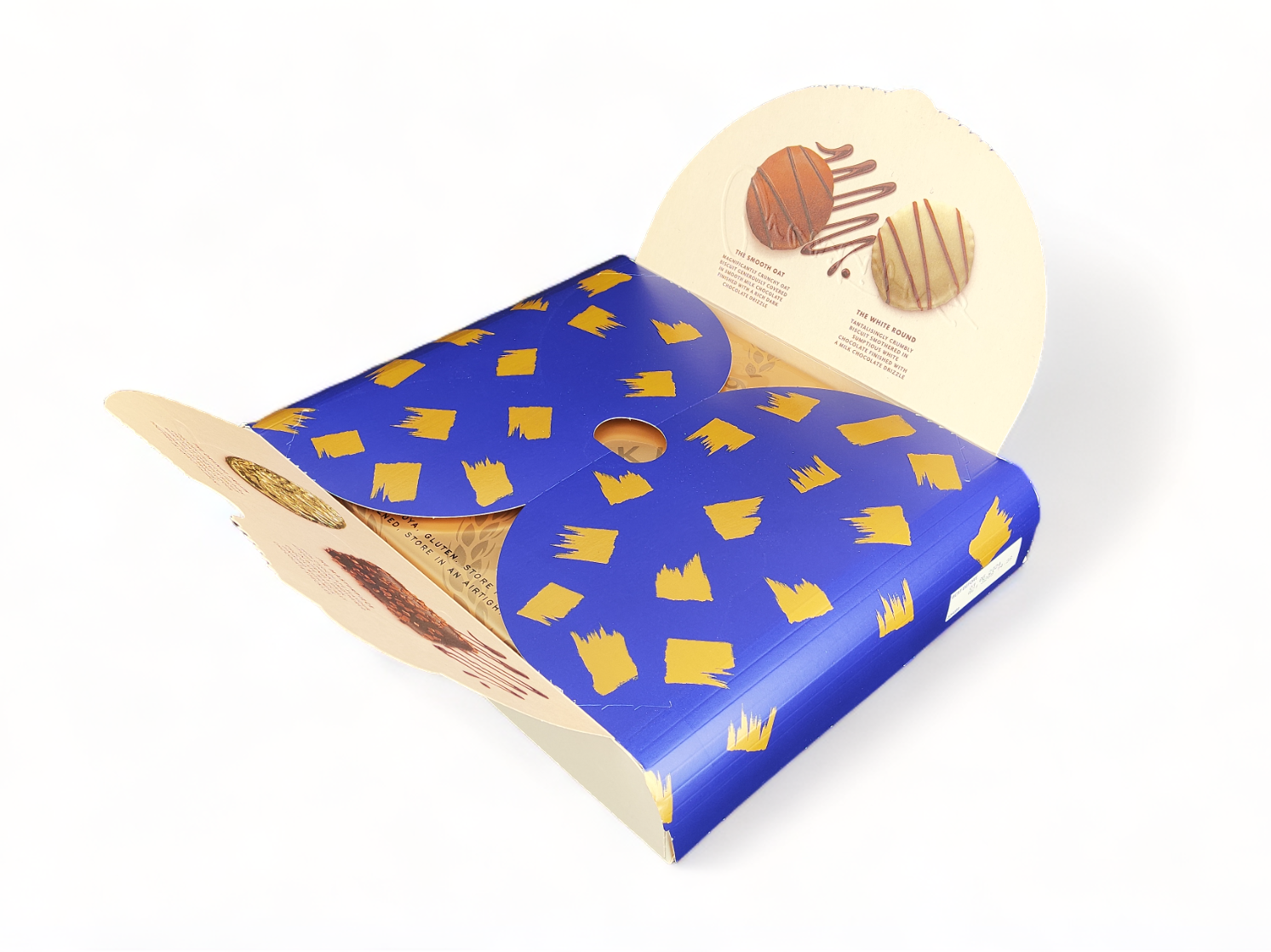
A recent example of this in action can be seen in the carton we developed for Pladis’ McVitie’s Victoria Chocolate Creations biscuit selection. This pack uses a one-piece design that incorporates four folded closing flaps, elegantly curved to be reminiscent of a flower petal, which gives the pack a unique silhouette on-shelf and also creates a premium opening experience for the consumer.
Despite its seemingly delicate curves, the pack was produced with two robust end walls that added the mechanical strength required to withstand packing, palletization, and delivery. The versatility of paperboard also enabled us to tailor the pack to run smoothly on the customer’s automated packing lines with only minor adjustments, minimizing the level of investment required. The pack proved to be a success with consumers, with Pladis deciding to make what had been a seasonal product into a year-round gifting staple, and it was recognized with the Public Vote Award at the European Carton Excellence Awards.
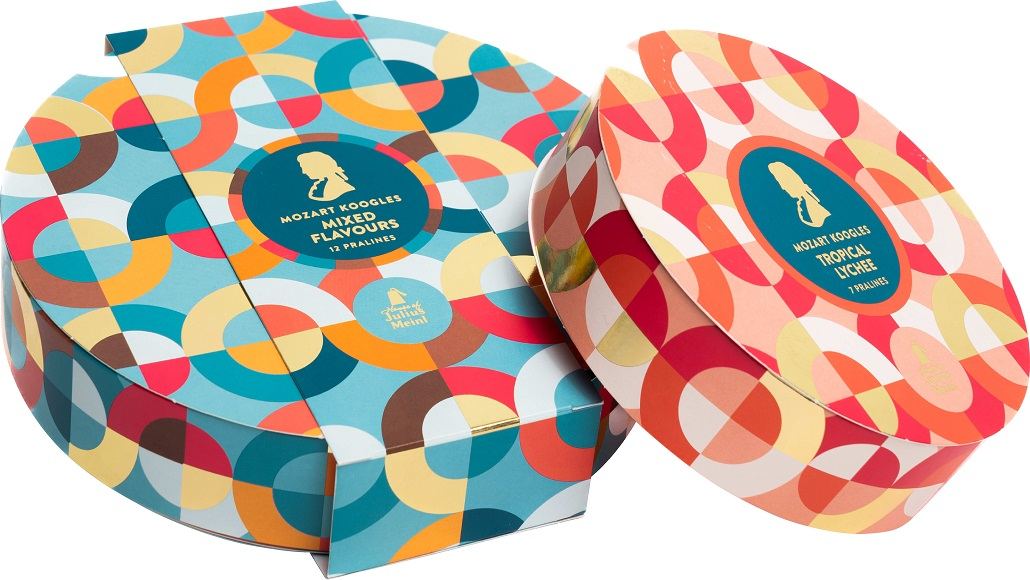
Another award-winning pack resulted from our collaboration with Salzburg Schokolade on its traditional Mozartkugeln gift boxes. These cartons were introduced to replace the tins that had previously contained the fragile Mozartkugeln candies with a durable, decorative solution that offered equal product protection.
To provide the confectionery with the protection it needed, we used a two-piece telescoping round carton with a double side wall. This provided extremely high levels of compressive strength, and due to the many print finishing possibilities unlocked by paperboard, presented an eye-catching, premium prospect on the shelf.
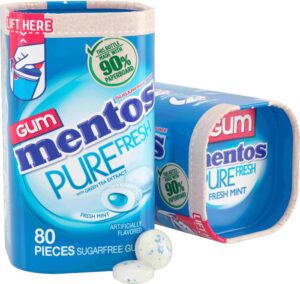
One other multi-award-winning commercialization that we should mention resulted from the partnership with multinational confectionery manufacturer Perfetti Van Melle. Using our Boardio™ technology we developed a first-to-market paperboard bottle in the gum category that offers a more than 80% reduction in plastic use versus the previous rigid plastic tub, with no loss of structural integrity or barrier performance. The recyclable pack is compact and ergonomic, has rounded corners, and is designed to fit comfortably into the palm as well as into most cup holders and desk tidies for consumer convenience.
These are just three examples of the limitless possibilities available when developing paperboard packs for confectionery. As confectioners face a changing industry, shaped by evolving regulations and new consumer desires, they need a new generation of packaging solutions to keep up with the pace of change. With paperboard packaging that hits the sweet spot between sustainability, aesthetic appeal, and product protection, confectioners will find success in this complex landscape of challenges and opportunities.