





















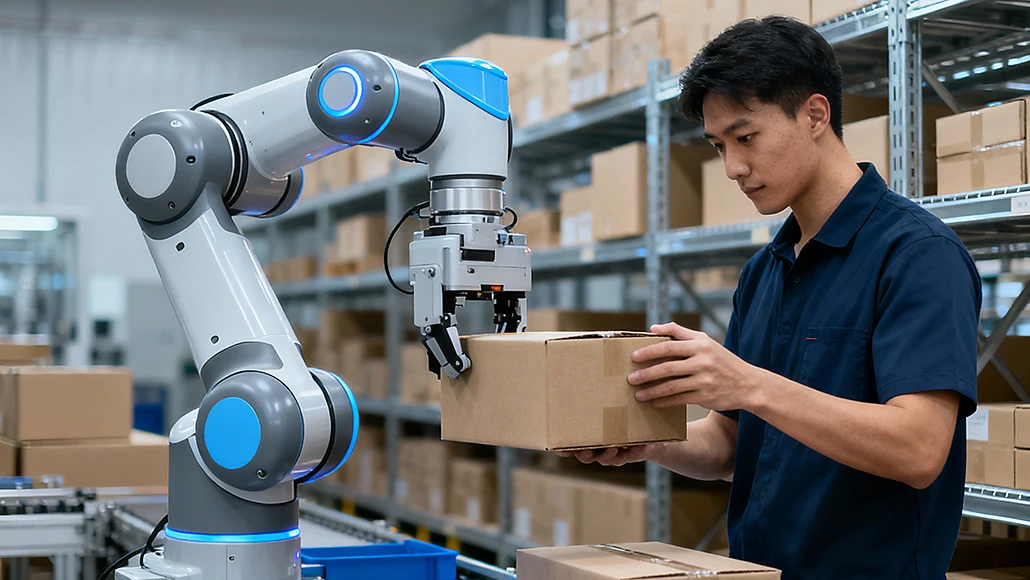

The evolution of manufacturing automation has reached a pivotal moment with the widespread adoption of collaborative robots in packaging operations. These sophisticated systems represent a fundamental departure from traditional industrial automation, offering unprecedented opportunities for human-robot collaboration while maintaining the highest safety standards. Collaborative robots in packaging environments demonstrate remarkable versatility, adapting seamlessly to changing production requirements while working safely alongside human operators without traditional safety barriers or extensive protective equipment.
The transformation brought by collaborative robots extends far beyond simple task automation to encompass comprehensive reimagining of packaging workflows. These systems excel in applications requiring flexibility, precision, and adaptability that traditional automation struggles to provide economically. Modern collaborative robots combine advanced sensor technologies, intelligent control systems, and intuitive programming interfaces to create packaging solutions that respond dynamically to changing conditions while maintaining consistent performance standards.
The strategic value of collaborative robots in packaging operations becomes apparent through their ability to bridge the gap between fully manual processes and completely automated systems. This flexibility enables manufacturers to optimize their operations incrementally, implementing automation where it provides the greatest benefit while retaining human involvement in tasks that require judgment, creativity, or complex problem-solving capabilities.
Safety and Efficiency Advantages Transforming Operations
The implementation of collaborative robots in packaging operations creates inherently safer work environments while dramatically improving operational efficiency through intelligent design and advanced safety systems. These robots incorporate sophisticated sensing technologies that enable them to detect human presence and adjust their behavior accordingly, eliminating the need for traditional safety barriers while maintaining optimal protection for human workers.
Force-limiting technologies ensure that collaborative robots automatically reduce their power and speed when contact with humans is detected, preventing injuries that might occur with traditional industrial robots. These safety systems operate continuously, monitoring multiple parameters including position, velocity, and applied forces to ensure safe operation under all conditions.
Productivity improvements from collaborative robots stem from their ability to work continuously without fatigue while maintaining consistent quality standards. Unlike human operators who require breaks and experience performance variations throughout their shifts, cobots maintain optimal performance levels throughout their operation. This consistency translates directly into improved throughput and reduced variability in packaging quality.
Ergonomic benefits for human workers result from collaborative robots assuming physically demanding tasks such as heavy lifting, repetitive motions, and awkward positioning requirements. This reduction in physical stress leads to decreased worker fatigue, reduced injury rates, and improved job satisfaction. Workers can focus on higher-value activities that utilize their problem-solving abilities and flexibility.
Quality consistency improvements occur because collaborative robots eliminate human error sources such as fatigue, distraction, or inconsistent technique. These systems maintain precise positioning, consistent force application, and accurate timing throughout their operation, resulting in packaging quality that meets specifications reliably.
Training requirements for collaborative robots are substantially reduced compared to traditional industrial automation systems. Intuitive programming interfaces enable operators to teach robots new tasks through demonstration or simple programming steps, reducing the specialized knowledge required for system operation and modification.
Flexibility Advantages in Modern Production Lines
The inherent flexibility of collaborative robots enables packaging operations to adapt rapidly to changing product requirements, seasonal variations, and market demands without extensive reprogramming or mechanical modifications. This adaptability proves essential for manufacturers serving diverse markets or producing products with frequent design changes.
Rapid changeover capabilities allow collaborative robots to switch between different packaging tasks within minutes rather than hours required by traditional automation systems. Simple reprogramming or tool changes enable these systems to handle products of different sizes, shapes, or packaging requirements without significant downtime. This flexibility reduces the economic barriers to automation for smaller production runs or customized products.
Scalable implementation strategies enable manufacturers to deploy collaborative robots incrementally, starting with specific applications and expanding their use as experience and confidence grow. This approach reduces initial investment requirements while providing opportunities to optimize implementations based on actual performance experience[49].
Multi-task capabilities enable individual collaborative robots to perform several different packaging functions, maximizing utilization while reducing the number of specialized systems required. A single cobot might handle product placement, quality inspection, and case packing within the same production cycle, providing comprehensive automation with minimal equipment investment.
Product variety accommodation becomes practical with collaborative robots because they can adapt to different product characteristics without mechanical modifications. Vision systems and adaptive gripping technologies enable these robots to handle products of varying sizes, shapes, and materials within the same production run.
Integration flexibility allows collaborative robots to work within existing packaging lines without requiring extensive facility modifications. Their compact design and ability to work safely near humans enables deployment in constrained spaces where traditional automation would not be practical.
Industry Applications Demonstrating Cobot Effectiveness
Collaborative robots have proven their value across diverse packaging applications, demonstrating versatility and effectiveness that spans multiple industries and packaging requirements. These implementations showcase the broad applicability of cobot technology while providing concrete examples of the benefits achievable through human-robot collaboration.
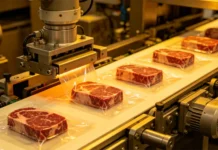
Food and beverage packaging operations utilize collaborative robots for tasks ranging from product placement and case packing to palletizing and quality inspection. The food industry’s stringent hygiene requirements are met through robots designed for easy cleaning and sanitization, while their flexibility enables handling of products with varying sizes, shapes, and packaging requirements. Bakery operations use cobots to place delicate products into packages without damage, while beverage companies employ them for high-speed case packing and palletizing operations.
Pharmaceutical packaging applications leverage the precision and consistency of collaborative robots to meet strict quality and regulatory requirements. These systems handle tasks such as vial placement, blister pack assembly, and secondary packaging while maintaining the documentation and traceability required by regulatory agencies. The ability to work in cleanroom environments makes cobots particularly valuable for sterile packaging applications.
Consumer goods packaging benefits from collaborative robots’ ability to handle products with irregular shapes or delicate construction. These systems excel at tasks such as placing products into display boxes, applying labels or promotional materials, and preparing products for e-commerce fulfillment. The flexibility to handle multiple product variations without extensive reconfiguration makes cobots ideal for consumer goods manufacturers with diverse product lines.
Automotive parts packaging operations employ collaborative robots for handling components ranging from small fasteners to large assemblies. These systems provide the precision required for automotive quality standards while adapting to the wide variety of part shapes and packaging requirements typical in automotive manufacturing.
Electronics packaging applications utilize the precision and gentle handling capabilities of collaborative robots to package sensitive components without damage. Vision systems enable these robots to verify proper component placement and packaging integrity while maintaining the throughput required for high-volume electronics production.
Future Evolution of Collaborative Robotics in Packaging
The continued development of collaborative robot technology promises even more sophisticated packaging capabilities that will further transform manufacturing operations over the coming years. Emerging technologies and design approaches will address current limitations while creating entirely new possibilities for human-robot collaboration in packaging environments.
Artificial intelligence integration will enable collaborative robots to learn from experience and adapt their behavior based on changing conditions or requirements. These systems will optimize their performance continuously while learning to handle new situations without explicit programming. Machine learning algorithms will enable cobots to predict and prevent quality issues while improving their efficiency over time.
Advanced sensor technologies including computer vision, force sensing, and proximity detection will provide collaborative robots with enhanced awareness of their environment and the products they handle. These sensors will enable more sophisticated decision-making capabilities while ensuring safe operation in complex packaging environments.
Improved manipulation capabilities through advanced gripper technologies and dexterous end-effectors will enable collaborative robots to handle increasingly complex packaging tasks. Adaptive grippers that automatically adjust to different product shapes and materials will expand the range of applications suitable for cobot implementation.
Network connectivity and cloud computing integration will enable collaborative robots to share learning experiences and optimizations across multiple installations. This collective intelligence will accelerate improvements in robot performance while reducing the effort required to optimize new implementations.
Autonomous mobile capabilities will combine collaborative robots with mobile platforms, creating systems that can move between different packaging stations or production lines as needed. This mobility will maximize robot utilization while providing ultimate flexibility in production planning and resource allocation.
Enhanced human-robot interface technologies including voice control, gesture recognition, and augmented reality will make collaborative robots even easier to operate and program. These interfaces will enable more intuitive interaction between humans and robots while reducing the training required for effective system operation.