






















Water is the lifeblood of the beverage industry. It is the primary ingredient in the vast majority of products and a critical resource for cleaning, cooling, and power generation in the manufacturing process. However, in an era of increasing water scarcity and environmental degradation, the responsible management of this finite resource has become a paramount concern. Water stewardship in beverage packaging plants is a holistic approach that goes beyond simple water reduction; it involves a commitment to preserving the entire watershed, improving the quality of wastewater, and ensuring that the act of production does not come at the expense of the local community or the ecosystem.
Improving Resource Efficiency through Closed-Loop Systems
The first pillar of water stewardship in beverage packaging plants is the maximization of water efficiency within the facility. Modern plants are moving away from “linear” water use where water is used once and then discarded toward “closed-loop” and “recirculating” systems. For example, water used for cooling filling machines can be captured, filtered, and reused for external crate washing or in the facility’s cooling towers. Similarly, the “rinse water” used for bottles and cans can be recovered and repurposed for non-product contact applications.
These “internal recycling” systems can reduce the facility’s total water intake by up to 50%, a significant achievement that directly lowers utility costs and environmental impact. To achieve this, plants are investing in advanced filtration and treatment technologies, such as reverse osmosis and ultrafiltration, which ensure that the recovered water meets the highest standards of purity. Water stewardship in beverage packaging plants is thus a technical challenge that requires a deep understanding of the facility’s “water balance” and a commitment to continuous improvement.
Advanced Wastewater Treatment and Environmental Protection
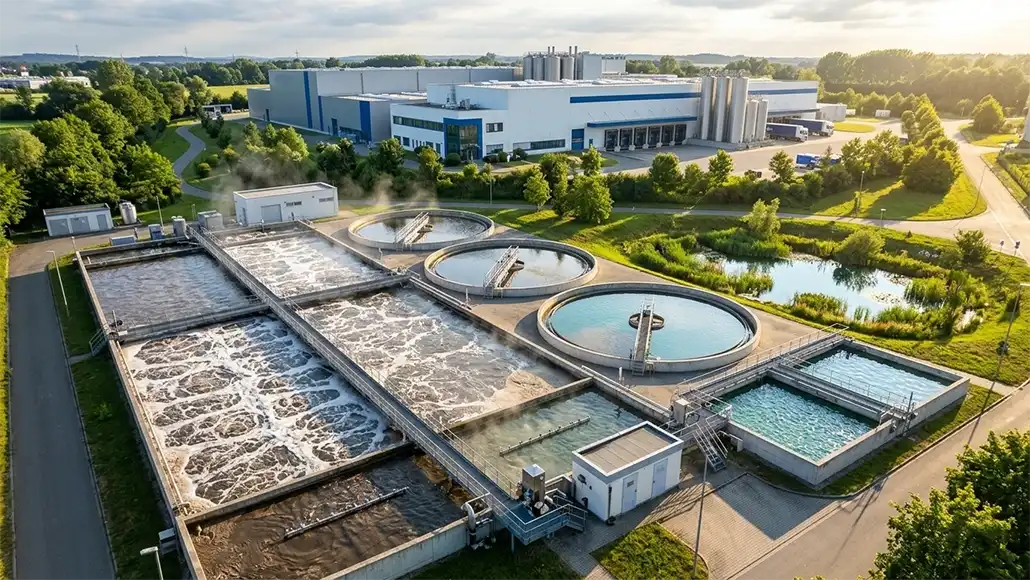
The second pillar of stewardship is the responsible management of wastewater. Beverage production generates a significant volume of effluent containing organic matter, cleaning chemicals, and thermal energy. If released untreated, this wastewater can have a devastating impact on local rivers and lakes. Water stewardship in beverage packaging plants involves the installation of on-site wastewater treatment plants (WWTPs) that use biological, chemical, and physical processes to remove contaminants before the water is returned to the environment or the municipal sewer system.
Many leading beverage companies are now going beyond regulatory requirements to achieve “Net Zero” wastewater discharge. This involves treating the effluent to a level where it can be safely used for irrigation or even returned to the facility as “process water” for cooling or cleaning. By turning wastewater into a valuable resource, these facilities are demonstrating the true meaning of circularity. Water stewardship in beverage packaging plants is about closing the loop and ensuring that the water we use today is available for others tomorrow.
Reducing the Water-to-Product Ratio: A Key Metric for Success
A critical metric for measuring the success of water stewardship in beverage packaging plants is the “water-to-product ratio.” This represents the total amount of water used by the facility to produce one liter of beverage. A decade ago, it was common for this ratio to be 3:1 or even 4:1. Today, through the adoption of more efficient equipment and better operational practices, many plants have reached ratios of 1.5:1 or even lower. This progress is a testament to the power of engineering and the commitment of the industry to do more with less.
The transition to “dry” processes is a major contributor to this improvement. As discussed in earlier articles, dry lubrication for conveyors and air-based rinsing systems eliminate the need for water in these high-volume applications. Furthermore, the use of “Clean-in-Place” (CIP) systems that are optimized for minimal water and chemical use ensures that hygiene standards are met without unnecessary waste. Water stewardship in beverage packaging plants is a process of optimization where every drop is accounted for and every opportunity for saving is explored.
Corporate Responsibility and Community Engagement
Beyond the “fence line” of the factory, water stewardship in beverage packaging plants involves a deep engagement with the local community and the surrounding watershed. Beverage companies are increasingly investing in “watershed restoration” projects, such as reforestation, wetland preservation, and the installation of rainwater harvesting systems for local farmers. The goal is to “balance” the water used by the facility by returning an equivalent or greater amount of water to the local ecosystem.
This proactive approach builds trust and ensures that the brand remains a welcome member of the community. In many regions, the “social license to operate” is dependent on the brand’s ability to demonstrate responsible resource management. By being a leader in water stewardship, beverage companies are securing their long-term operational resilience and building a legacy of positive impact. Water stewardship in beverage packaging plants is thus a core component of “ESG” (Environmental, Social, and Governance) strategy, reflecting the brand’s values and its commitment to a sustainable future.
The Role of Digital Monitoring and Real-Time Analytics
To manage water with the necessary precision, modern plants are utilizing “digital water management” systems. These systems use smart meters and IoT sensors to track water flow and quality in real-time across the entire facility. This data is then analyzed using AI-driven platforms to identify leaks, optimize treatment processes, and predict future demand. This “visibility” is essential for achieving the highest levels of performance and ensuring that the facility remains on track to meet its sustainability goals.
In conclusion, the evolution of water stewardship is a journey toward a more responsible and efficient way of doing business. By prioritizing resource efficiency, advanced treatment, and community engagement, the beverage industry is setting a global standard for excellence. Water stewardship in beverage packaging plants is not just an environmental necessity; it is a strategic advantage that strengthens the brand, protects the planet, and ensures that we can continue to enjoy our favorite drinks in a world where water is abundant and healthy for all. The future of the industry is clear, and it is built on a foundation of responsible hydration.