







As the world of commerce becomes increasingly saturated, industry leaders must leverage every competitive edge they can find. While often overlooked, emphasizing high-quality and efficient packaging can be the difference between being ahead of the competition and being just another forgettable enterprise. Yet with the sheer amount of materialistic and operational options available, it can be hard to discern what is high-performance and what is a business liability.
In the current logistics landscape, the focus has shifted from high-volume and cheap over-packing to quality engineering with an emphasis on a “zero-damage” delivery cycle. As supply chain demands continue to evolve in 2026, the strategy for damage-free transit now involves an integrated approach to structural integrity that leverages science to mitigate inevitable risks in the globalized distribution network.
Understanding The Mechanics of Transit Damage
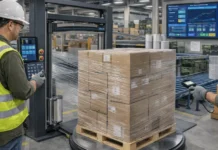
In America, wooden pallets are the industry standard for transporting and storing packages. To achieve a zero-damage delivery process, operational leaders must first understand the physics around the pallet journey.
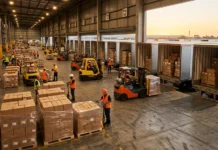
Packages undergo pressure from stacking, shock from when loads get shifted in the trailer and the impact of mechanical handling, which varies significantly based on the location and the implemented technology. Considering the sheer amount of movement and force that a single package goes through, engineering a strong and cost-effective vessel is imperative.
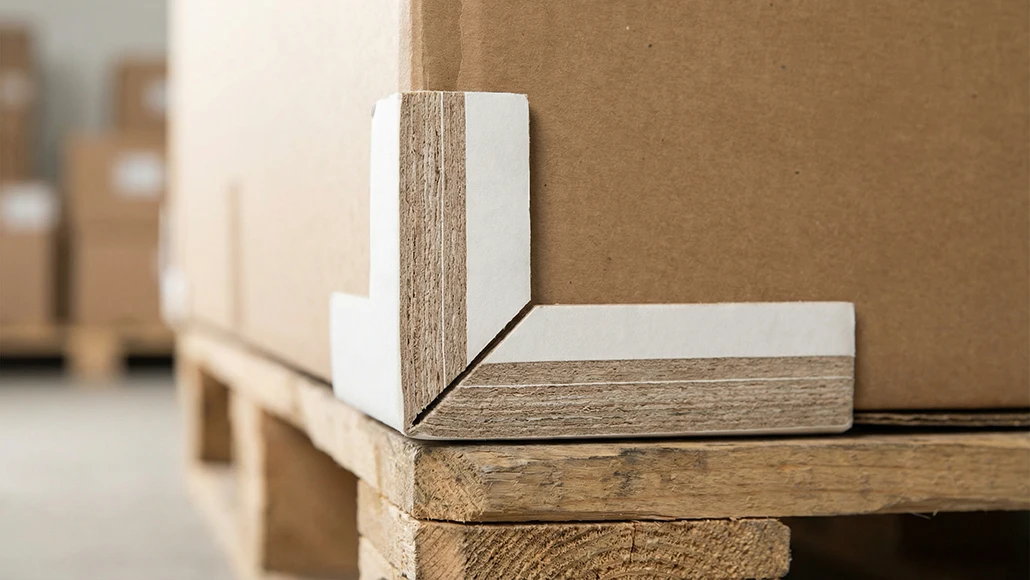
The structural foundation of a package box lies in its corners, as they are furthest from the center of gravity, and they receive the highest level of force. If a package’s corners are damaged, it can cause a “pancake effect” that can ruin the entire pallet. Focusing protection on these zones is the most efficient way to keep products safe.
Which Materials Offer The Most Structural Protection?
Material science has evolved to provide several sophisticated options for edge and corner fortification. Below are the most common high-performance materials used in damage-free packaging:
- Engineered paperboard: Often viewed as the industry standard for sustainable yet highly effective packaging, this multi-layered, high-strength material is both lightweight and has exceptional crush resistance, minimizing overall supply chain costs. Because paperboard is fully recyclable, it aligns with environmental mandates without sacrificing durability.
- Expanded polystyrene (EPS) foam: For specialized, fragile products that require more padding, EPS foam is a common choice. It is often used for electronics or medical devices that cannot withstand sudden jolts. Its ability to absorb shock is a significant advantage in specific industries, though it is worth mentioning that increasingly strict environmental regulations have become less lenient with plastic foam.
- Corrugated reinforcements: A balanced option for lighter goods, these protectors provide adequate strength to keep boxes steady but cost less than higher-duty materials. This is a popular choice for companies that need robust packaging but do not require the level of robustness that paperboard brings.
3 Top-Rated Partners for Damage-Free Packaging
Below is a shortlist of three of the best partners for shipping services, ranked based on the following criteria:
- Innovation in material use: This list prioritizes shipping companies that incorporate high-quality, industrially relevant materials.
- Flexibility in customization: An effective provider understands that with the massive volume of varying industries that exist today, a “one size fits all ” approach does not work. Customizability based on clients’ unique product needs is key.
- Emphasis on sustainability: With sustainability becoming an increasingly integral aspect of consumer perception, having a partner that stays up to date with environmental regulations and trends is a strong advantage.
- Industry recognition: Listed companies have the basic industry certifications such as ISTA, as well as a proven track record of effective service provision.
1. Great Northern Laminations®
Great Northern Laminations has emerged as one of the top choices for businesses emphasizing both innovative and sustainable operational practices. Known industry-wide as Laminations, it has established a reputation as a manufacturer of protective packaging solutions.
The shipping provider boasts excellence that helps customers cut assembly time in half, reduce packaging material costs and lower shipping costs throughout the supply chain. Despite their significant speed, they are still in contention for who provides the best packaging for corner protection during transit in the industry.
Notable Features:
- Custom Engineered Components: Laminations have achieved mastery in formulating custom paperback solutions, providing a robust delivery infrastructure for a wide range of clients and product types.
- ISTA Testing Lab: A key differentiator for the company is its ability to perform ISTA testing, ensuring packaging mechanisms are tested under simulations of the unique harshness of supply-chain conditions. Clients can rest assured that the final service has undergone rigorous testing before implementation.
- Dedication to Sustainability: Since 2023, Laminations has become increasingly devoted to sustainable production. Their paperback products are made from fibers consisting of post- and pre-consumer waste.
- Supply Chain Efficiency: Their preference toward light and durable materials helps with lowering costs and increasing efficiency.
2. Plasti-Fab
Plasti-Fab is a great solution for companies that require softer padding for specialized products. The Canadian-based manufacturer has established itself as a reliable provider of quality EPS solutions. While paperboard provides superior stacking strength, EPS offers the best shock absorption.
Notable Features:
- GREENGUARD Certified: While EPS products are typically critiqued for being one of the least environmentally friendly shipping products particularly because of their lack of biodegradability Plasti-Fab’s products are GREENGUARD certified thanks to their unique, energy-efficient formulation.
- Fully Vertically Integrated: Plasti-Fab’s operations are entirely vertically integrated, meaning full control over the entire manufacturing process.
- Impact Absorption: Its corner protectors deform under pressure, shielding fragile items such as glass from sudden drops.
3. Crown Packaging
With 50 years of experience in the packaging industry, Crown Packaging has become a reliable source for companies that require a wide range of standard-duty edge protection. It serves as a one-stop shop for an organization’s packaging needs, offering a wide catalog from traditional V-board to various custom corrugated reinforcements. Their dedication to maintaining pallet integrity across shipments is a core contributor to their longevity.
Notable Features:
- Stacking Infrastructure: Its V-board products are highly effective at maintaining pallet integrity, enabling higher stacking in warehouses.
- Diverse Industry Connections: The firm provides services across a wide range of sectors, from industrial manufacturing to agriculture, demonstrating its capacity for customization.
- Sustainable Packaging Solutions: Crown Packaging collaborates with top manufacturers to ensure alignment with industry-standard sustainable packaging. They also help clients analyze their processes and make recommendations for integrating environmental consciousness into operations.
Finding the Right Packaging Partner for Your Business
Identifying which packaging company to partner with is a significant business decision that affects a multitude of factors, ranging from supply chain operations to consumer perception. By understanding the materials and specializations offered by different packaging services, you can begin to discern what’s ideal for your specific product, and ultimately make the right choice for your organization.