
















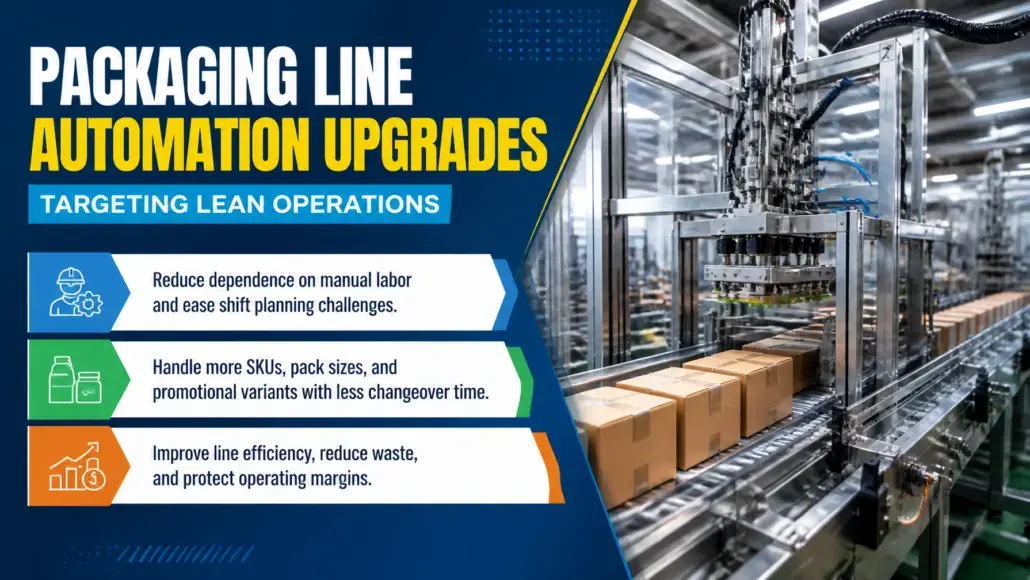
Manufacturing facilities across food, beverage, personal care, and pharmaceutical industries encounter persistent operational friction. Labor constraints complicate shift planning, brand portfolios continue to expand through proliferation of package sizes and promotional variants, and operating margins face continuous pressure. In response to these headwinds, engineering leadership and plant managers have increasingly moved away from the costly assumption that operational excellence requires complete, capital-heavy line replacements. Instead, the focus has shifted toward targeted packaging line automation upgrades that isolate specific failure points, eliminate non-value-added activities, and reinforce overall equipment effectiveness.
Within a lean manufacturing framework, machine velocity alone does not guarantee productivity. When machinery runs at elevated cyclical rates only to halt intermittently due to upstream package misfeeds, erratic carton loading, or protracted changeovers, the packaging line suffers hidden operational penalties. Micro-stops trigger ripple effects across the entire plant: accumulation systems choke, upstream fillers starve or enter idle cycles, seal integrity deteriorates, and operators spend valuable shift time clearing blockages rather than sustaining throughput. Packaging World Insights observes that by retrofitting targeted automation modules onto sound mechanical assets, facilities capture the stability, speed, and yield of newly commissioned lines while safeguarding operational budgets and established facility layouts.
Targeting Line Bottlenecks Through Strategic Modernization
Before introducing new automation hardware or digital controls, technical teams must conduct a thorough operational audit spanning from primary container filling to tertiary palletizing. The central doctrine of lean manufacturing maintains that optimizing an asset upstream or downstream from the true pacing station merely shifts work-in-progress inventory or exposes adjacent operational vulnerabilities. Determining where packaging line automation upgrades generate the highest return requires careful examination of production event logs, separating overt mechanical downtime from chronic, low-visibility friction points.
Auditing Machine Utilization and Lost Capacity
Uncovering latent capacity involves tracking mean time between failures, micro-stop frequencies, and the manual intervention requirements of every individual cell. In legacy packaging installations, high-speed primary packaging units may perform reliably in isolation, but manual infeed stations often fail to keep pace or let deformed containers slip through undetected. A structured line balance audit reveals whether production targets are compromised by buffer limitations, mechanical play in aging guides, or physical handling bottlenecks, ensuring investment addresses the genuine constraint.
Primary Infeed and Dynamic Accumulation Upgrades
The interface between primary filling and downstream packaging machinery represents one of the most common sources of line disruption. Conveyor networks on older lines frequently depend on basic gravity feeds, fixed friction plates, or static mechanical switches. These crude mechanisms often result in container scuffing, shingling, and violent backpressure jams that force downstream cartoners, wrappers, or baggers into emergency stop cycles. Modernizing this infeed infrastructure represents an exceptionally high-impact mechanical intervention.
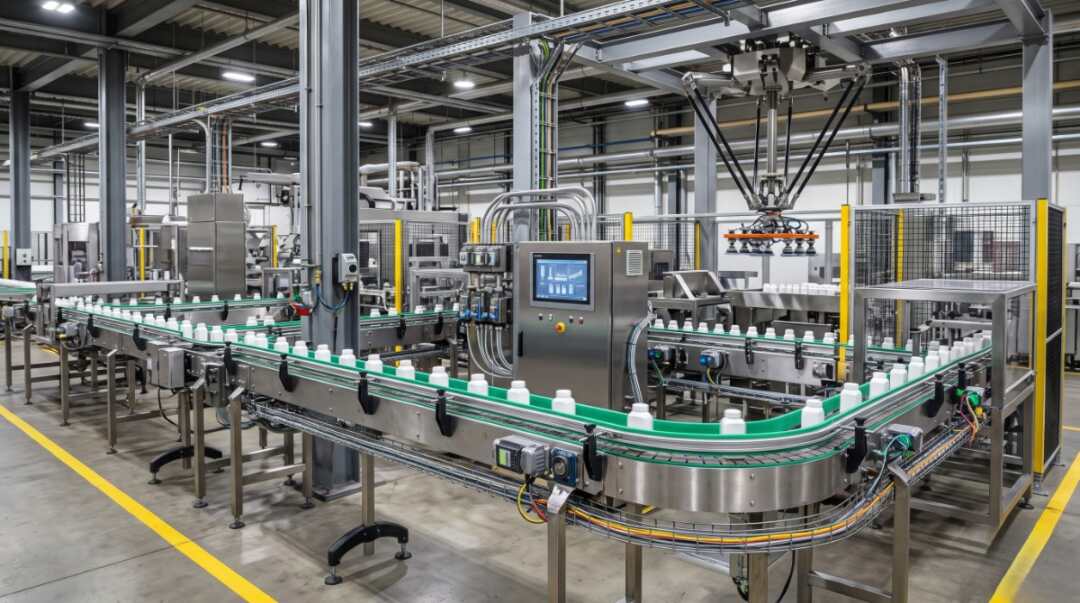
Modern packaging lines utilize dynamic accumulation tables and zero-pressure accumulation conveyors driven by decentralized variable frequency drives or localized servo drives. These systems actively modulate conveyor speeds based on downstream capacity, creating a responsive buffer that absorbs momentary interruptions without starving critical packaging stations. By tailoring container velocity to machine pitch in real time, the line maintains consistent spacing, which prevents container damage, label abrasion, and material scrap caused by collisions.
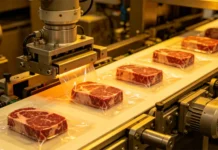
Integrating high-speed industrial vision systems at infeed points delivers an additional layer of process control. When packaging lines process items with natural variations or lightweight flexible containers prone to minor distortion, human inspection cannot catch every deviation at production speeds. Vision-guided reject stations identify and divert misshapen containers, open flaps, or misaligned closures before they enter cartoners or sealers, preventing costly machine crashes, seal failures, and extensive cleanup operations.
Recipe-Driven Changeovers and Digital Agility
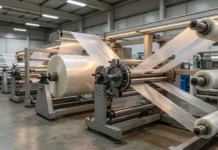
The regular introduction of varied packaging formats, alternative materials, and targeted promotional packaging has severely compressed production batch runs. This operational agility is particularly vital as manufacturers pivot toward flexible packaging solutions adapting to modern retail trends, where shelf-ready pouches, lightweight materials, and multi-pack variants demand rapid line versatility without sacrificing throughput.
On traditional packaging lines, a format changeover entails substantial mechanical downtime: operators manually turn hand-cranks, reposition side rails with calipers, swap mechanical change parts, and conduct lengthy trial-and-error startup runs. In an operational setting requiring multiple changeovers per shift, this manual approach destroys operational availability and generates substantial packaging material scrap.
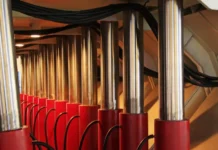
Automated, recipe-driven positioning mechanisms represent one of the most transformative packaging line automation upgrades for high-mix operations. By replacing manual lead screws with networked motorized positioning units linked to a central human-machine interface, an operator can initiate complete line changeovers with a single screen selection. Guide rails, carton magazines, overhead hold-down belts, and seal-jaw spacing adjust simultaneously to programmed coordinates within seconds, operating within fractions of a millimeter of target dimensions.
Eliminating manual adjustments fundamentally alters the economics of high-mix manufacturing. Because the repositioning is digital and absolute, the packaging line does not require iterative fine-tuning using real product and packaging materials. Cartons fold squarely on the first pass, containers enter starwheels without binding, and heat-sealing pressures match exact material specifications from the moment the line resumes operation. Plants achieve predictable, repeatable changeovers while reclaiming dozens of production hours each month.
Operational Impact: Legacy Lines Versus Automated Upgrades
The tangible operational gains realized by migrating from legacy mechanical packaging stations to integrated automated systems can be observed across key operating parameters:
| Operational Parameter | Legacy Baseline Operation | Upgraded Automated Operation | Core Lean Benefit |
|---|---|---|---|
| Format Changeover | Manual hand-cranks, visual markers, physical calibration | Recipe-driven servo positioning via centralized HMI | Dramatically reduced downtime, minimal startup scrap |
| Infeed & Buffering | Static conveyors, line pressure, frequent jams | Zero-pressure accumulation, vision tracking, dynamic buffering | Smooth product flow, elimination of micro-stops |
| Case Packing & Palletizing | Manual loading, repetitive ergonomic strain | Compact delta pick-and-place, collaborative robotics | Consistent throughput, optimized labor redeployment |
| Asset Maintenance | Reactive repair following component failure | Condition monitoring via vibration and thermal telemetry | Prevention of catastrophic downtime during production runs |
Secondary Packaging and End-of-Line Robotics
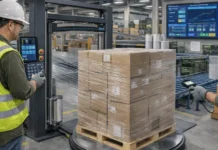
End-of-line packaging tasks frequently represent the most labor-intensive and ergonomically hazardous areas in legacy operations. Tasks such as erecting corrugated cases, hand-packing primary containers, and stacking finished pallets consume considerable manpower while introducing physical fatigue, variability, and potential musculoskeletal injuries. At the same time, floor space limitations often prevent the installation of conventional, hard-guarded industrial robotic cells.
To overcome space restrictions, facilities are deploying targeted packaging line automation upgrades that incorporate collaborative robots and overhead delta pick-and-place systems. Compact robotic cells can be suspended over existing conveyor networks to erect cases, orient primary packs, and pack shipping containers continuously. Modern collaborative and speed-monitored robotics feature integrated safety systems, including optical area scanners and force sensors, allowing them to work in close proximity to operators without requiring expansive safety perimeters.
Adaptive Tooling for High Flexibility
The flexibility of modern secondary packaging cells is enhanced by multi-functional end-of-arm tooling. Vacuum arrays configured with integrated check valves, paired with servo-mechanical grippers, enable a single robotic arm to process flexible pouches, rigid bottles, and corrugated cases without necessitating physical change parts. This operational adaptability ensures that secondary packaging stations adjust quickly to upstream packaging revisions without starving or bottlenecking the line.
Condition Monitoring to Secure Line Availability
Total productive maintenance forms a core pillar of lean manufacturing, aiming to eliminate unplanned breakdowns by addressing equipment wear proactively. High-speed packaging machinery exerts continuous thermal and mechanical stress on moving components such as drive chains, bearings, vacuum generators, and sealing elements. In traditional operational environments, maintenance teams often discover component failure only after an asset breaks down mid-shift, triggering emergency repairs and scrap generation.
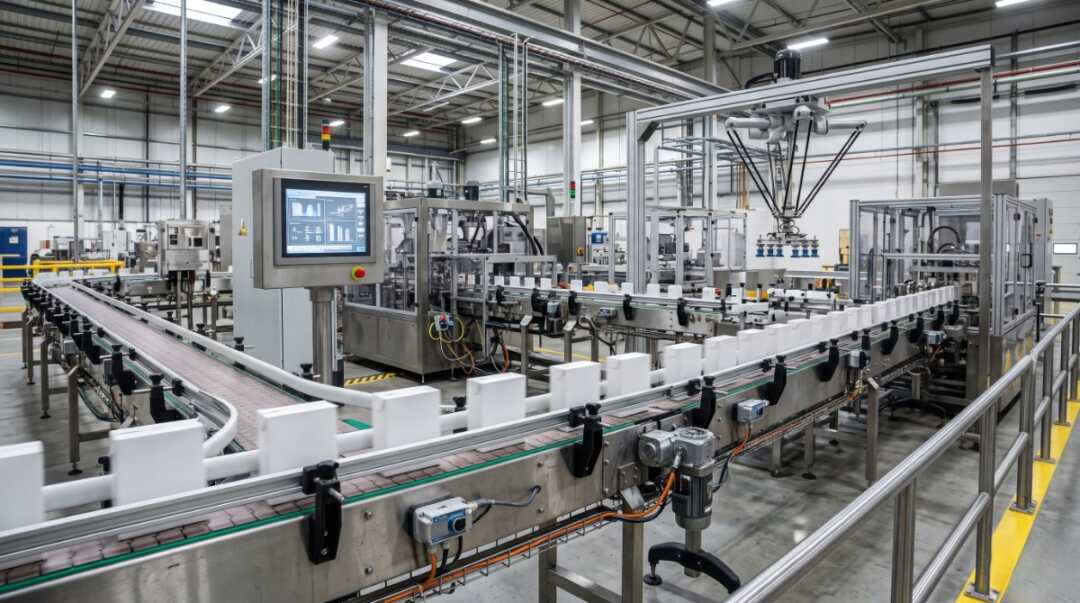
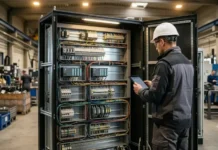
Retrofitting critical assets with non-invasive condition-monitoring sensors offers an accessible, high-yield modernization pathway. External vibration sensors fitted to main motor bearings and drive shafts detect early mechanical wear long before audible degradation occurs. Infrared thermal sensors continuously assess the heat distribution across sealing jaws, identifying heating element degradation before weak packaging seals result in product leaks or contamination. Transmitting this telemetry to edge devices or supervisory control systems enables technicians to schedule targeted maintenance during planned washdowns or changeovers, safeguarding line uptime.
Building an Incremental Modernization Roadmap
Implementing packaging line automation upgrades successfully requires a disciplined, step-by-step strategy. Simply adding robotics or automation to an unstable packaging process tends to amplify existing issues rather than resolve them. Packaging teams must adopt a phased modernization plan that protects working capital while delivering verifiable efficiency gains at each phase.
The process starts by analyzing production downtime records to identify the primary mechanical constraint. Engineering teams should then install modular, field-proven upgrades that resolve that specific bottleneck, such as adding automated guide rail adjustment to streamline changeovers or introducing zero-pressure accumulation to eliminate product jamming. Packaging World Insights believes that by measuring operational improvements, providing thorough operator training, and documenting labor savings and scrap reductions, the organization builds the operational stability and financial justification needed for ongoing automation investments.

