
















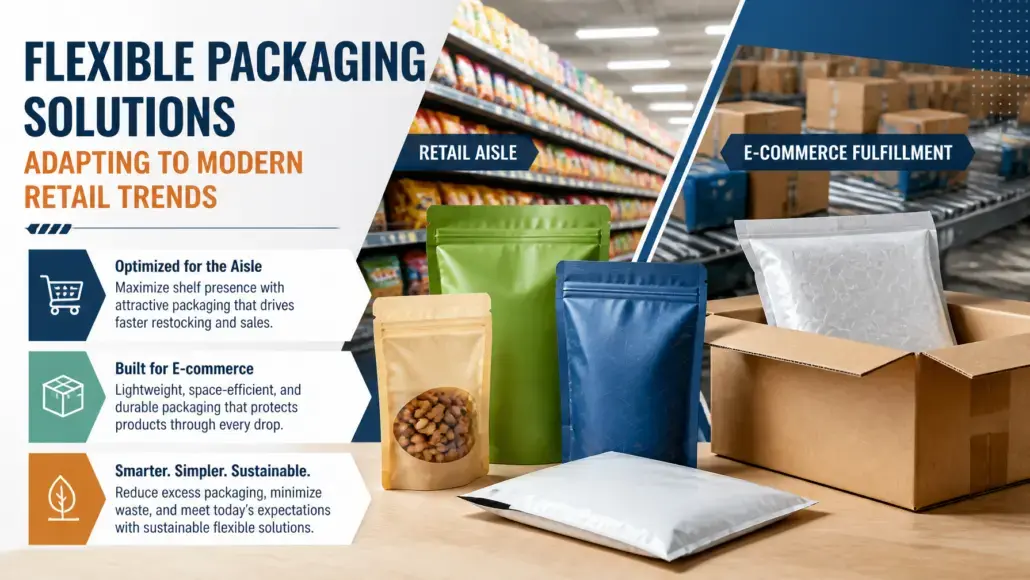
Retail landscapes are undergoing a structural shift driven by competing commercial demands. On one side stands the physical aisle, demanding optimal shelf density, robust presentation, and rapid restocking. On the other lies the e-commerce fulfillment engine, prioritizing volumetric shipping efficiency, structural resilience against parcel drops, and the elimination of superfluous secondary packaging.
Navigating these two operational worlds simultaneously has forced brand owners and packaging engineers to rethink traditional formats. Packaging World Insights observes that in this environment, advanced flexible packaging solutions have emerged as a primary vehicle for brand agility, cost optimization, and logistical efficiency.
The Retail Transformation: Omnichannel Pressures on Pack Design
Historically, fast-moving consumer goods packaging was engineered primarily for palletized consolidation and static retail shelving. Primary rigid packaging, including high-density polyethylene bottles, metal cans, and glass jars, dominated consumer categories due to perceived structural permanence and straightforward vertical stackability. However, the expansion of omnichannel retailing and localized fulfillment hubs has revealed the physical limitations of rigid formats across distributed logistics networks.
Rigid containers inherently transport empty space, increasing dimensional weight charges in parcel transit and freight costs across long-haul transport. In response, brand owners are increasingly deploying flexible packaging solutions, particularly stand-up pouches, spouted pouches, and flat-bottom bags.
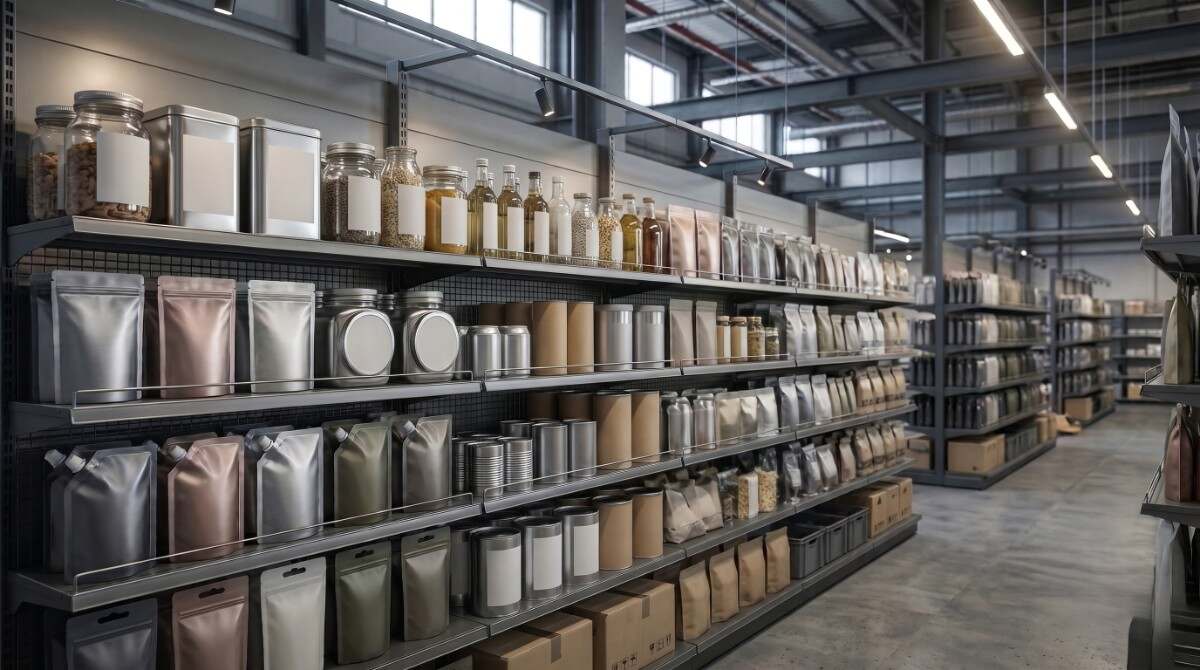
By conforming directly to product volume, flexible structures significantly reduce primary packaging tare weight compared to rigid alternatives, lowering transport mass while improving the cubic efficiency of retail distribution totes and automated sorting systems. This dual advantage of material reduction and dimensional efficiency is particularly evident in the beauty sector, where lightweight flexible pouches serve as replenishment packs, with refillable packaging transforming cosmetics lifecycle management by replacing single-use rigid jars with low-impact refill systems.
Transit Durability: Protecting Integrity Through Parcel Logistics
The journey from distribution center to customer doorstep exposes parcels to repetitive drop impacts, mechanical sorting vibration, and unpredictable barometric shifts. Rigid containers are susceptible to side-impact denting, stress cracking around neck finishes, and closure loosening under continuous transit vibration. In contrast, engineered flexible pouches absorb and dissipate kinetic energy across their laminate surface area, provided the multi-layer structure and sealing parameters are carefully controlled.
Seal Integrity and Burst Pressure Mitigation
Converting machinery must produce hermetic seals that maintain barrier integrity under sudden pressure differentials, such as those encountered in air freight cargo holds or during automated parcel drops. Structural failures typically occur at the transition points between multi-layer film and rigid fitments, or along horizontal fin seals where multiple film plies intersect. Addressing these vulnerabilities requires optimizing hot tack strength and seal dwell times to ensure the inner sealant layer fuses completely without thinning or embrittling adjacent polymer chains.
Engineering for Ships in Own Container Protocols
As major e-commerce platforms incentivize primary packaging that requires no secondary preparation or corrugated overboxing, flexible packaging solutions are being re-engineered to qualify for Ships in Own Container standards. This shift requires integrating puncture-resistant coextruded films, rounded corner geometries to prevent abrasion during transit, and robust secondary locking mechanisms on reclosable fitments or press-to-close zippers to prevent inadvertent opening under compressive loads.
Substrate Innovation: Balancing Circularity with Product Protection
The operational demand for packaging reduction intersects directly with regulatory mandates for recyclability and Extended Producer Responsibility fee structures. Traditional high-barrier pouches relied on multi-material laminates, combining polyethylene terephthalate for mechanical stiffness and printability, aluminum foil or metallized film for barrier, and polyethylene for sealing. While functionally robust, these legacy constructions remain incompatible with standard mechanical recycling streams.
The Rise of Mono-Material Laminates
Material science developments have enabled mono-material flexible packaging solutions primarily based on oriented polyethylene or oriented polypropylene. By matching polymer families across laminated layers, converters achieve the tensile stiffness and thermal resistance required for conversion without introducing incompatible resins. These mono-structures can be recovered through conventional polyolefin recycling streams without causing contamination during reprocessing.
| Structural Configuration | Primary Barrier Technology | Circularity Pathway | Omnichannel Performance Profile |
|---|---|---|---|
| Legacy Multi-Material Laminates | Aluminum foil or metallized core | Difficult to sort mechanically; primarily landfill or energy recovery | High barrier retention and puncture resistance; subjected to higher regulatory fees |
| Mono-Material Polyethylene | Inorganic vacuum coatings or high-barrier EVOH layers | Compatible with established PE film recovery streams | Narrower sealing window on form-fill-seal lines; excellent impact resistance |
| Mono-Material Polypropylene | Vacuum-deposited metal oxides or barrier coatings | Compatible with designated PP recycling channels | Superior clarity and thermal stability; requires structural modification for cold impacts |
Ultra-Thin Barrier Coatings
To replicate the barrier performance of aluminum foil within mono-material webs, converters apply nanoscale vacuum-deposited inorganic coatings, such as aluminum oxide or silicon oxide. Because these barrier layers are exceptionally thin, they do not disrupt the mechanical recycling properties of the base polyolefin. However, their integration demands precise web handling during pouch forming to prevent micro-fracturing that could compromise oxygen and water vapor transmission barriers.
Visual Impact and In-Store Merchandising
Physical store aisles require continuous brand visibility. A recurring challenge of earlier flexible pouches was their tendency to crease or lean when partially filled or repeatedly handled by shoppers, detracting from product presentation. Today, film manufacturers integrate specialized orientation techniques, such as machine direction orientation, to impart vertical rigidity into films, ensuring pouches maintain an upright profile throughout their retail lifecycle.
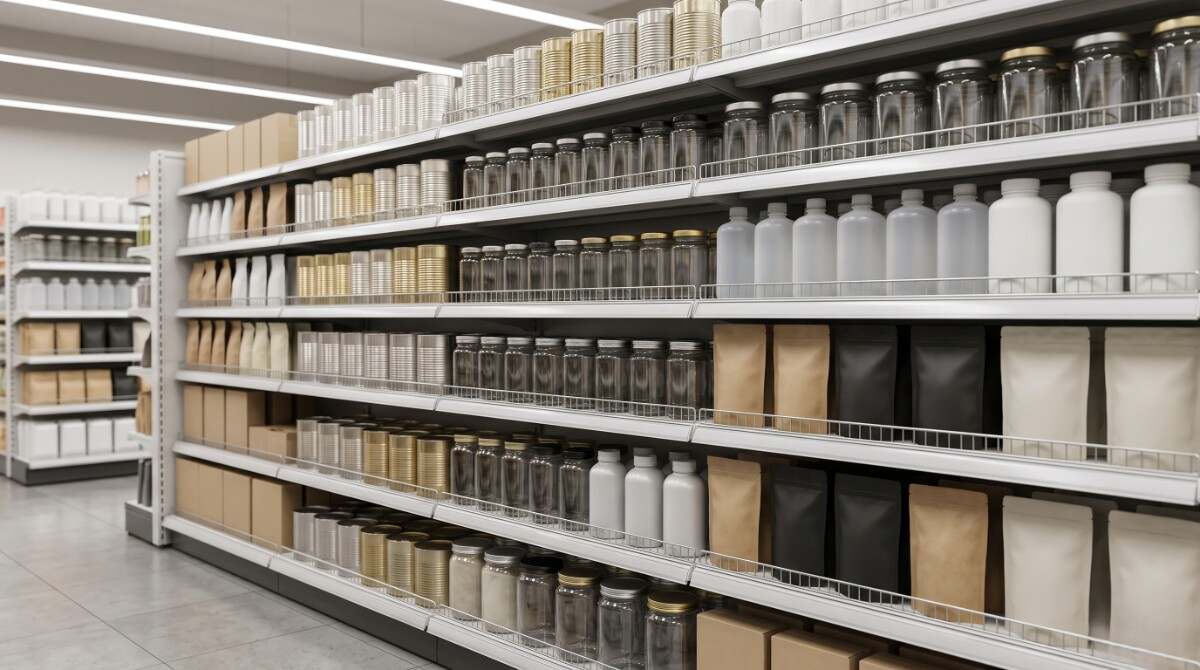
Furthermore, flexible packaging provides an expansive, uninterrupted surface area for branding. High-definition flexographic printing and extended-gamut digital printing allow for accurate color reproduction across regional product variations. Digital printing also enables rapid stock-keeping unit turnover, private-label diversification, and short promotional runs without the tooling lead times and setup costs associated with traditional printing cylinders.
Converting and Packaging Line Efficiency
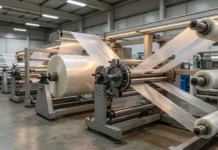
Transitioning from rigid formats to flexible packaging solutions or shifting existing pouch production from legacy laminates to mono-material alternatives introduces distinct operational considerations on packaging lines. Converting and filling equipment must process substrates with lower melting points and greater elongation under tensile stress.
Sealing Window Management
In standard multi-material laminates, the outer layer possesses a significantly higher melting point than the inner sealant layer, creating a broad operating temperature window. On a mono-material polyethylene structure, the thermal differential between the oriented print web and the unoriented sealant layer is markedly narrower. Operating form-fill-seal machinery at commercial throughput speeds requires precise digital temperature regulation, cooled seal jaws, or ultrasonic sealing technology to prevent film deformation and burn-through while securing hermetic seals.
Web Handling and Tension Control
Mono-material films typically demonstrate greater elasticity under web tension than polyester-based alternatives. Packaging facilities must equip packaging machinery with responsive load-cell tension controls, low-friction rollers, and dynamic web edge guides to eliminate material stretching, tracking inconsistencies, and registration drift during continuous form-fill-seal cycles.
Data Integration: Smart Packaging Across Fulfillment Chains
Modern retail fulfillment depends on comprehensive serialization, traceability, and operational speed. Flexible packaging serves as a practical vehicle for smart packaging features, including serialized 2D datamatrix codes, GS1 Digital Links, and scannable watermarks embedded into the printed design.
Unlike rigid containers that often require secondary labeling passes to apply localized variable data, digital printing systems can apply unique, high-resolution serialized identifiers directly to the flexible film during the converting or packaging process. This capability accelerates fulfillment speeds within automated warehouses by facilitating optical scanning from wider camera angles. At the checkout counter, 2D codes streamline point-of-sale scanning while embedding production batch data, dynamic expiration dates, and recycling guidelines, directly connecting supply chain tracking to post-purchase consumer transparency.
As retail formats continue to converge across digital fulfillment and physical store footprints, packaging must deliver structural protection, process efficiency, and environmental compliance. Packaging World Insights notes that flexible packaging solutions that combine mechanical durability, line runnability, and certified circularity will remain foundational to modern supply chain strategy.

