








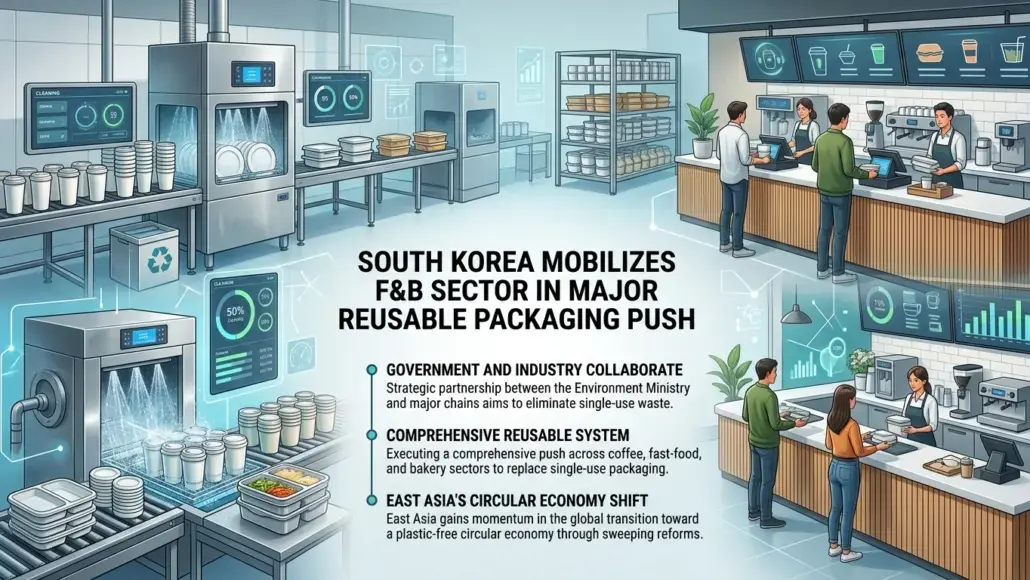

The global transition toward a plastic-free circular economy is gaining significant momentum in East Asia as national governments implement sweeping reforms to eliminate single-use waste from everyday commercial spaces. In a major strategic move, the South Korean government has partnered with the nation’s leading coffee, fast-food, and bakery chains to execute a comprehensive reusable packaging push. This collaborative initiative, led by the Ministry of Climate, Energy, and Environment, involves global giants including Starbucks, Burger King, KFC, and McDonald’s, alongside domestic brands and 150 independent cafes. The agreement establishes eco-friendly guidelines for approximately 22,000 stores nationwide, with the new regulatory framework set to take effect this September.
Strategic Framework for a Plastic-Free Society
The current reusable packaging push is a direct component of the “Plan to Promote the Transition to a Plastic-Free Circular Economy.” This broader policy was developed as a strategic response to the plastic supply-chain crisis exacerbated by geopolitical instability and the war involving Iran in the Middle East. Kim Sung-hwan, Minister of Climate, Energy, and Environment, emphasized the importance of localized changes in achieving national sustainability goals. “The transition toward a plastic-free circular economy begins with changes in everyday spaces such as cafés,” Kim stated. “Beginning with this agreement with the café industry, we will work with businesses and civil society organizations to expand these practices throughout society, including funeral halls, workplaces, amusement parks, and sports venues.”
Under the guidelines finalized in the agreement, participating businesses will prioritize reusable cups for all on-site dining. To encourage consumer participation, the government and industry partners are introducing financial incentives, allowing customers who bring their own cups or tumblers to save up to KRW800 (US$0.60) per beverage. Furthermore, the protocol for single-use accessories is being restricted; straws will now be provided only upon specific request through self-service kiosks or staff members. The common practice of “double-cupping”—nesting a plastic cup inside a paper one for insulation—will be officially banned to eliminate redundant waste.
Systemic Reform and Future Regulatory Targets
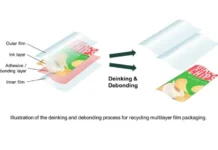
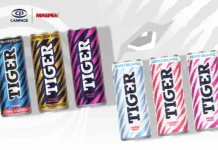
The initiative extends beyond consumer-facing habits to address the systemic challenges of packaging design. Participating F&B chains have pledged to move away from problematic packaging formats, such as PET cans. These containers often combine plastic and metal in ways that make material separation difficult, ultimately disrupting recycling systems and reducing the quality of recovered resins. By phasing out these composite materials, the Ministry aims to improve the efficiency of the national recycling infrastructure. The agreement remains open to additional stores and independent operators who wish to join the movement after the initial signing.
This pilot-scale mobilization is intended to serve as a data-driven foundation for future legislation. The Ministry of Climate, Energy, and Environment will analyze the results of the initiative to guide long-term policies aimed at reducing disposable-product consumption. This push follows earlier mandates that required bottled water sold in the country to be label-free during manufacturing and distribution. Additionally, the government has already implemented requirements for bottled water and non-alcoholic beverage producers to integrate recycled plastic into their packaging starting this year. These cumulative efforts underscore South Korea’s commitment to accelerating the transition to a fully circular packaging ecosystem.