

















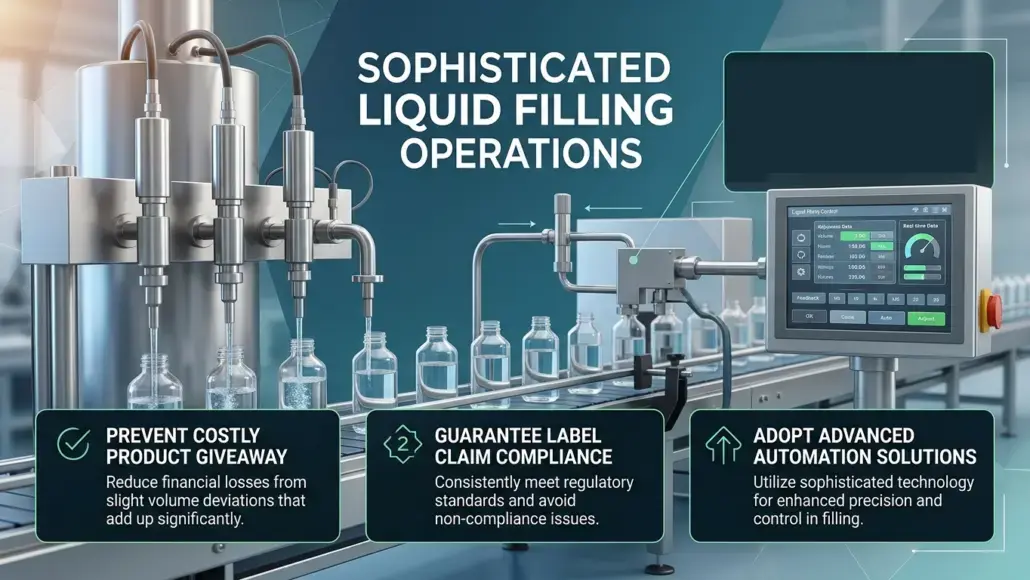
The maintenance of accurate fill volumes is a fundamental requirement for the economic and regulatory success of modern liquid filling operations. In industries ranging from pharmaceutical packaging to beverage production and chemical processing, even a slight deviation in volume can lead to significant financial loss through product giveaway or, conversely, a lack of compliance with label claims. To address these challenges, the packaging sector has turned toward more sophisticated automation strategies that move beyond traditional static settings. The implementation of closed-loop process control is a key factor in enhancing filling precision, providing a dynamic and self-correcting system that ensures every container is filled to the exact required specification.
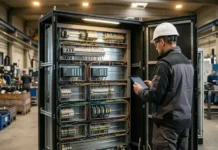
Strategic process management now relies on the ability of the filling machinery to monitor its own performance and make adjustments in real-time. Traditional volumetric filling systems were often subject to drift caused by changes in product temperature, viscosity, or ambient conditions. In a closed-loop environment, the system utilizes high-precision sensors, such as mass flow meters, to measure the actual amount of product delivered to each container. This information is instantly fed back to the filling controller, which adjusts the valve timing or the pump speed for the next cycle. This continuous cycle of measurement and adjustment is what allows for a level of consistency that was previously unattainable with manual or open-loop systems.
Waste Reduction and Quality Assurance Standards
The primary benefit of utilizing a self-correcting filling system is the significant reduction in product waste. In high-value sectors such as pharmaceutical packaging or specialty chemical processing, the cost of the raw materials is immense. Even a one percent reduction in overfill can translate into millions of dollars in savings over the course of a production year. Closed-loop process control provides the analytical depth required to tighten the fill tolerances, ensuring that the giveaway is minimized while still meeting all regulatory requirements. For the plant director, this means a more efficient use of resources and a clear improvement in the bottom line of the facility.
Furthermore, the enhancement of filling precision is a vital component of a comprehensive quality assurance program. By providing a digital record of every fill event, the system ensures that the organization can demonstrate full compliance with international weights and measures standards. This level of transparency is essential for maintaining the trust of the regulatory bodies and for protecting the brand’s reputation in the global market. The move toward a more professional and data-driven approach to quality control is a hallmark of the modern packaging industry, where the focus is on achieving the highest possible standards of accuracy and for ensuring the safety and the satisfaction of the end consumer.
Mass Flow Meters and Volumetric Filling Innovation
The transition toward a more precise filling model is driven by the integration of advanced sensing technologies that can handle the complexity of different liquids. Mass flow meters, particularly those utilizing the Coriolis principle, are a cornerstone of modern closed-loop process control. These devices measure the mass of the product directly, which is a much more stable and accurate indicator than volume, especially when the density of the product varies with temperature. By integrating these meters into the filling manifold, manufacturers can achieve a level of technical precision that is independent of environmental changes. This focus on measurement accuracy is what allows for the successful handling of sensitive products in the beverage industry and beyond.
Furthermore, the design of the filling valves and the control software has evolved to support these high-speed adjustments. Modern systems utilize fast-acting servomotors and low-latency digital networks to ensure that the feedback from the flow meters is translated into physical action in milliseconds. This level of technical sophistication ensures that the filling precision remains high even as the overall production speed increases. The move toward a more integrated and responsive filling architecture is a defining characteristic of the modern packaging industry, and the role of closed-loop technology in supporting this transition is indisputable. The focus remains on achieving the best possible balance between operational throughput and the absolute accuracy of the fill.
Managing Liquid Filling Across Diverse Industries
The versatility of closed-loop automation allows it to be applied across a wide range of liquid filling applications, from the bottling of water to the packaging of highly viscous detergents or hazardous chemicals. Each industry presents its own set of challenges, such as the need for sanitary design in the beverage industry or the requirement for explosion-proof equipment in chemical processing. Closed-loop process control can be tailored to these specific needs, featuring different types of sensors and control algorithms that are optimized for the product in question. This adaptability is a major advantage for contract packagers who must handle a diverse array of client requirements on a single production line.
In the pharmaceutical sector, the importance of accuracy is magnified by the potential impact on patient safety. The use of closed-loop systems in pharmaceutical packaging ensures that every dose is delivered with extreme precision, meeting the rigorous standards set by the FDA and other global regulators. The ability to verify and record the fill volume of every individual vial or syringe provides a level of accountability that is essential for modern medicine. The commitment to technical excellence in this arena is a testament to the power of automation in protecting human health, ensuring that the next generation of liquid therapies is both safe and effective for every patient who needs them.
Future Horizons in Filling Technology and Process Automation
The continued evolution of the liquid filling market will likely lead to an even greater emphasis on the integration of artificial intelligence and edge computing. We are already seeing the emergence of “smart” filling machines that can predict when a valve is starting to wear out based on subtle changes in the flow profile. This move toward more proactive and intelligent maintenance represents the next frontier in process automation. The role of closed-loop process control in supporting this evolution is essential, as it provides the high-quality data points needed for effective predictive analytics.
In the coming years, the integration of vision systems with flow measurement will provide an even more robust level of quality control. A filling line could be equipped with cameras that verify the fill level visually while the flow meter measures the mass, providing a dual-layered assurance of accuracy. This would provide a more secure and reliable environment for the entire production team, reducing the risk of a faulty product reaching the consumer. The ability to manage complex filling requirements with the same speed and precision as a simple assembly task is a major goal for both researchers and equipment manufacturers. The ongoing commitment to technical innovation and operational excellence is what will define the leaders of the industry in the decades to come.
The transition toward a more connected and data-driven approach to liquid filling is a defining characteristic of the modern industrial sector. By prioritizing the use of closed-loop process control, manufacturers can achieve levels of filling precision and waste reduction that were once considered unattainable. The benefits of this approach extend beyond the production line, contributing to a more effective and sustainable supply chain that is better equipped to handle the challenges of a global population. The commitment to technical excellence and quality assurance is what will define the success of these programs in the decades to come.
As the industry moves forward, the focus will remain on the refinement of sensor properties and the continued improvement of production outcomes. The ability to handle the increasing complexity of new liquid formulations and regulatory requirements will remain a key challenge for engineers and plant managers alike. The ongoing evolution of closed-loop process control is a testament to the power of technical innovation in the service of manufacturing productivity, ensuring that the next generation of liquid filling is both accurate and efficient for every organization that needs it.

