













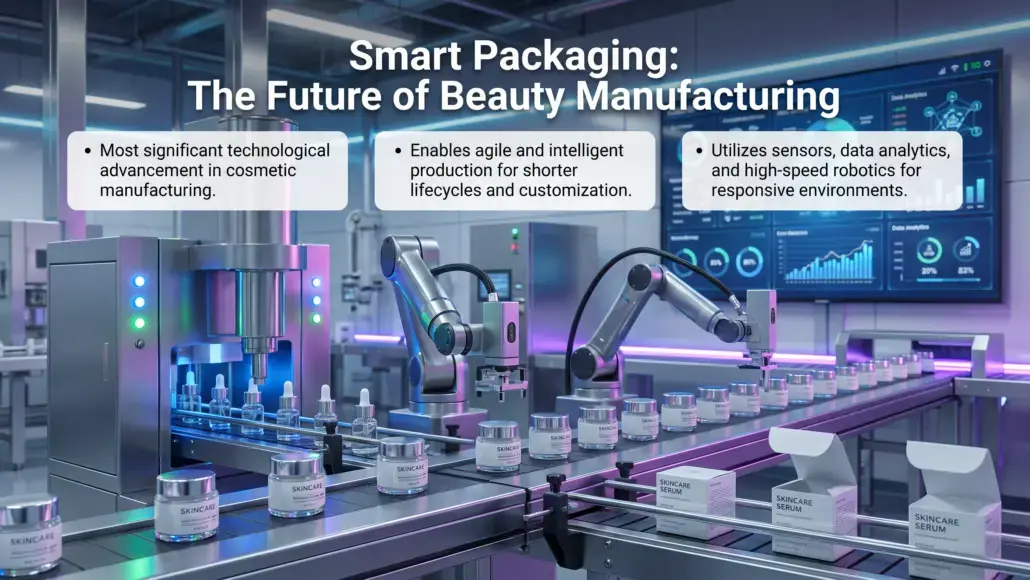

The integration of smart packaging equipment optimizing beauty production lines is currently the most significant technological advancement in the cosmetic manufacturing sector. As brands face increasing pressure to shorten product lifecycles and increase customization, the need for agile and intelligent production systems has become paramount. Smart systems utilize sensors, data analytics, and high-speed robotics to create a highly responsive manufacturing environment. By implementing smart packaging equipment optimizing beauty production lines, facilities can achieve unprecedented levels of throughput while maintaining the strict quality standards required for premium beauty products. This evolution represents a move away from static, hardware-based production to a dynamic, software-driven model where every component of the packaging line communicates in real-time to maximize efficiency.
Automation Synchrony in High-Speed Filling and Capping Operations
The core of smart packaging equipment optimizing beauty production lines lies in the seamless synchronization of filling and capping modules. In traditional setups, these units often operate in isolation, leading to bottlenecks and inefficiencies when speeds are increased. Smart equipment utilizes integrated motion control systems that allow every station to adjust its pace based on the performance of the preceding and following units. This level of synchrony is essential for handling delicate cosmetic containers, such as thin-walled glass bottles or complex multi-component jars, which are prone to damage if handled roughly at high speeds. The use of servo-driven motors provides the precision necessary to manage these containers with the highest degree of care.
Furthermore, smart packaging equipment optimizing beauty production lines incorporates vision systems that verify the alignment and presence of every component before the next stage of the process begins. If a bottle is detected as improperly positioned, the system can automatically adjust the mechanical grippers or divert the faulty unit without stopping the entire line. This capability drastically reduces downtime and ensures that every finished product meets the brand’s aesthetic and functional specifications. The integration of collaborative robots, or cobots, further enhances this synchrony by performing complex assembly tasks that were previously difficult to automate, such as placing small decorative caps or inserting intricate pumps into bottles.
Data Acquisition and Real-Time Monitoring in Automated Assemblies
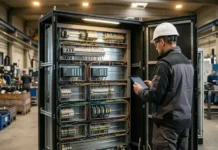
A defining characteristic of smart packaging equipment optimizing beauty production lines is its ability to collect and analyze massive amounts of data in real-time. Every sensor on the production line contributes to a digital twin of the manufacturing process, allowing managers to monitor key performance indicators from any location. Data points such as fill volume accuracy, torque levels for capping, and label placement precision are tracked continuously. By analyzing this information, the system can identify subtle trends that might indicate an emerging problem, such as a slight drift in fill weights due to temperature-induced changes in product viscosity.
Real-time monitoring provided by smart packaging equipment optimizing beauty production lines enables immediate corrective actions. If the system detects a deviation from the established tolerances, it can automatically recalibrate the machinery without human intervention. This closed-loop control system is vital for maintaining consistency across large production runs, where even minor variations can lead to significant waste or regulatory compliance issues. The data collected is also invaluable for long-term process optimization, as it provides a clear picture of where inefficiencies exist and where further investments in automation could yield the highest returns. The move toward Industry 4.0 in beauty packaging is fundamentally built on this foundation of data-driven decision-making.
Precision Calibration and Tolerance Management in Cosmetic Fillers
Cosmetic products range from watery toners to thick, viscous creams, and even multi-phase serums. Smart packaging equipment optimizing beauty production lines addresses this diversity through highly versatile and precise filling technology. Modern fillers use mass flow meters and piston-driven systems that can be calibrated for different formulations in seconds. The software controlling these units stores specific profiles for each product, ensuring that the fill speed, nozzle depth, and suction parameters are perfectly tuned to prevent splashing, aeration, or dripping. This precision is essential for high-value products where even a fraction of a milliliter of overfill can result in substantial financial losses over time.
Tolerance management in smart packaging equipment optimizing beauty production lines also extends to the physical components of the packaging. Variations in bottle dimensions or cap threading can cause failures in traditional automated lines. Smart systems, however, use force-feedback sensors to detect the resistance during the capping process, ensuring that the correct torque is applied regardless of minor manufacturing deviations in the packaging components. This adaptability reduces the number of rejected units and ensures a secure, leak-proof seal for every product. The ability to manage these tight tolerances at high speeds is what distinguishes smart machinery from conventional mechanical systems, providing a competitive edge for manufacturers serving the premium beauty market.
Modular Equipment Architectures for Rapid Changeover and Flexibility
The trend toward small-batch production and frequent product launches has made flexibility a key requirement for beauty production. Smart packaging equipment optimizing beauty production lines is often built on modular architectures that allow for rapid changeovers between different container sizes and types. Instead of spending hours manually adjusting mechanical rails and starwheels, operators can switch to a new product configuration via a touchscreen interface. The machinery then automatically repositions its components using motorized actuators. This “plug-and-play” approach significantly reduces the time that the line is inactive, allowing for greater variety in the production schedule.
Modular design in smart packaging equipment optimizing beauty production lines also facilitates easier upgrades as new technologies become available. If a manufacturer wants to add a new labeling capability or a specialized secondary packaging module, they can integrate the new unit into the existing control network with minimal disruption. This future-proofing is essential in a fast-moving industry like beauty, where packaging trends can change rapidly. The flexibility afforded by these smart systems allows brands to experiment with limited edition releases and localized packaging designs without the prohibitive costs traditionally associated with retooling a production line.
Predictive Maintenance Protocols in Advanced Packaging Machinery
One of the most valuable benefits of smart packaging equipment optimizing beauty production lines is the transition from reactive to predictive maintenance. By continuously monitoring the vibration, temperature, and power consumption of critical components, the system can predict when a part is likely to fail. An alert is then generated, allowing maintenance teams to replace the component during a scheduled break rather than waiting for a catastrophic failure that halts production. This proactive approach maximizes the uptime of the equipment and extends its overall service life by ensuring that it always operates within its design parameters.
Predictive maintenance in smart packaging equipment optimizing beauty production lines is driven by machine learning algorithms that become more accurate over time. As the system collects more data on component wear and failure patterns, it can refine its predictions, eventually reaching a state where unplanned downtime is virtually eliminated. This reliability is crucial for large-scale operations that run 24/7, where every hour of lost production has a significant impact on the bottom line. The integration of smart equipment is not just an investment in speed and precision, but a strategic move toward a more resilient and sustainable manufacturing model that can meet the evolving demands of the global beauty industry.