















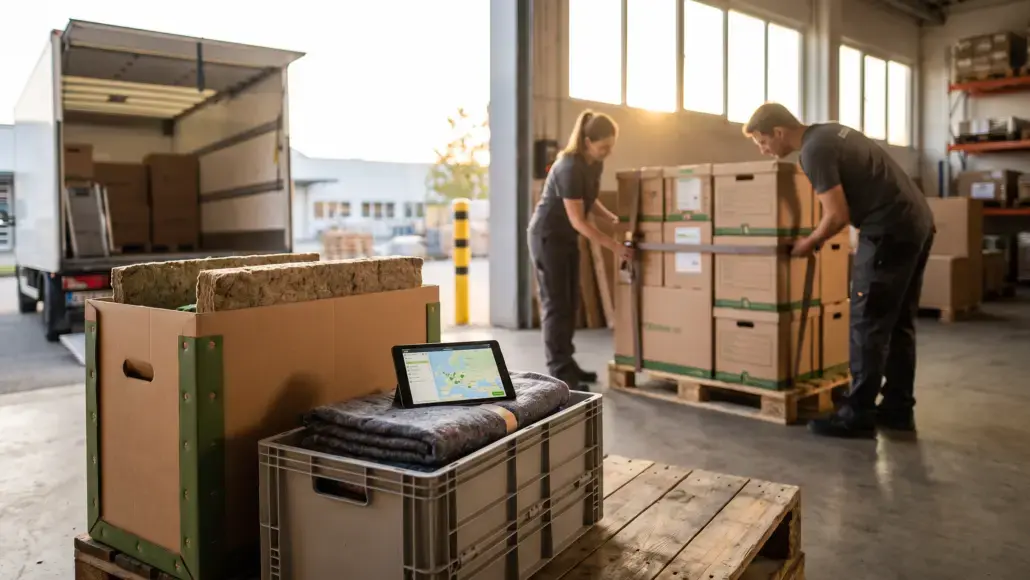

Cross-country moving has become significantly more demanding than simply loading possessions into boxes and transporting them from one location to another. Longer transit routes, increasingly complex logistics networks, rising customer expectations and evolving environmental standards have reshaped how goods must be protected throughout the journey.
As challenges continue to evolve, logistics and packaging professionals are adopting smarter, stronger and more sustainable packaging systems that improve protection while supporting operational efficiency.
The Shift Toward Smart Logistics and Packaging Disruptions
The packaging industry is undergoing one of its most significant transformations in decades. McKinsey highlights that disruptive market forces, technological innovation and evolving business models are reshaping the packaging industry through 2030, requiring organizations to embrace new models in packaging.
Packaging is now viewed as a vital component of the logistics ecosystem designed to improve inventory management, reduce delays and enhance customer visibility. The industry is also seeing changing consumer expectations, growing e-commerce volumes and increasingly complex transportation networks. These shifts require packaging solutions that are adaptable, data-friendly and capable of supporting automated warehouse operations.
Modern logistics providers are also increasingly relying on solutions that actively support visibility, efficiency and operational flexibility throughout the supply chain. Examples include digital tracking technologies, connected inventory systems, RFID labeling, IoT-enabled sensors and predictive analytics.
1. Incorporating Sustainable Materials for Long Hauls
Sustainability has evolved from a marketing initiative into a core operational priority across logistics and transportation. Companies responsible for interstate freight are seeking packaging materials that minimize environmental impact without sacrificing the durability required for extended transport.
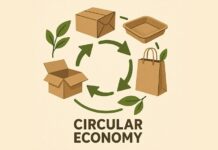
Reusable transport containers, recyclable corrugated materials, molded fiber packaging, biodegradable cushioning and compostable protective wraps are steadily replacing traditional single-use plastics. These alternatives reduce waste while maintaining the structural performance necessary to withstand repeated handling during long-distance moves.
Instead of designing packaging for one-time use, many organizations also prioritize systems that can be reused multiple times, recycled efficiently or reintroduced into manufacturing processes after delivery. For example, circular material systems for healthcare packaging reduce plastic consumption by up to 53% and greenhouse gas emissions by up to 55%.
2. Reducing Freight Costs Through Lightweight Packaging Innovations
Transportation expenses remain among the most costly operational expenses in long-distance logistics. Every added shipment contributes to fuel consumption, handling costs and freight pricing, particularly in less-than-truckload shipping environments.
Modern packaging engineers address this challenge by developing lightweight materials that maintain exceptional structural strength. Some examples include advanced corrugated designs, reinforced honeycomb structures, engineered polymers and high-performance composite materials, which allow businesses to reduce packaging weight without compromising product protection.
Optimized structural design distributes pressure more effectively while using fewer raw materials, allowing shipments to maintain integrity during stacking, loading and long-distance transport. By minimizing unnecessary packaging weight while preserving durability, logistics professionals can significantly improve transportation economics across thousands of miles.
3. Maximizing Capacity With Modular Container Strategies
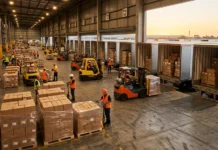
Efficient use of transportation space has become a critical competitive advantage in cross-country moving. Stackable crates, standardized pallet footprints, uniform carton dimensions and modular protective inserts allow movers to create stable, space-efficient load configurations that minimize shifting during transit.
Household relocations may use different sizes like 12-foot, 16-foot and 20-foot containers to effectively pack belongings. Packaging designed around these standard containers maximizes storage density while ensuring that household goods remain properly supported during long-distance transport. Well-designed modular packaging also simplifies loading, unloading, inventory management and route planning, supporting operational efficiency throughout the relocation process.
4. Advanced Damage Prevention for Cross-Country Transit
Cross-country shipments are exposed to continuous vibration, acceleration, deceleration, road impacts and multiple transfer points. Even durable products can experience damage when internal packaging fails to absorb these cumulative forces.
Modern cushioning technologies such as advanced shock-absorbing foams, engineered air-cell systems, molded protective inserts and foam-in-place solutions offer significantly greater protection than conventional packing materials. These features create custom-fit protection that limits movement within shipping containers.
Reducing breakage delivers measurable operational benefits beyond customer satisfaction. Lower damage rates result in:
- Decreased insurance claims
- Reduced replacement costs
- Fewer return shipments
- A stronger company reputation for reliable service
5. Navigating the Evolving Nature of Packaging
Packaging regulations continue to evolve as governments introduce stricter environmental policies and waste reduction initiatives. Logistics providers operating across multiple states must navigate varying requirements concerning recyclable materials, packaging disposal, labeling standards and sustainability reporting.
Broader global packaging trends demonstrate how interconnected packaging, changing customer preferences and convenience collectively shape packaging decisions across global supply chains. For instance, 47% of consumers worldwide use connected packaging through QR codes to gain more insights or interaction about a product. Conversely, 46% of Gen Z consumers say that packaging aesthetics matter to them, with vibrant visuals and engaging packaging serving as unique experiences.
6. Leveraging Smart Packaging Technology for Better Shipment Visibility
The latest logistics technologies allow providers to monitor package location, temperature, humidity and shock events throughout transit. When unexpected delays or handling issues arise, businesses can respond more quickly and make informed decisions to prevent product damage or service disruptions. Smart packaging solutions are equipped with QR codes, RFID tags, GPS-enabled trackers and environmental sensors that provide real-time visibility into shipments as they move across multiple distribution points.
Beyond improving shipment visibility, smart packaging also supports inventory accuracy, streamlines warehouse operations and provides customers with greater transparency during cross-country moves. As supply chains become more connected, data-enabled packaging is quickly becoming a standard feature of modern logistics operations.
7. Preparing for Climate and Weather Challenges During Transit
Cross-country shipments often travel through multiple climate zones, exposing packages to changing temperatures, humidity levels and severe weather conditions. Packaging that performs well in one environment may not provide the same level of protection after days of exposure to heat, cold or moisture.
Modern packaging systems incorporate moisture-resistant coatings, insulated liners, vapor barriers and temperature-resistant materials. They help preserve product integrity throughout extended journeys. These features are especially valuable for electronics, furniture, artwork and other sensitive household items that can be damaged by environmental fluctuations. As a result, logistics providers can reduce weather-related damage, minimize costly claims and deliver more consistent results regardless of seasonal or geographic challenges.
Preparing the Supply Chain for the Future
Organizations that regularly evaluate their packaging strategies are better positioned to respond to changing customer expectations, evolving regulations and increasingly competitive transportation markets. Cross-country moving companies are heavily investing in lightweight engineering, modular designs, advanced protective materials and environmentally responsible packaging solutions to create operational advantages that extend throughout the supply chain.
As relocation services continue to evolve, businesses that embrace innovation today will be better equipped to deliver safer, more efficient and more sustainable cross-country moves for years to come.