
















The rapid evolution of global commerce has placed unprecedented pressure on industrial distribution centers to increase throughput while maintaining high levels of accuracy. At the heart of this transformation is the integration of automated packaging systems, which have replaced manual labor in the critical task of palletisation. The transition from human stacking to robotic precision is not merely a matter of speed; it is an essential shift toward structural consistency and workplace safety. Modern industrial operations require a level of load stability that can only be achieved through the repeatable accuracy of programmed machines. By eliminating the variability inherent in manual handling, these systems ensure that every pallet is built to optimal specifications, reducing the risk of product damage during transit.
Furthermore, the implementation of robotics allows for the handling of heavier and more complex loads that would be physically demanding or dangerous for human workers. The ability of a robotic arm to perform high-speed, repetitive motions without fatigue ensures a constant flow of goods from the production line to the shipping dock. This consistency is a vital component of lean manufacturing, where any bottleneck at the end-of-line packaging stage can disrupt the entire supply chain. As technology continues to advance, the flexibility of these systems has improved, allowing them to handle a wide variety of SKU dimensions and packaging materials with minimal downtime for reconfiguration.
Integration of Robotics in Stacking
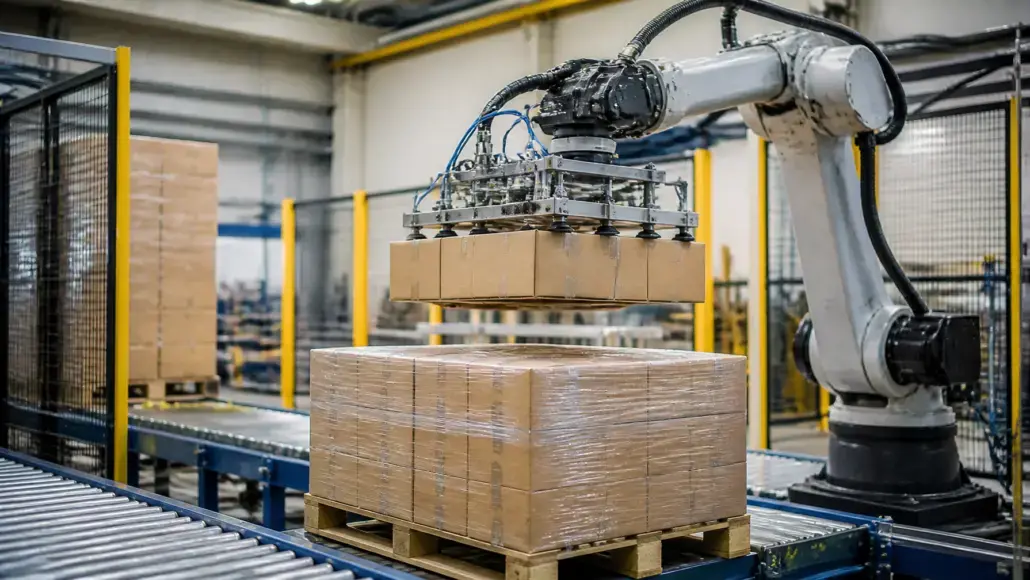
The efficiency of a robotic palletising cell is determined by the synergy between the mechanical arm, the vision system, and the end-of-arm tooling. Modern robotic arms are capable of high-payload capacities, allowing them to lift entire layers of products at once. This layer-palletising approach significantly increases speed compared to individual case handling. The integration of advanced 3D vision systems enables the robot to identify the orientation of incoming goods and adjust its placement strategy in real-time. This level of intelligence is crucial for facilities that handle multiple product lines on a single conveyor, as it allows for the simultaneous building of different pallet configurations without human intervention.
End-of-arm tooling is the most specialized component of the system, often custom-designed to match the specific characteristics of the product. Vacuum grippers are commonly used for cardboard boxes, providing a secure hold without damaging the surface of the container. For heavier or more fragile items, mechanical clamps or specialized fork-style tools are employed to ensure stability. The ability to quickly swap these tools through automated couplers further enhances the versatility of the cell. By matching the tool to the task, manufacturers can ensure that their automated packaging systems operate at peak efficiency, maintaining the delicate balance between speed and product integrity.
Structural Integrity of Automated Loads
The primary goal of palletisation is to create a load that is stable enough to withstand the mechanical stresses of the supply chain. In manual operations, inconsistent stacking can lead to load shifting, which is a major cause of transit damage and workplace accidents. Automated systems solve this problem by applying precise geometric patterns that maximize the interlocking of containers. The use of software to calculate the optimal stacking sequence ensures that the weight is evenly distributed across the pallet, preventing the crushing of lower layers. This mathematical approach to load building is essential for high-stacking in modern warehouses, where vertical space must be utilized to its full potential.
- Column stacking patterns maximize the vertical compression strength of the containers, preventing collapse under heavy loads.
- Interlocking brick patterns provide superior lateral stability, reducing the risk of the load leaning or tipping during transport.
- Automated layer pads can be inserted between levels to increase friction and provide additional structural reinforcement.
- Precise corner-board application by the robot ensures that the edges of the load are protected from strap damage and external impacts.
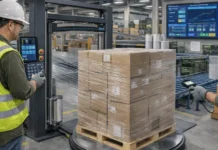
The structural integrity of the load is further enhanced by the integration of automated stretch-wrapping machines at the end of the palletising line. These machines apply film with a consistent tension that is calibrated to the specific requirements of the load. Over-tightening can crush the products, while under-tightening leads to instability. By synchronizing the palletiser and the wrapper, manufacturers can ensure a seamless transition from stacking to sealing. This integrated approach creates a unified shipping unit that is ready for the rigors of long-distance transport, providing peace of mind for both the manufacturer and the end-user.
Throughput Optimization in Distribution
In high-volume industrial environments, the ability to maintain a high cycle rate is the most significant competitive advantage. Automated packaging systems are designed to operate 24/7, providing a level of reliability that manual teams cannot match. Throughput optimization is achieved by minimizing the time the robot spends in non-productive motion. Advanced path-planning software calculates the most efficient trajectory for the arm, reducing wear and energy consumption while maximizing speed. Furthermore, the use of dual-pallet stations allows the robot to continue stacking on one side while a completed pallet is being removed from the other, eliminating downtime during changeovers.
The scalability of these systems also plays a role in throughput management. Modular designs allow companies to start with a single robotic cell and add more as production volumes increase. This phased approach to automation reduces the initial capital expenditure while providing a clear path for future growth. In larger facilities, multiple robotic cells can be networked to a central management system, allowing for the real-time monitoring of performance metrics and proactive maintenance scheduling. By optimizing every aspect of the palletising process, manufacturers can significantly increase their daily output, enabling them to meet the demands of a rapidly expanding global market.
Safety Protocols for Robotic Palletisers
The introduction of high-speed robotics into the workplace requires a rigorous approach to safety management. Industrial robots are powerful machines that can pose a significant risk to personnel if not properly guarded. Modern safety protocols involve a combination of physical barriers and electronic sensors to create a secure working environment. Fencing with interlocked gates ensures that the robot is immediately disabled if a human enters the work zone. In more collaborative settings, the use of light curtains and laser scanners allows for the robot to slow down or stop when a person is detected nearby, enabling safer interaction during maintenance or troubleshooting.
Beyond physical guarding, the software controls of automated packaging systems include multiple layers of redundancy to prevent malfunctions. Emergency stop buttons are strategically placed around the cell, and the control system constantly monitors the position and speed of the arm to detect any deviations from the programmed path. Regular safety audits and operator training are essential components of a successful automation strategy, ensuring that all staff are aware of the risks and the proper procedures for interacting with the machines. By prioritizing safety, manufacturers can enjoy the benefits of automation without compromising the well-being of their workforce, creating a productive and sustainable operational model.
Economic Impact of Robotic Integration
The decision to invest in automation is driven by a complex set of economic factors. While the initial investment in robotic hardware and software can be significant, the long-term return on investment is often achieved within a few years through labor savings and increased productivity. In many regions, the difficulty of finding and retaining labor for repetitive palletising tasks has become a major driver for automation. By replacing these roles with machines, companies can reallocate their human resources to more complex and value-added activities, such as quality control and process management. This transition not only improves efficiency but also enhances the job satisfaction and career prospects of the workforce.
Furthermore, the reduction in product damage and insurance claims associated with automated stacking leads to direct financial gains. A single unstable load that tips over in transit can result in thousands of dollars in losses and potential damage to the company’s reputation. By ensuring a consistent and high-quality output, automated packaging systems provide a level of risk mitigation that is invaluable in the high-stakes world of industrial logistics. The integration of these systems is also a key factor in aligning with modular packaging designs, as the precision of the robot is required to handle the standardized dimensions of modern interlocking units. As the cost of robotic technology continues to decrease, the economic case for automation will only become stronger, making it a standard requirement for all modern industrial operations.
The future of industrial palletisation is undeniably linked to the continued advancement of robotic technology. As machines become more intelligent and flexible, they will play an even more central role in the global supply chain. The ability to handle diverse loads with speed, precision, and safety is the cornerstone of modern distribution. By embracing these automated systems, the industrial sector can ensure that its logistical capabilities keep pace with the demands of the 21st-century economy, driving efficiency and growth across all sectors of manufacturing and commerce.

