



















In the high-stakes world of retail, the label is the ultimate silent salesperson. It carries the brand’s identity, provides essential regulatory information, and serves as the primary interface for price scanning and inventory tracking. However, as consumer habits shift toward more variety and faster product cycles, the traditional methods of label production are being pushed to their limits. To meet this demand, the industry has turned to high speed label printing a technological frontier where precision engineering and advanced chemistry meet to produce thousands of labels per minute with flawless accuracy.
The Engineering Behind Ultra-Fast Label Production
To achieve true high-speed performance, every component of the printing press must be optimized for velocity. In the world of analog printing, this means gallus or flexo presses that feature massive drying tunnels and sophisticated web-handling systems. These machines can process rolls of label stock at speeds exceeding 200 meters per minute. The challenge at these speeds is maintaining registration the perfect alignment of different colors. If the web of paper or film moves even a fraction of a millimeter out of place, the entire batch becomes blurred and unusable.
Modern high speed label printing utilizes laser-guided sensors and automatic registration systems that make thousands of tiny adjustments every second. This ensures that even at top speeds, the fine text of an ingredient list or the intricate lines of a brand’s logo remain sharp and legible. Furthermore, the development of high-output UV-LED curing systems allows the ink to dry instantly as it passes through the press, preventing offsetting or smudging, which was a major limitation of older thermal drying methods. This combination of mechanical speed and chemical speed is the engine of the modern label plant.
The Digital Revolution in High-Volume Labeling
While analog presses own the high-volume market, digital high speed label printing is rapidly closing the gap. The latest generation of inkjet label presses can now reach speeds of up to 100 meters per minute while offering the resolution of a high-end photo printer. The primary advantage of digital is the lack of plates, which allows for continuous printing of different designs. In a traditional setup, changing from a Standard label to a Low-Sugar version would require stopping the press and changing the plates. In a digital workflow, the press simply continues to run, switching designs between one label and the next.
This capability is vital for the SKU explosion seen in modern retail. A single brand might have dozens of different flavors, sizes, and localized language versions of the same product. High speed label printing allows these variations to be produced in a single run, drastically reducing the cost per SKU and allowing brands to be much more reactive to market trends. This is the technology that enables the seasonal labels and limited edition runs that are now common in everything from craft beer to premium cosmetics.
Streamlining the Labeling Workflow for Maximum Efficiency
High speed is about more than just how fast the press turns it’s about the efficiency of the entire packaging workflow. From the moment a designer sends a file to the moment the finished label is applied to a bottle, every step must be optimized. This has led to the rise of smart workflow software that automates the pre-press process. These tools can automatically add the necessary bleed, adjust color profiles for different substrates, and even generate the variable data for barcodes and serial numbers.
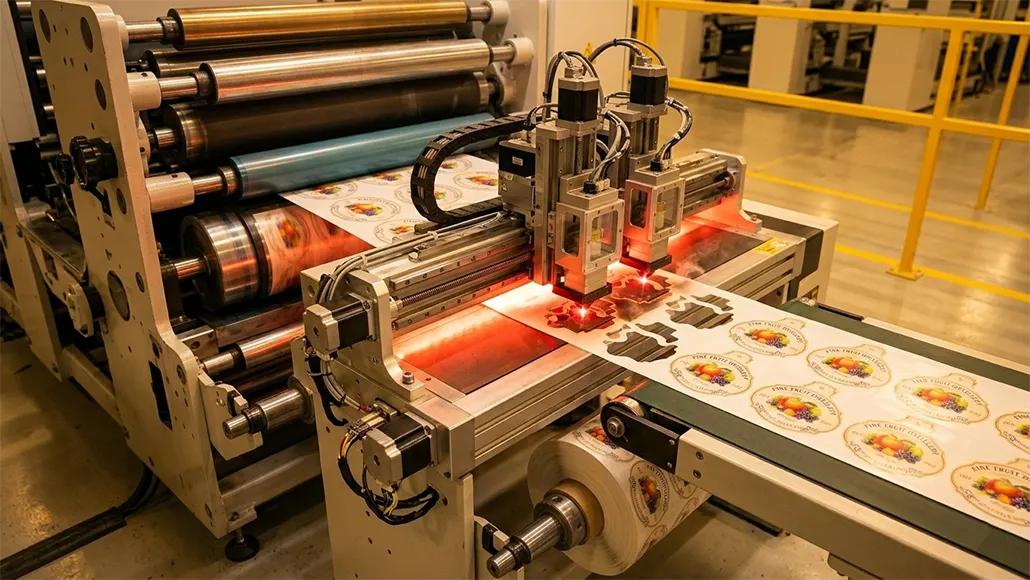
One of the most significant bottlenecks in label production is the finishing stage the process of die-cutting the labels into their final shape, removing the excess material known as the matrix, and slitting the wide rolls into smaller ones. High speed label printing is increasingly being integrated with in-line finishing systems. This means that as the labels come off the printing station, they go immediately through a laser die-cutter or a high-speed semi-rotary die. This one-pass production eliminates the need to move heavy rolls of printed material between different machines, reducing the risk of damage and significantly cutting lead times.
Addressing the Demands of Retail Durability and Aesthetics
A label in the retail environment must be more than just pretty it must be incredibly durable. It will be subjected to the friction of shipping, the moisture of a refrigerator, and the constant handling of shoppers. High speed label printing must utilize ink systems and coatings that can survive these conditions without fading or peeling. This is why pressure-sensitive labels have become the dominant format in retail they offer a clean, robust application that can be performed at high speeds on the bottling line.
Aesthetics also play a massive role in consumer choice. Techniques such as cold foiling, embossing, and spot-UV varnishing are now being performed at high speeds alongside the primary printing. These embellishments add a tactile, premium feel to the product, catching the light on a crowded shelf and signaling quality to the consumer. The challenge for manufacturers is to apply these complex finishes without slowing down the press. Innovation in rotary embellishment tools has made this possible, allowing for luxury effects to be produced at industrial speeds.
Navigating the Challenges of Substrate and Adhesive Innovation
The variety of surfaces that labels must adhere to is staggering from cold, damp glass bottles to flexible plastic pouches and recycled cardboard boxes. Each of these requires a different combination of substrate the paper or film and adhesive. High speed label printing requires a deep understanding of these materials. For example, thin-gauge films are popular because they reduce material waste and allow for more labels per roll meaning fewer roll changes and more uptime, but they are also more difficult to handle at high speeds due to their elasticity.
The industry is also moving toward wash-off and recyclable labels to support global sustainability goals. These labels are designed to stay firmly in place during the product’s life but to detach easily when the container is recycled. Printing on these specialized materials requires a careful balance of ink adhesion and chemical compatibility. By investing in high speed label printing that is compatible with these green materials, manufacturers are ensuring they can meet both the production quotas and the environmental standards of the modern era.
The Role of Data and Analytics in Production Excellence
In a modern high-speed facility, data is as important as ink. Every press is connected to a network that monitors production metrics in real-time. If a machine’s speed drops or the waste percentage increases, the management team is alerted immediately. This level of operational visibility allows for continuous improvement, as data from hundreds of runs can be analyzed to find the optimal settings for every material and design.
Furthermore, the labels themselves are becoming carriers of data. Beyond simple barcodes, we are seeing the rise of invisible codes and NFC-enabled labels that can be scanned by smartphones. High speed label printing is the only way to produce these advanced, data-rich labels at the scale required by global retailers. This smart labeling provides a bridge between the physical store shelf and the digital world, allowing brands to offer recipes, coupons, and authenticity verification with a single tap of a phone.
The Future: Toward Autonomous Label Production
The ultimate goal of the industry is a fully autonomous production environment. We are already seeing the first stages of this with presses that can set their own registration and color profiles using AI-driven cameras. As these technologies mature, the human role will shift from manual operation to high-level oversight and strategic planning.
High speed label printing is the lifeblood of the retail packaging sector. It is the technology that ensures the shelves are stocked, the brands are recognized, and the information is clear. As the pace of retail continues to accelerate, the innovations in speed, precision, and digital integration will remain the primary drivers of success in the labeling world. The future is fast, it is vibrant, and it is incredibly efficient.