






















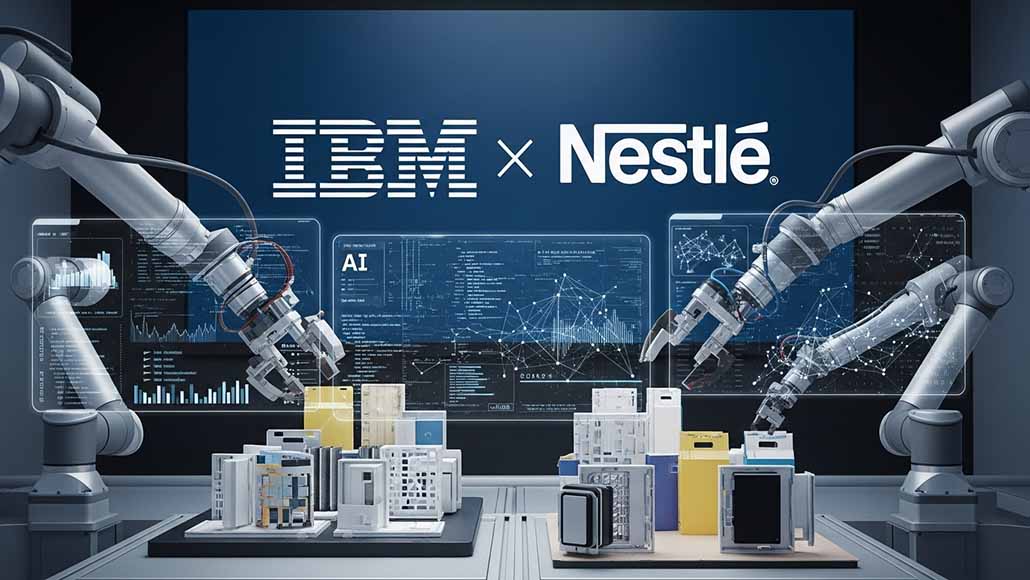

IBM Research has joined forces with Nestlé R&D to create a groundbreaking AI-powered packaging innovation that aims to transform how high-barrier packaging materials are identified and developed.
This AI-powered packaging innovation is powered by a custom-trained chemical language model and a regression transformer, enabling the design of materials that meet a range of critical criteria, including safety compliance, functional integrity, cost efficiency, and recyclability. Nestlé intends to integrate this technology into its packaging framework as part of a broader artificial intelligence strategy in recipe optimisation, streamlining manufacturing efficiency and delivering personalised nutrition solutions.
The collaboration with IBM Research marks a major advancement in applying artificial intelligence to accelerate the development of sustainable, high-performance packaging. This new generative AI tool is engineered to identify novel high-barrier materials that provide strong protection against moisture, oxygen, and temperature shifts.
The process began with AI-powered data analysis, drawing insights from a wide range of materials which were sourced through both publicly available databases and proprietary sources. Scientists developed a fit-for-purpose chemical language model capable of interpreting molecular structures within those materials. Building on that, IBM’s regression transformer model established connections between those structures and their related physical and chemical attributes. The resulting system is now capable of generating innovative packaging concepts for further testing and application.
Nestlé’s Chief Technology Officer, Stefan Palzer, stated, “This novel AI-powered language model, developed in collaboration with IBM Research, illustrates how Nestlé is leading the digital transformation within the food and beverage industry. In the future, such breakthrough technology could be used to optimize the development of more sustainable packaging solutions across product categories.”
Alessandro Curioni, Vice President of IBM Research Europe & Africa, added, “We do believe that Generative AI will continue to disrupt scientific discovery, impacting the core business of all knowledge-based industries, allowing critical differentiation and sustainable growth.”
Nestlé is pursuing a broad AI strategy, using emerging technologies not only for packaging but also for optimising recipes to better balance nutrition, sustainability, and cost. The company is applying digital twin technology to enhance its manufacturing efficiency. Artificial intelligence is also being used to develop customised nutrition solutions tailored to the specific needs of not just humans but also pets. The company has opened a deep tech R&D centre dedicated to food and nutrition innovation. This facility brings together state-of-the-art tools—including advanced sensors, robotics, AI systems, and mixed reality technology—to support operational excellence and drive long-term innovation.