















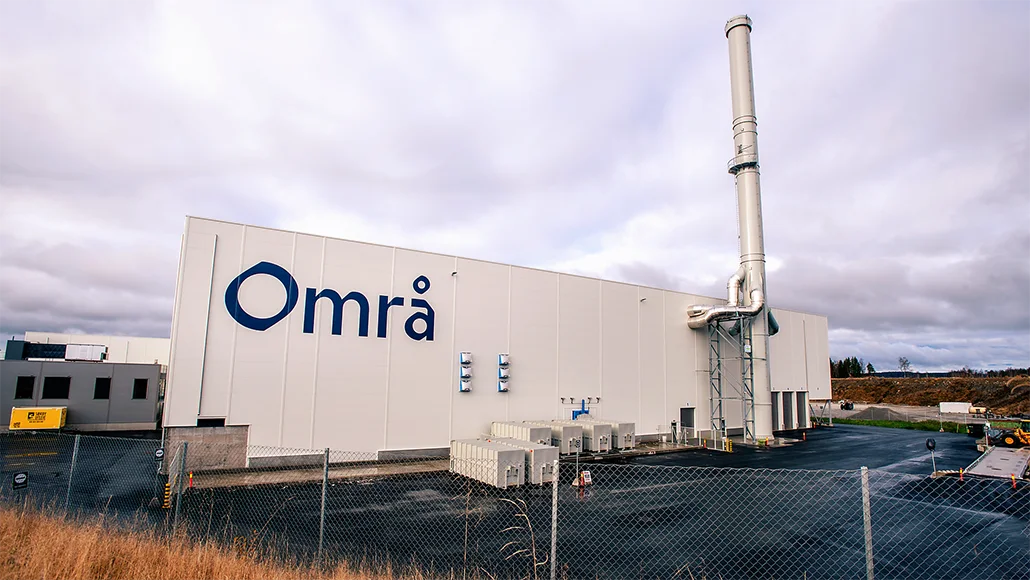

Norway is celebrating the official opening of Områ, which is its new national facility when it comes to sorting all kinds of plastic packaging waste. This includes plastic, which in the past had no other alternative but incineration. Jointly owned by TOMRA at 65% and Plastretur at 35%, the facility can go ahead and process 90,000 tonnes of plastic every year, thereby transforming plastic packaging waste into uniform polymer fractions that are ready to get recycled.
Områ is going to make use of advanced sensor-based technology in order to sort the mixed plastic waste into ten varied mono-fractions, which would include the likes of Polyethylene – PE, Polypropylene – PP, Polyethene terephthalate – PET, Polystyrene – PS and also others.
This goes on to close the loop for plastics, thereby representing one of the most advanced installations of its kind across the world.
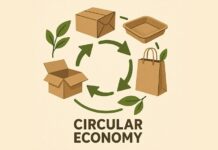
President and CEO of TOMRA, Tove Andersen, said that Omra is indeed more than a facility – it is a missing link in the circular economy of Europe. This facility has got the capacity to receive as well as transform all of Norway’s household plastic packaging waste into recyclable fractions, therefore essentially closing the loop when it comes to plastics. It is indeed a landmark piece of infrastructure that offers a very dependable offtake when it comes to mixed waste sorting facilities and can also enable the recovery of more resources coming from source-separated material.
The facility, which is situated just outside of Oslo, will serve as a dependable offtake solution when it comes to municipalities as well as waste management companies that are looking out for automated mixed waste sorting -MWS, which helps to raise the recycling rates without causing any sort of dependence completely on household source separation.
Områ gives municipalities as well as the overall value chain a crystal clear signal that there is now a scalable or a high-quality route when it comes to plastic packaging, opines the CEO of Plastretur, Karl Johan Ingvaldsen. He adds that it provides the infrastructure that is required so as to meet EU recycling targets and also supports their shared ambition to go ahead and build an actual circular plastics economy.